

Introduction
Navigating the complexities of safety and compliance can be challenging for contractors, especially when it comes to selecting the right fire-rated doors. With options like steel fireproof doors and fiberglass fire-rated doors, each material presents distinct advantages and challenges that can significantly impact project outcomes. As the stakes rise in ensuring occupant safety and adhering to stringent building codes, making the right choice can significantly enhance safety and compliance in various environments, from schools to hospitals. This article delves into the critical comparisons between steel and fiberglass fire-rated doors, equipping contractors with the insights needed to make informed decisions that prioritize safety and compliance.
Understand Fire Ratings: Key Concepts and Importance
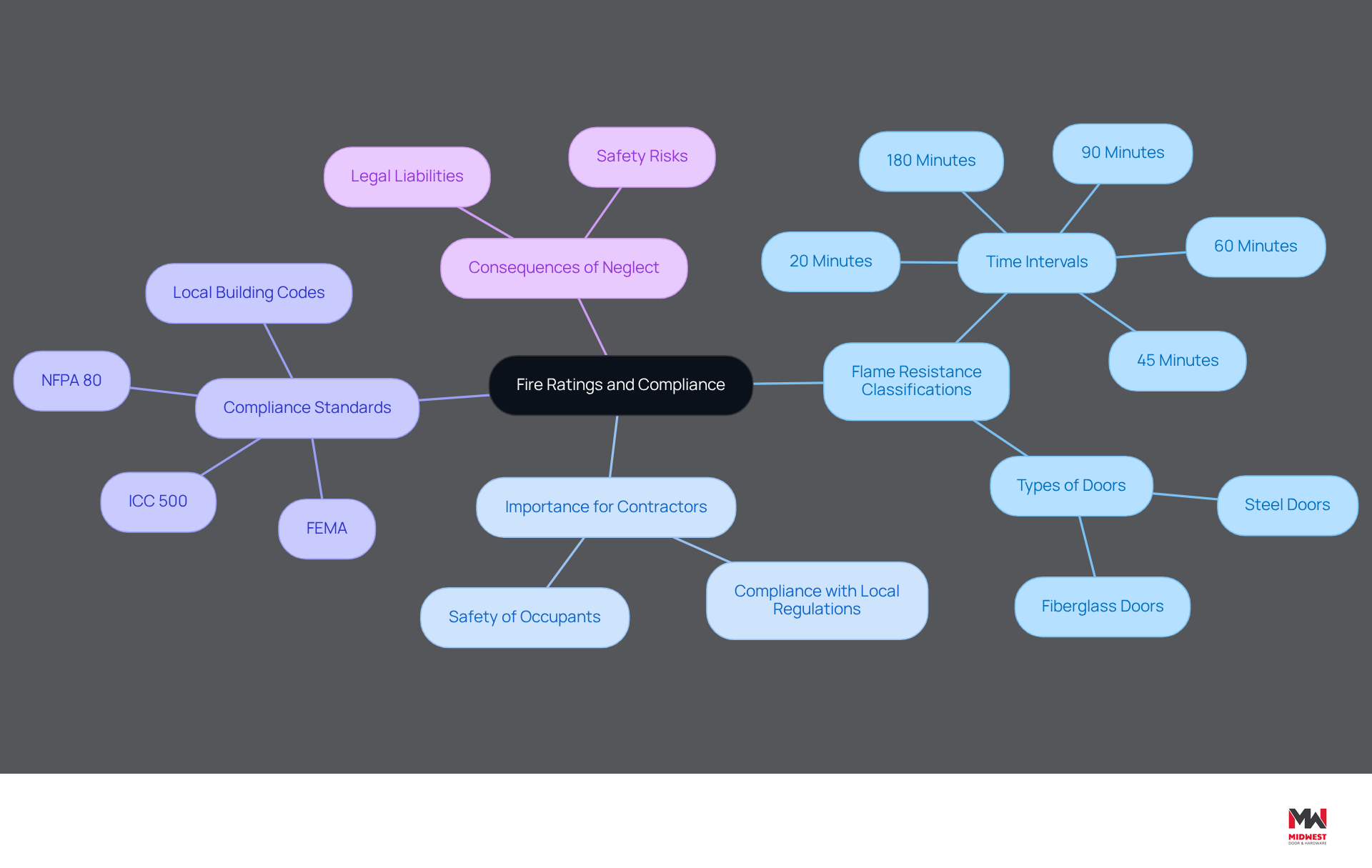
Understanding flame resistance classifications is critical for contractors to ensure compliance and safety in building projects. These classifications indicate how long a barrier can withstand flames and smoke, typically measured in intervals like 20, 45, 60, 90, or 180 minutes. Established through standardized testing, these assessments measure how effectively an entry can hinder the spread of flames and smoke during a fire. Contractors need to understand these evaluations to comply with local building regulations and select the right entry type for their projects. Steel fireproof doors typically achieve higher fire ratings due to their robust construction, while fiberglass entries generally have lower ratings, often ranging from 20 to 90 minutes. This knowledge is essential for contractors to protect occupants and maintain the building's integrity.
Adherence to NFPA 80 requires yearly inspection and testing of fire-rated assemblies, necessitating documented maintenance programs to uphold safety standards. Furthermore, [compliance with FEMA, ICC 500, and local building codes](https://designingbuildings.co.uk/wiki/The 2026 Compliance Landscape: Why 'Business as Usual' is a Liability) is essential for both fire-rated and tornado-rated entries, which includes proper labeling, hardware compatibility, and installation standards. Tornado-rated shelter entrance hardware must be listed and compliant with interior egress requirements; non-listed hardware is unacceptable.
Case studies emphasize the significance of preserving fire-rated entry assemblies to avoid legal liabilities and guarantee safety. For example, organizations that hire qualified experts for installation and perform regular inspections can keep their safety barriers in effective working condition, thus ensuring adherence to the Regulatory Reform (Fire Safety) Order 2005.
Ultimately, neglecting flame ratings and compliance standards can jeopardize both safety and legal standing in the event of an emergency.
Explore Steel Fireproof Doors: Features and Applications
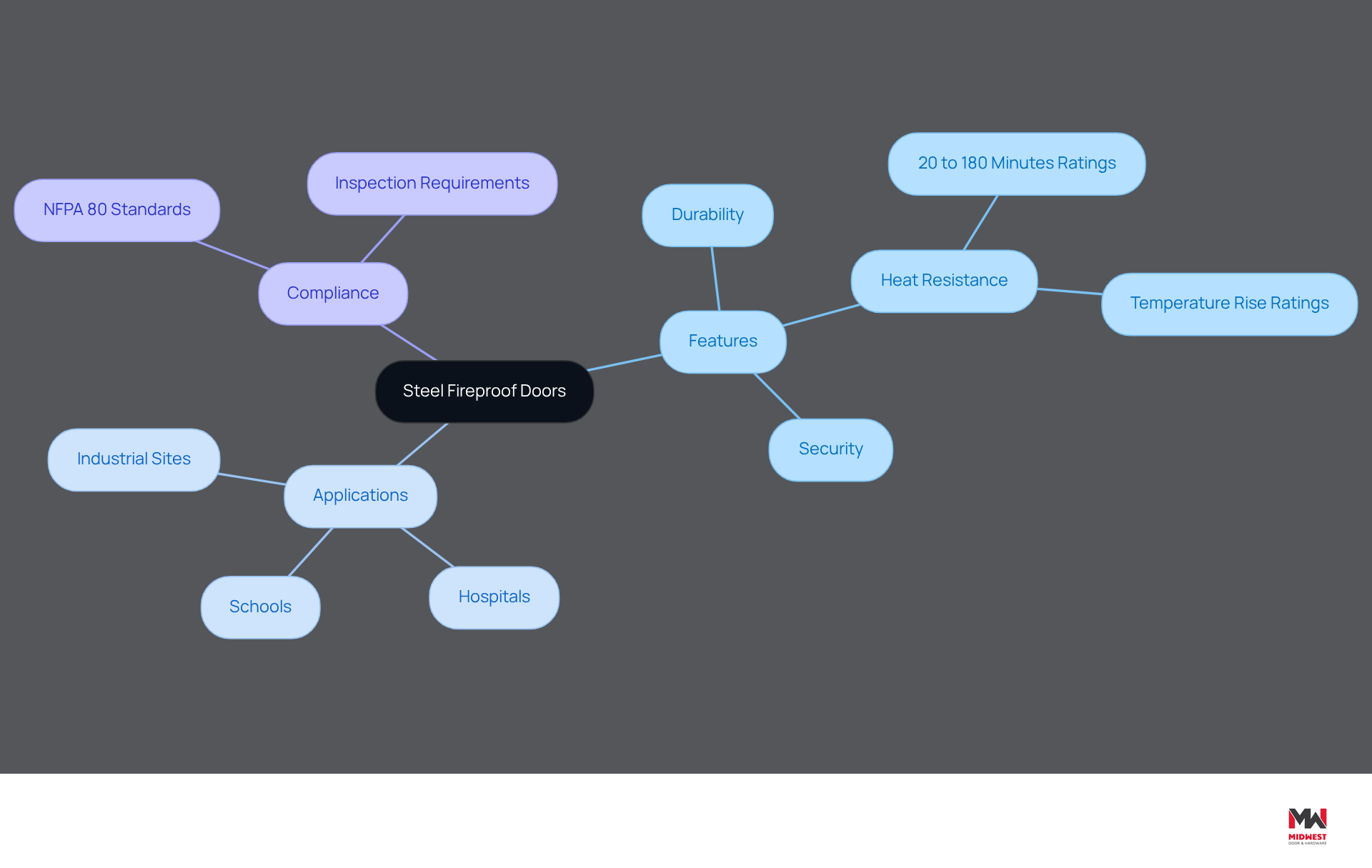
Steel fireproof doors are essential for ensuring safety in high-traffic environments, as they combine durability with compliance. Made from heavy-gauge steel, these barriers can be further reinforced for added resilience. They are ideal for high-traffic areas, often found in schools, hospitals, and industrial sites where fire safety is critical. With heat resistance ratings ranging from 20 minutes to 3 hours, they serve various applications, including exit routes and fire barriers. Additionally, a steel fireproof door provides improved security, making it a preferred choice for safety-conscious facilities.
In commercial applications, steel fire-resistant barriers hold up well against tough conditions, ensuring long-lasting performance. Case studies indicate that in educational settings, these barriers not only meet fire safety standards but also enhance overall security, creating a safe environment for students and staff. Similarly, hospitals rely on these barriers to withstand flames and manage smoke, protecting vulnerable patients who may struggle to evacuate quickly.
Compliance with NFPA 80 standards mandates annual inspections and testing of fire-rated entry assemblies, ensuring they function correctly and maintain their protective capabilities. Effective fire-resistant barriers must also feature self-closing and positive-latching mechanisms, which are vital for preventing the spread of flames and smoke. Adhering to these regulations is crucial for contractors, as it mitigates risks associated with non-compliance and bolsters the overall security of the structures they manage.
As the demand for reliable safety solutions continues to grow, understanding the characteristics and applications of the steel fireproof door becomes essential for contractors aiming to deliver high-quality, compliant projects. Ultimately, a thorough understanding of these barriers can significantly impact project success and safety outcomes.
Examine Fiberglass Fire-Rated Doors: Benefits and Use Cases
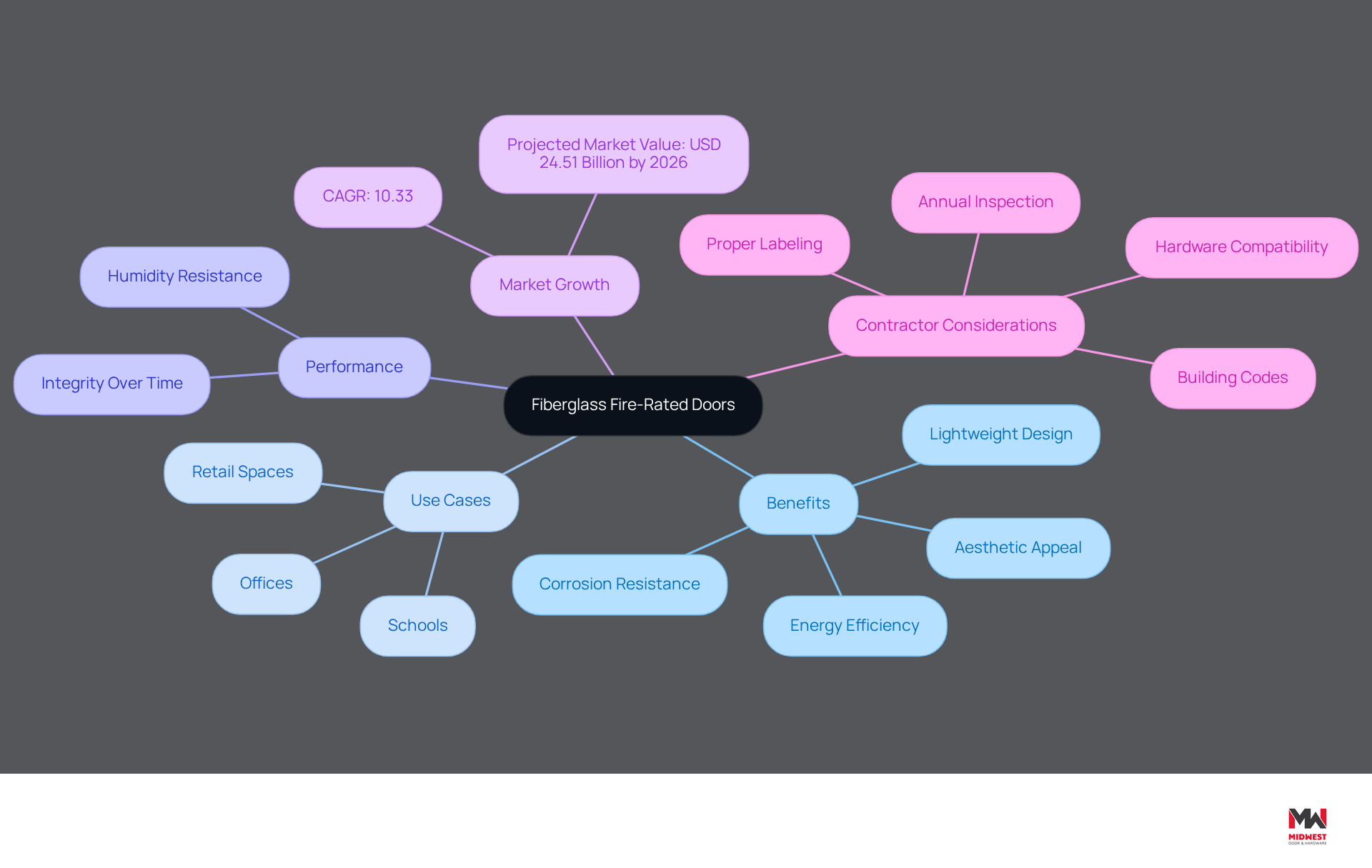
Fiberglass fire-rated entries are gaining recognition for their lightweight design and corrosion resistance, making them suitable for high-moisture environments. These entries typically provide fire ratings ranging from 20 to 90 minutes, meeting the requirements for various commercial applications. Fiberglass entries are energy efficient, often featuring insulated cores that help maintain stable indoor temperatures and reduce energy costs. Additionally, they can be designed to resemble wood, providing aesthetic appeal without compromising performance. This makes them ideal for environments such as schools, offices, and retail spaces, where fire safety and visual attractiveness are both critical.
In humid environments, case studies have shown strong performance in humid environments, maintaining integrity and functionality over time. Manufacturers have adapted their products to meet specific climate needs, highlighting the importance of fiberglass entries in different construction settings. Furthermore, the demand for these entries is supported by statistics indicating a growing market, with the fiberglass segment projected to reach USD 24.51 billion in 2026, reflecting a compound annual growth rate of 10.33%.
Contractors must consider the security limitations of fiberglass entries in high-risk environments. Therefore, it is crucial to evaluate the specific requirements of each project to ensure compliance with safety standards and project specifications, including the following:
- Annual inspection and testing of fire-rated assemblies as mandated by NFPA 80.
- Proper labeling.
- Hardware compatibility.
- Adherence to local building codes.
These factors are essential for ensuring the longevity and effectiveness of these fire-rated solutions.
Compare Pros and Cons: Steel vs. Fiberglass Fire-Rated Doors
When selecting fire-rated doors, understanding the differences between a steel fireproof door and fiberglass options is crucial for ensuring safety and compliance.
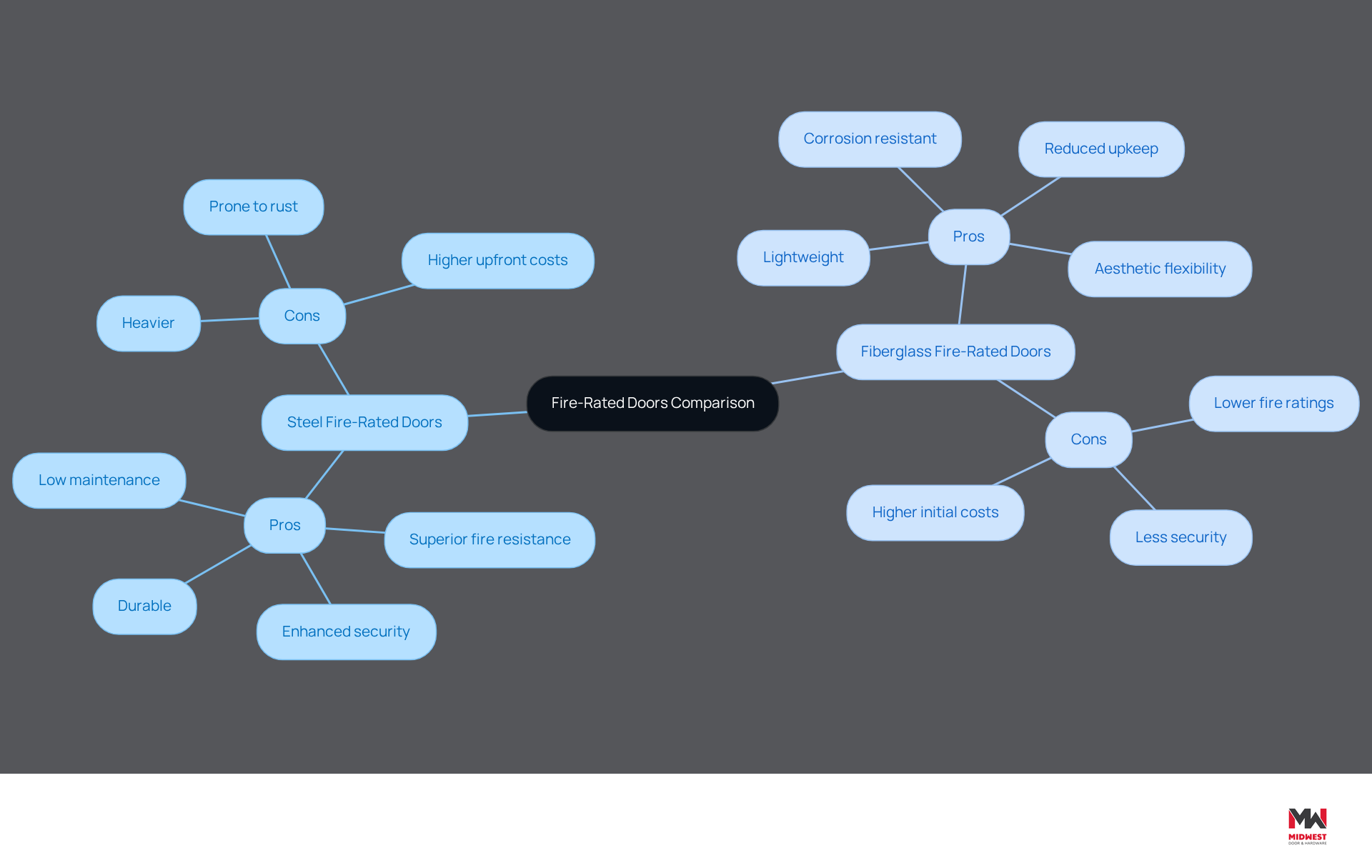
Steel Fire-Rated Doors:
-
Pros:
- Superior fire resistance with ratings extending up to 3 hours, significantly limiting radiant heat transfer and enhancing safety during emergencies.
- Enhanced security features, making them difficult to breach, which is crucial for high-risk environments such as hospitals and schools.
- Durable and resistant to impact and harsh weather conditions, ensuring longevity in various applications.
- Low maintenance requirements over time, contributing to cost-effectiveness in the long run.
Cons:
- Heavier, necessitating more robust framing and hardware, complicating installation and increasing labor costs.
- Prone to rust and dents if not properly maintained, requiring regular inspections and maintenance as per NFPA 80 standards.
- Typically higher upfront costs compared to fiberglass options, which may impact budget-conscious projects.
-
Pros:
- Lightweight and easier to install, which can reduce labor costs and installation time.
- Resistant to corrosion and moisture, making them ideal for humid environments and applications where aesthetics are prioritized.
- Aesthetic flexibility, available in various designs and finishes, allowing for customization to match building aesthetics.
- Reduced upkeep requirements compared to wooden entries, offering a practical solution for numerous contractors.
Cons:
- Generally lower fire ratings, with maximum ratings up to 90 minutes, which may not suffice in high-risk scenarios.
- May not offer the same level of security as steel barriers, potentially compromising safety in certain applications.
- Higher initial costs than some steel options, depending on design and specifications.
Ultimately, the steel fireproof door is the go-to choice for high-security and high-fire-risk areas due to its exceptional fire ratings and durability. In contrast, fiberglass doors may be more suitable for applications where aesthetics and moisture resistance are prioritized, making them a versatile choice for various construction projects. When it comes to fire-rated doors, making the right choice is key to keeping your project safe and compliant with building codes. It is essential to ensure compliance with FEMA, ICC 500, NFPA 80, and local building codes when selecting and installing fire-rated entries, including proper labeling, hardware compatibility, and installation standards. Furthermore, yearly examination and testing of fire-rated entry assemblies are mandated according to NFPA 80, with recorded maintenance programs to ensure continuous compliance and security.
Ensure Compliance: Navigating Building Codes and Safety Standards
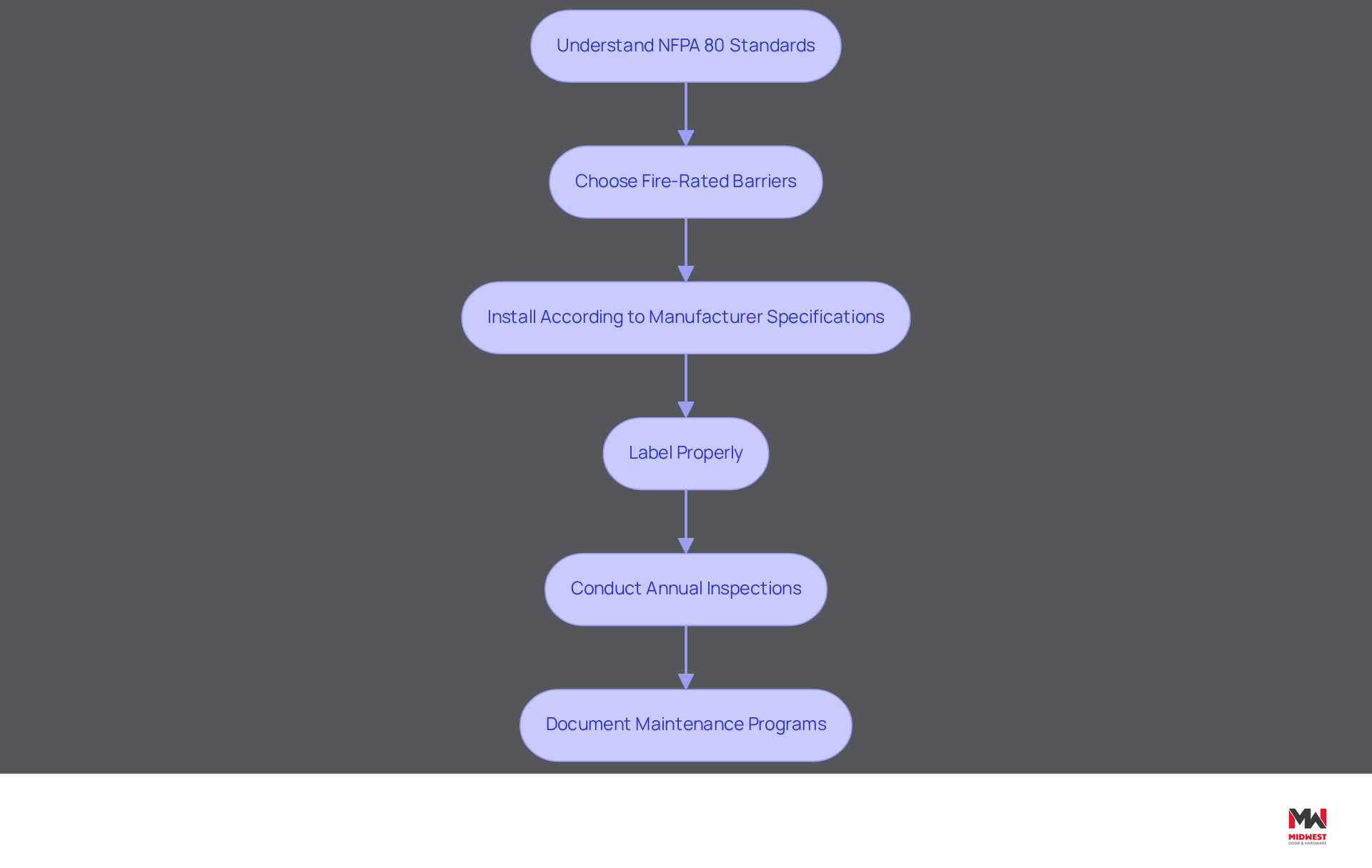
Choosing and installing fire-rated barriers without adhering to building codes can expose contractors to significant risks. Contractors must be knowledgeable about the National Fire Protection Association (NFPA) standards, particularly NFPA 80, which governs the installation and maintenance of safety barriers. These guidelines specify the necessary safety classifications for entrances based on their location within a structure and the type of occupancy. For instance, entrances in high-traffic areas or those serving as exits typically require higher safety ratings. Contractors should also ensure proper labeling and installation of entrances per the manufacturer's specifications to maintain compliance. Regular evaluations and maintenance are essential to ensure emergency barriers function effectively in crises. NFPA 80 mandates that all flame protection assemblies be inspected at least annually, with documented maintenance programs to confirm adherence. Not adhering to NFPA 80 can expose contractors to serious legal and financial risks. This proactive approach not only protects the safety of building occupants but also reduces liability risks linked to non-compliance, which can result in severe consequences, including the revocation of a building's certificate of occupancy by safety marshals.
The Authority Having Jurisdiction (AHJ) plays a crucial role in enforcing fire and building codes, ensuring compliance with NFPA 80 throughout the life cycle of fire assembly units. Furthermore, compliance with FEMA, ICC 500, and local building codes is critical for fire-rated and tornado-rated doors, including proper labeling, hardware compatibility, and installation standards. Tornado-rated shelter entrance hardware must be listed and compliant with interior egress requirements; non-listed hardware is unacceptable. By prioritizing these compliance measures, contractors can enhance safety and reliability in their projects while boosting their credibility in the industry.
Conclusion
Choosing the appropriate fire-rated door is crucial for contractors, influencing both safety and project outcomes. The comparison between steel fireproof doors and fiberglass fire-rated doors highlights the strengths and weaknesses of each option.
- Steel fireproof doors offer superior fire resistance, enhanced security, and durability, making them ideal for high-risk environments such as schools and hospitals.
- In contrast, fiberglass fire-rated doors provide lightweight, corrosion-resistant solutions that are aesthetically pleasing and suitable for various commercial applications.
- However, contractors must consider whether fiberglass doors can meet the specific safety and security needs of their projects.
Understanding these distinctions allows contractors to make informed choices that align with safety standards and project requirements.
It's vital for contractors to prioritize compliance with NFPA 80 and local building codes to ensure fire-rated doors work effectively. Regular inspections and maintenance programs help contractors safeguard their installations and protect building occupants. By prioritizing compliance and maintenance, contractors not only protect occupants but also solidify their standing as trusted professionals in the field.
Frequently Asked Questions
What are fire ratings and why are they important?
Fire ratings indicate how long a barrier can withstand flames and smoke, typically measured in intervals like 20, 45, 60, 90, or 180 minutes. They are critical for contractors to ensure compliance with safety regulations and to select the appropriate entry type for building projects.
How are fire ratings established?
Fire ratings are established through standardized testing that measures how effectively an entry can hinder the spread of flames and smoke during a fire.
What types of doors typically have higher fire ratings?
Steel fireproof doors typically achieve higher fire ratings due to their robust construction, while fiberglass entries generally have lower ratings, often ranging from 20 to 90 minutes.
What regulations must contractors adhere to regarding fire-rated assemblies?
Contractors must adhere to NFPA 80, which requires yearly inspection and testing of fire-rated assemblies, as well as compliance with FEMA, ICC 500, and local building codes.
What are the consequences of neglecting fire ratings and compliance standards?
Neglecting fire ratings and compliance standards can jeopardize safety and legal standing in the event of an emergency, potentially leading to legal liabilities.
What features make steel fireproof doors suitable for high-traffic environments?
Steel fireproof doors are made from heavy-gauge steel, can be reinforced for added resilience, and provide improved security, making them ideal for high-traffic areas like schools, hospitals, and industrial sites.
What is the heat resistance rating range for steel fireproof doors?
Steel fireproof doors have heat resistance ratings ranging from 20 minutes to 3 hours, suitable for various applications including exit routes and fire barriers.
What mechanisms are essential for effective fire-resistant barriers?
Effective fire-resistant barriers must feature self-closing and positive-latching mechanisms to prevent the spread of flames and smoke.
How do steel fireproof doors enhance security in commercial applications?
Steel fireproof doors not only meet fire safety standards but also enhance overall security, making them a preferred choice for safety-conscious facilities.
Why is it important for contractors to understand the characteristics and applications of steel fireproof doors?
Understanding the characteristics and applications of steel fireproof doors is essential for contractors to deliver high-quality, compliant projects and significantly impact project success and safety outcomes.
List of Sources
- Understand Fire Ratings: Key Concepts and Importance
- turoffen.co.uk (https://turoffen.co.uk/blog/fire-safety-regulations-how-to-ensure-your-fire-doors-are-fully-compliant-for-2026)
- zhfiredoor.com (https://zhfiredoor.com/Industry-News)
- NFPA 80 Fire Door Requirements: Code Guide | CDF Distributors (https://cdfdistributors.com/blog/post/nfpa-80-fire-door-requirements)
- The 2026 Compliance Landscape: Why 'Business as Usual' is a Liability (https://designingbuildings.co.uk/wiki/The 2026 Compliance Landscape: Why 'Business as Usual' is a Liability)
- Why Fire Door Compliance Should Be a Priority for Builders in 2026 (https://linkedin.com/pulse/why-fire-door-compliance-should-priority-builders-2026-kok6f)
- Explore Steel Fireproof Doors: Features and Applications
- zhfiredoor.com (https://zhfiredoor.com/Industry-News)
- Fire-Rated Steel Doors: A Complete Homeowner’s Guide (https://nativedoors.com/blogs/news/fire-rated-steel-doors-homeowners-guide?srsltid=AfmBOorxgbSojWjkEoYn8ceNZ99-svYZbC2dHrj2dORy1obJH-efC8Om)
- Fire-Rated Steel Doors: Everything You Need to Know (https://usabuildersdepot.com/blogs/news/fire-rated-steel-doors-commercial?srsltid=AfmBOopVJxs0n1l1d4gxoJWCGDpQbPdmcFE2ylFfsiECKTCXpnGPD1gr)
- Fire-Rated Doors for Safety & Compliance | Steel Door Institute (https://steeldoor.org/firerateddoors)
- Examine Fiberglass Fire-Rated Doors: Benefits and Use Cases
- New doors, windows focus on protection, performance, style (https://plasticsnews.com/end-markets/construction/pn-doors-windows-ibs2026)
- Fire Rated Fiberglass Doors at ODL (https://odl.com/solutions/fire-rated)
- Fiberglass Doors Market Size & Share 2026-2032 (https://360iresearch.com/library/intelligence/fiberglass-doors)
- Fire-Rated Doors 101: Learn More about Commercial FRP Fire Doors (https://special-lite.com/fire-rated-doors-101-learn-more-about-commercial-frp-fire-doors)
- Compare Pros and Cons: Steel vs. Fiberglass Fire-Rated Doors
- Residential Steel Fire Door Market Size, Growth Report 2035 (https://marketresearchfuture.com/reports/residential-steel-fire-door-market-30257)
- Hollow Metal Manufacturers Association National Association of Architectural Metal Manufacturers (https://naamm.org/division/news/5)
- Fiberglass vs Steel Fire Door Ratings Guide (https://frame-well.com/blogs/perspectives/fire-rating-fiberglass-doors-vs-steel-doors?srsltid=AfmBOoq_Ld2WXOSWv3Sfli-fR6teOm6vWJt-iXoQ6DpTE47OpyUPxYY6)
- zhfiredoor.com (https://zhfiredoor.com/Industry-News)
- Ensure Compliance: Navigating Building Codes and Safety Standards
- NFPA 80 Fire Door Requirements: Code Guide | CDF Distributors (https://cdfdistributors.com/blog/post/nfpa-80-fire-door-requirements)
- NFPA 80 | Maintenance Care (https://maintenancecare.com/nfpa-80)
- NFPA 80 Fire Door Compliance: Inspection & Maintenance Guide (https://doorservicescorporation.com/resources/blogs/2025-march/how-to-comply-with-nfpa-80-fire-door-requirements)
- Fire Door Installation Guide: Expert Tips For 2026 | UK Wide Coverage | Logic Fire & Security (https://logicfireandsecurity.com/news/fire-door-installation)
Related News
Check out more of what we’ve worked on.