
General
Tornado Doors in Nebraska: What They Are and When You Need One
Nebraska doesn't need an introduction when it comes to severe weather. Anyone who has spent time in this state knows that spring and summer bring the kind of storms that command respect — and that the buildings we construct here need to be ready for them.
For most of the country, commercial door and hardware specifications are driven primarily by fire codes, security requirements, and building access needs. In Nebraska and across the broader tornado alley region, there's an additional layer of consideration — wind-borne debris resistance and tornado shelter requirements that affect how certain commercial openings need to be specified and built.
If your projects include storm shelters, safe rooms, or buildings with FEMA shelter designations, understanding tornado-rated doors is not optional. Here's what you need to know.
What Is a Tornado-Rated Door?
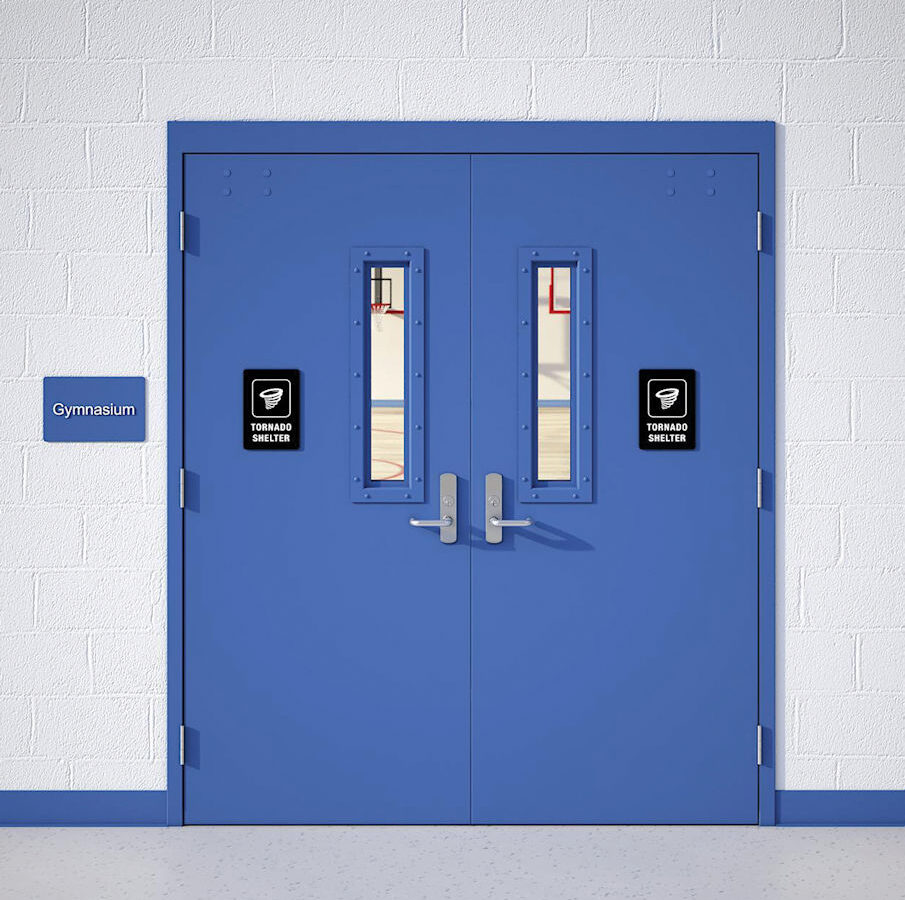
A tornado-rated door — sometimes referred to as a wind-rated or storm shelter door — is a door assembly that has been tested and certified to withstand the extreme wind pressures and wind-borne debris impacts associated with tornado events. These are not standard commercial doors with a heavier gauge. They are purpose-engineered assemblies designed to perform under conditions that would destroy a conventional door opening.
The testing standard for tornado shelter doors is ICC 500, the ICC/NSSA Standard for the Design and Construction of Storm Shelters. Under this standard, doors used in designated storm shelters must pass a wind pressure test and a debris impact test — the latter of which involves a 15-pound 2×4 piece of lumber fired at the door at 100 miles per hour to simulate the kind of wind-borne debris a tornado generates. A door assembly that passes this test earns its certification. One that hasn't been tested and certified to this standard does not belong on a designated storm shelter opening, regardless of how substantial it looks.
When Are Tornado-Rated Doors Required?
The requirement for tornado-rated doors is tied directly to whether a space is designated as a storm shelter or safe room under the applicable building code. Not every commercial building in Nebraska requires tornado-rated doors — but certain occupancy types and building programs do trigger the requirement.
ICC 500 and FEMA P-361, the federal guideline for safe rooms, both address when storm shelter construction is required or recommended. In Nebraska, the most common applications where tornado-rated doors come into play include the following.
K-12 schools are the most significant category in Nebraska. Following a series of devastating school tornado events nationally, there has been strong legislative and regulatory momentum toward requiring designated storm shelters in new school construction. Many Nebraska school districts now incorporate FEMA-compliant storm shelters into new building programs, which means tornado-rated doors on shelter openings.
Community centers, recreation facilities, and large assembly occupancies that serve as designated public shelters during tornado events also require shelter-grade construction including tornado-rated doors on shelter areas.
Mobile home parks and manufactured housing communities are required in many jurisdictions to provide accessible community storm shelters — another application where tornado-rated assemblies are the specification.
Healthcare facilities, particularly those in areas of high tornado risk, increasingly incorporate storm shelter areas into facility design for patient and staff protection.
If your project involves any designated shelter area — whether required by code or included as a design feature — the doors on that shelter need to meet ICC 500 requirements. This is not an area where substitutions or equivalents are appropriate.
What Makes These Doors Different
Tornado-rated door assemblies differ from standard commercial doors in several important ways that contractors need to understand before they arrive on the job site.
The door itself is significantly heavier and more robust than a standard hollow metal door. The steel gauges are heavier, the internal reinforcement is more substantial, and the door is engineered as part of a complete tested assembly — meaning the door, frame, hardware, and anchorage all work together as a system. You cannot take a certified tornado door and install it in a standard hollow metal frame and maintain the shelter rating. The entire assembly has to be installed as tested and certified.
The frame anchorage requirements are also substantially more demanding than standard commercial frame installation. Tornado shelter frames are anchored to resist the extreme lateral loads a tornado event generates — which means the structural connection between the frame and the wall assembly is a critical part of the installation. This is not something to improvise in the field.
Hardware on tornado-rated doors is also specific to the assembly. The door must be capable of being secured from the inside by shelter occupants, and the hardware has to be part of the tested and listed assembly. Substituting non-listed hardware on a tornado shelter door is not acceptable.
Planning Ahead for Tornado Door Projects
Tornado-rated door assemblies are specialty products with longer lead times than standard commercial doors. They are not items that can be ordered at the last minute when a project is ready to close in. If your project includes designated shelter areas, tornado doors need to be on the radar early — during design development and certainly before the construction documents are finalized.
MDH works with contractors on projects that include tornado shelter requirements across Nebraska. We can help identify the right certified assemblies for the application, make sure the specification is consistent with ICC 500 requirements, and coordinate the lead time planning that these specialty products require.
Nebraska's severe weather season doesn't wait for a project to be ready. Neither should the planning for the doors that protect the people inside.
If your next project includes a storm shelter or safe room designation, reach out to our team early. We're glad to help you get the specification right from the start.
Start Your Build
Got a project? We'll bring frames, doors, hardware, and the expertise to keep every opening on schedule.