
Introduction
Restroom design must prioritize user comfort and satisfaction, transcending mere aesthetics. As public facilities evolve, they must address growing user expectations for privacy and comfort. The design of bathroom wall partitions becomes essential in this context. This article will highlight best practices in bathroom partition design, focusing on strategies that enhance user experience while addressing privacy concerns and facility management challenges. Addressing these design challenges is essential for enhancing user experience and ensuring effective facility management.
Ensure Privacy in Bathroom Partition Design
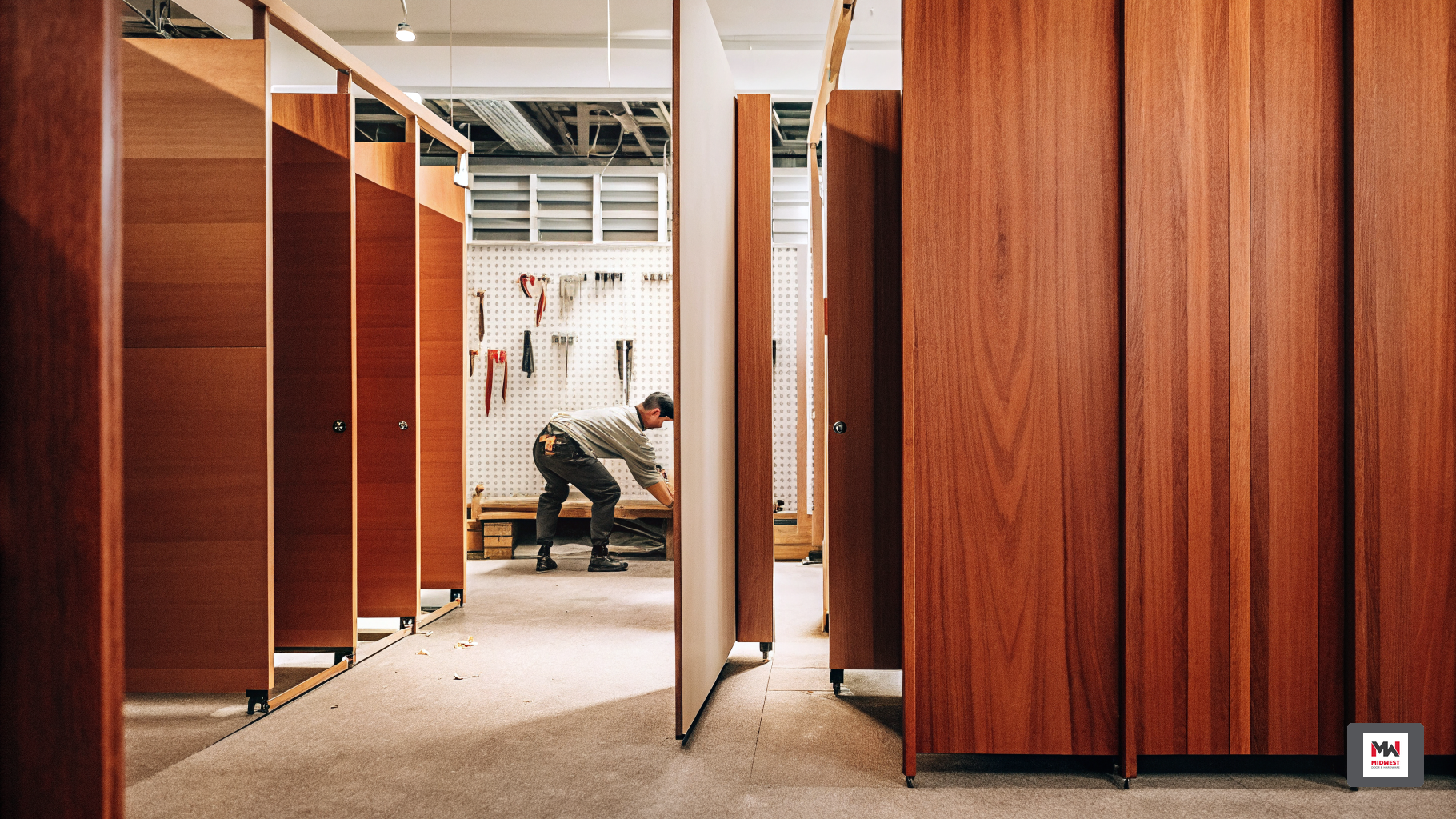
In high-traffic areas, privacy concerns can lead to discomfort and dissatisfaction among users, making the design of restroom layouts critical. To ensure optimal privacy in bathroom layout design, a bathroom wall partition that extends from floor to ceiling is essential. This design significantly minimizes sightlines, creating a more enclosed and secure environment.
Opting for materials such as solid plastic or phenolic barriers not only boosts durability but also helps keep noise levels down, leading to a more serene restroom experience. For instance, solid plastic dividers are made from recycled materials, which makes them a more eco-friendly choice. Overlapping door designs further eliminate gaps that could jeopardize confidentiality.
Significant applications can be observed in contemporary public facilities at airports and shopping centers, where bathroom wall partitions have been effectively employed to enhance user confidentiality and comfort. Additionally, high-quality toilet dividers typically range from $615 to $1500 per stall, a factor that contractors should keep in mind when budgeting for projects.
Using sound-insulating materials, like those found in high confidentiality systems, can further enhance the bathroom experience by reducing noise distractions. Expert insights from producers highlight that a bathroom wall partition enhances confidentiality while also contributing to a more visually appealing atmosphere, making it a worthwhile investment for any commercial restroom. Investing in full-height dividers not only addresses privacy concerns but also elevates the overall restroom experience for users.

Minimize Gaps for Enhanced User Experience
To enhance privacy in bathroom wall partitions, selecting designs that incorporate features like privacy strips and overlapping panels is essential. Privacy strips, which are full-height T-shaped brackets placed along the edges of doors and panels, create a seamless barrier that prevents visibility into stalls, greatly improving comfort for individuals. Proper alignment during installation is crucial. Adjustable mounting brackets help achieve precise positioning, especially in older buildings with uneven floors.
Comprehensive installation support services are available, including:
- Pre-installation hardware setup
- Material staging
- Field installation to ensure attention to detail
Case studies from various commercial facilities demonstrate that these strategies not only elevate the visual appeal but also significantly improve user satisfaction by effectively addressing privacy concerns.

Implement Effective Occupancy Indicators
Implementing effective occupancy indicators in public facilities is crucial for enhancing visitor experience and operational efficiency. For example, LED lights can change color based on stall occupancy.
- Green lights show availability, while red lights indicate that a stall is occupied.
- Furthermore, integrating intelligent occupancy sensors that automatically detect when a stall is occupied can streamline facility management.
- These systems can link to a central display outside the bathroom, enabling individuals to verify stall availability before entering.
- Facilities using these technologies have seen shorter wait times and higher satisfaction among users, demonstrating how these innovations can enhance user experience in commercial bathrooms.
- Significantly, a study uncovered that the sink in a public washroom contained 50,000 bacterial colony counts, highlighting the importance of cleanliness and the role of occupancy indicators in managing hygiene.
- Additionally, case studies, such as the implementation of Sunpn Smart Public Toilet Occupancy Indicator Lights in office buildings, illustrate real-world applications and outcomes of these technologies.
- The implementation of LED occupancy indicators not only enhances comfort for individuals but also contributes to efficient restroom management, making them a valuable addition to modern facilities.
- To fully realize the benefits of these systems, ongoing maintenance and user education are vital.

Incorporate Security Features in Design
Vandalism and unauthorized access pose significant risks in educational facilities, making the incorporation of security features into bathroom divider design essential. Using tamper-proof hardware, such as security screws and locks, can deter these threats, aligning with best practices in school security.
Selecting durable materials, such as stainless steel or high-density polyethylene (HDPE), is crucial for enhancing the longevity of partitions, as recommended by Midwest Door & Hardware for educational facilities. Additionally, installing features like anti-ligature hardware can improve safety in facilities serving vulnerable populations.
Many modern schools and hospitals have adopted these security measures, including the installation of bathroom wall partitions, to create safer restroom environments. Regular maintenance checks are essential to ensure all security features function correctly, thereby enhancing user safety and supporting the operational flexibility advocated by Midwest Door & Hardware.

Conclusion
Effective bathroom wall partition design is crucial for enhancing user experience and ensuring privacy and security in restroom facilities. Implementing full-height dividers, sound-insulating materials, and occupancy indicators can significantly enhance comfort and confidentiality in restroom environments. These design choices address immediate user needs while also contributing to the overall functionality and appeal of the space.
Key insights discussed include:
- The importance of minimizing sightlines through proper partition height
- The use of privacy strips to eliminate gaps
- The integration of technology like occupancy indicators to streamline restroom management
- Incorporating security features such as tamper-proof hardware to ensure safety and longevity, particularly in high-traffic areas like schools and public facilities
Each of these elements plays a crucial role in fostering a pleasant restroom experience while maintaining essential privacy and security standards.
This commitment to design not only enhances user experience but also streamlines facility management. As facilities strive to meet modern expectations, embracing these best practices will significantly elevate user comfort and operational efficiency in restroom environments. By prioritizing these design considerations, contractors and facility managers can stay informed about the latest trends and technologies in bathroom partition design.
Frequently Asked Questions
Why is privacy important in bathroom partition design?
Privacy is crucial in bathroom design to prevent discomfort and dissatisfaction among users, especially in high-traffic areas.
What type of bathroom wall partition is recommended for optimal privacy?
A bathroom wall partition that extends from floor to ceiling is recommended as it significantly minimizes sightlines, creating a more enclosed and secure environment.
What materials are suggested for bathroom partitions to enhance durability and noise reduction?
Solid plastic and phenolic barriers are suggested as they boost durability and help keep noise levels down, leading to a more serene restroom experience.
Are there eco-friendly options for bathroom partitions?
Yes, solid plastic dividers are made from recycled materials, making them a more eco-friendly choice.
How do overlapping door designs contribute to privacy?
Overlapping door designs eliminate gaps that could jeopardize confidentiality, enhancing the overall privacy of the restroom.
Where are bathroom wall partitions commonly used?
Bathroom wall partitions are commonly used in contemporary public facilities such as airports and shopping centers to enhance user confidentiality and comfort.
What is the typical cost range for high-quality toilet dividers?
High-quality toilet dividers typically range from $615 to $1500 per stall.
How can sound-insulating materials improve the bathroom experience?
Sound-insulating materials can reduce noise distractions, further enhancing the bathroom experience by creating a more peaceful environment.
What benefits do full-height dividers provide in commercial restrooms?
Full-height dividers address privacy concerns and elevate the overall restroom experience for users, contributing to a more visually appealing atmosphere.
List of Sources
- Ensure Privacy in Bathroom Partition Design
- accessories.toiletpartitions.com (https://accessories.toiletpartitions.com/6-benefits-of-solid-plastic-toilet-partitions)
- partitionplus.com (https://partitionplus.com/high-privacy-partitions?srsltid=AfmBOori4umMEqrmNWXy5tEzbFxwfqLP8-Z_cU8VZJiejpsU1dV8WTwY)
- High Privacy Toilet Partitions: Privacy by Design for Modern Restrooms (https://asi-globalpartitions.com/high-privacy-toilet-partitions-privacy-by-design-for-modern-restrooms)
- berls.com (https://berls.com/blog/types-of-bathroom-partitions?srsltid=AfmBOoqt4MKuOhRehISegGZ6Axu3XOFbmOFdGAO8XabYWZp_pskTklxH)
- holman-inc.com (https://holman-inc.com/the-growing-demand-for-high-privacy-toilet-partitions-in-modern-restrooms)
- Minimize Gaps for Enhanced User Experience
- laforceinc.com (https://laforceinc.com/blog/bathroom-stall-privacy-options)
- manningmaterialsinc.com (https://manningmaterialsinc.com/recent-privacy-toilet-partition-trends)
- onepointpartitions.com (https://onepointpartitions.com/products/hardware/privacy-strips?srsltid=AfmBOoqV4qtCctQuPmGuNYTschb6O43QDhHxZkPEq0t-sLRDg_DrTF8S)
- scrantonproducts.com (https://scrantonproducts.com/demand-to-improve-toilet-compartment-privacy)
- Implement Effective Occupancy Indicators
- biocote.com (https://biocote.com/case-studies/public-bathroom-case-study)
- eeworldonline.com (https://eeworldonline.com/how-do-restrooms-get-smarter)
- sunpntech.com (https://sunpntech.com/product/smart-public-restroom-occupancy-indicator-lights.html)
- idighardware.com (https://idighardware.com/2021/03/wwyd-single-user-restrooms)
- Incorporate Security Features in Design
- lloydworrall.co.uk (https://lloydworrall.co.uk/about-us/latest-news/top-5-benefits-of-well-designed-anti-ligature-ironmongery)
- hfmmagazine.com (https://hfmmagazine.com/articles/3897-safeguarding-against-ligature-risks)
- kingswaygroupglobal.com (https://kingswaygroupglobal.com/what-is-anti-ligature-explanation-and-guide)
- choicebuildersolutions.com (https://choicebuildersolutions.com/blogs/blogs/how-anti-ligature-mirrors-boost-safety-in-public-restrooms?srsltid=AfmBOopca8sFsSWK3ZmDZOsfyT0witlpN3_NpYjovm_pVaUPPCTOl9WT)
Related News
Check out more of what we’ve worked on.