

Introduction
Selecting the right materials and techniques for commercial door framing is essential for ensuring safety, durability, and compliance with industry standards. We’ll explore best practices contractors can adopt to improve the efficiency and longevity of door installations.
Contractors often face challenges in selecting the right materials and techniques due to the complexity of industry standards and regulations. By implementing these strategies, contractors can enhance safety and compliance while ensuring efficient installations.
Select Appropriate Materials and Specifications
Choosing the appropriate materials for commercial door framing is essential for ensuring safety, durability, and compliance.
- Material Types: The primary materials used are steel, aluminum, and wood. Steel frames are favored for their exceptional durability and security, particularly in high-traffic environments. Aluminum, being lightweight and corrosion-resistant, is ideal for exterior applications. Wood, although visually appealing, requires more upkeep to guarantee longevity.
- Specifications: Ensure that materials comply with industry standards such as ANSI and ASTM. For instance, hollow metal entries must meet SDI standards to ensure strength and fire resistance, which is essential for safety and compliance.
- Environmental Considerations: Evaluate the installation environment carefully. In humid conditions, prioritize materials that resist moisture damage, such as galvanized steel or treated wood, to prevent deterioration over time.
- Fire Ratings: If fire resistance is a requirement, confirm that both the entry and structure adhere to necessary fire ratings as outlined by NFPA 80 guidelines. Hollow metal entries can be fire-rated for up to three hours, making them appropriate for various uses where safety is essential.
Ultimately, informed material choices lead to safer, more reliable commercial door framing that stands the test of time.

Implement Proper Installation Techniques
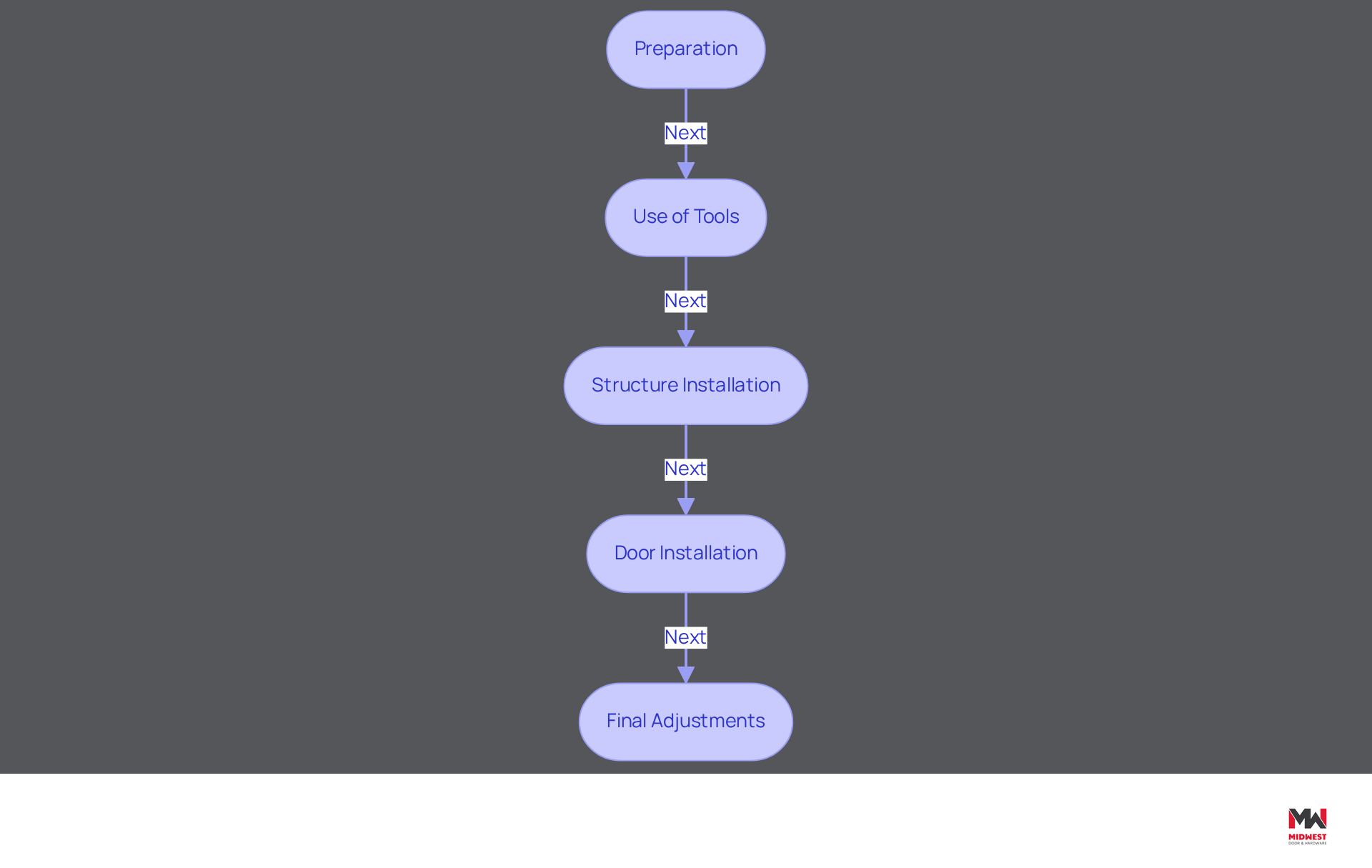
To achieve optimal performance in commercial door frame installations, adherence to best practices is essential:
- Preparation: Before setup, verify that the rough opening is square and level. This is crucial for proper alignment. Remove any obstructions and ensure the area is clean, as even minor debris can lead to misalignment and operational issues. Thorough preparation is vital for a successful setup. At Midwest Door & Hardware, we emphasize the importance of pre-setup checks to ensure everything is in order.
- Use of Tools: Utilize high-quality tools such as levels, shims, and measuring tapes to ensure accuracy. A laser level can assist in attaining accurate alignment, which is crucial since incorrect setup can result in expensive repairs and downtime. Using professional-grade tools can significantly improve the accuracy of your installation process.
- Structure Installation: Start by securing the structure in the rough opening. Use shims to adjust the structure until it is plumb and square. Securely attach the structure to the wall studs using appropriate fasteners. Proper installation methods can prevent costly errors in commercial door framing and ensure frames are set up efficiently, averting up to 89% of possible failures during peak usage periods.
- Door Installation: Start by securing the top hinge, then the bottom hinge. This approach helps maintain alignment and simplifies adjustments, ensuring that the entrance operates smoothly and efficiently. Our setup services encompass professional help in hanging entrances to ensure optimal performance.
- Final Adjustments: After installation, check the operation of the entrance. Ensure it opens and closes smoothly without binding. Adjust hinges as necessary to achieve the desired fit. Regular checks can prevent 73% of failures during busy times, emphasizing the importance of thorough final adjustments. Research indicates that most commercial entryway failures occur during peak hours, particularly between 9 AM and 5 PM, when equipment is under the most stress. Midwest Door & Hardware offers continuous assistance and upkeep services to help contractors maintain entries functioning optimally.
By following these assembly methods and utilizing the extensive assistance provided by Midwest Door & Hardware, contractors can reduce problems and guarantee that the commercial door framing operates optimally from the outset, ultimately improving project efficiency and client satisfaction. Considering the projected six-week timeline for commercial door framing setups in 2026, timely adherence to these practices is critical for project success.
Ensure Compliance with Safety Regulations and Building Codes
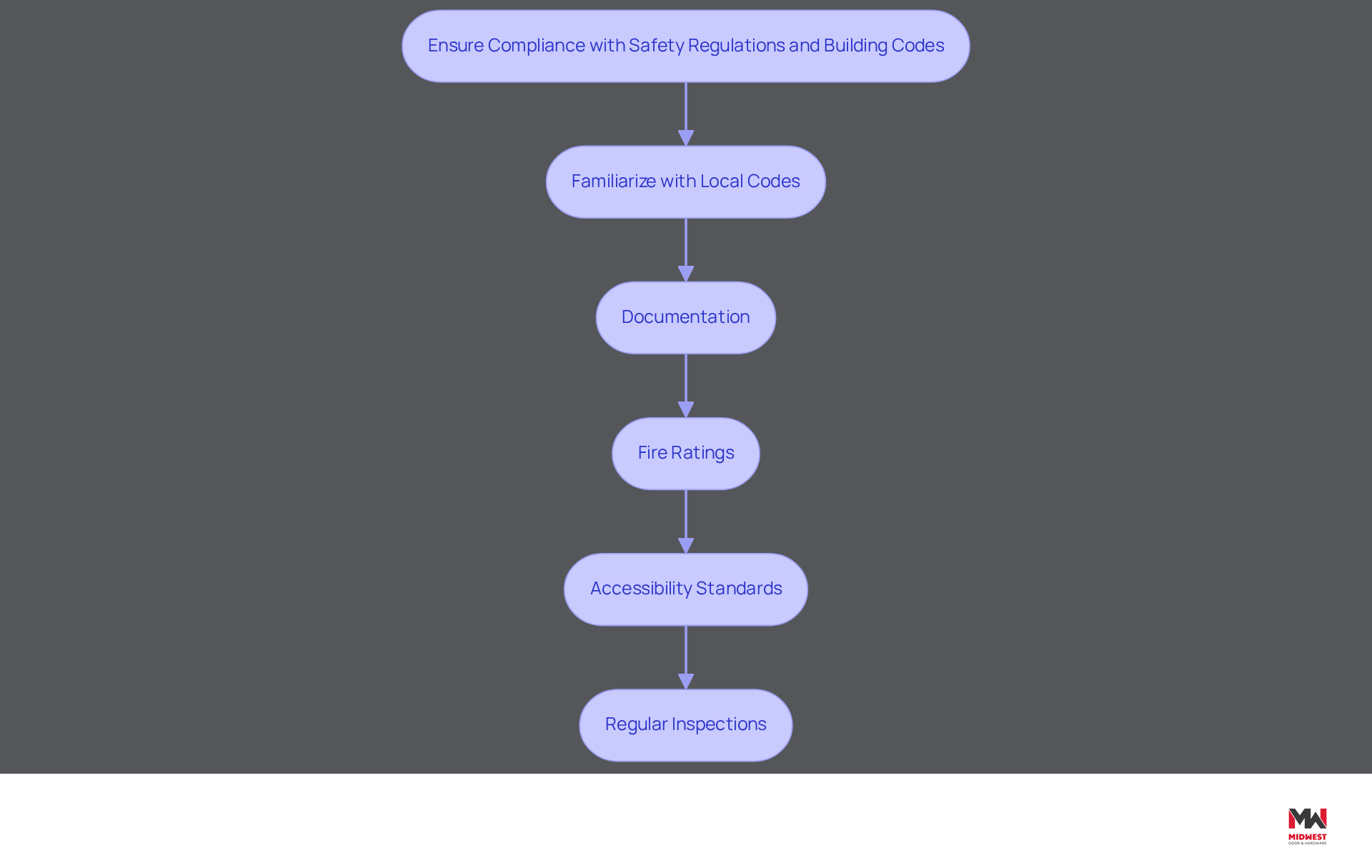
To ensure compliance with safety regulations and building codes, contractors must adopt a systematic approach:
- Familiarize with local codes, as understanding local building codes is essential for commercial door framing. This includes fire safety codes, accessibility standards mandated by the Americans with Disabilities Act (ADA), and structural integrity requirements. Midwest Door & Hardware (MDH) provides valuable insights and resources to help contractors navigate these regulations effectively, ensuring they receive honest bids and responsive communication throughout the process.
- Documentation: Maintaining thorough documentation of all materials and installation processes is crucial. This documentation acts as essential evidence during inspections and assists in maintaining compliance with regulations. MDH highlights how crucial proper documentation is for supporting contractors in compliance efforts, reinforcing their commitment to responsive communication.
- Fire Ratings: Verify that all entrances and frames meet the necessary fire ratings. Proper labeling and documentation confirming compliance with National Fire Protection Association (NFPA) standards are essential to ensure safety and regulatory adherence. This statistic highlights the difficulties contractors encounter in meeting fire safety compliance. MDH's expertise in commercial door framing can assist contractors in selecting the right products that meet these critical standards, ensuring they receive honest bids that reflect the quality of the materials.
- Accessibility Standards: Compliance with ADA requirements is critical. This includes ensuring that entry widths provide a minimum clear width of 32 inches when opened 90 degrees, hardware is mounted no higher than 48 inches from the floor, and that openings can be operated with one hand without tight grasping or twisting. As Dominic Anderson highlights, 'Ensuring your entryway meets the latest building code requirements is vital for safety, accessibility, and compliance.' MDH supports contractors by offering tailored solutions that meet these accessibility standards, demonstrating their commitment to responsive communication.
- Regular Inspections: Schedule regular inspections to maintain compliance with safety standards. These inspections should assess wear and tear that could compromise safety and functionality, as neglecting maintenance can lead to significant safety hazards and costly penalties. Emergency repairs can cost between $500 and $1,200, underscoring the financial implications of neglecting compliance. By partnering with MDH, contractors can implement proactive maintenance programs that enhance compliance and safety. This partnership reflects MDH's commitment to providing honest bids that accurately represent the costs of maintaining safety.
By prioritizing these compliance measures, contractors can enhance safety and mitigate the financial risks associated with non-compliance, including potential fines and operational disruptions. Ultimately, a proactive approach to compliance not only safeguards safety but also protects the bottom line.
Establish Maintenance and Adjustment Protocols
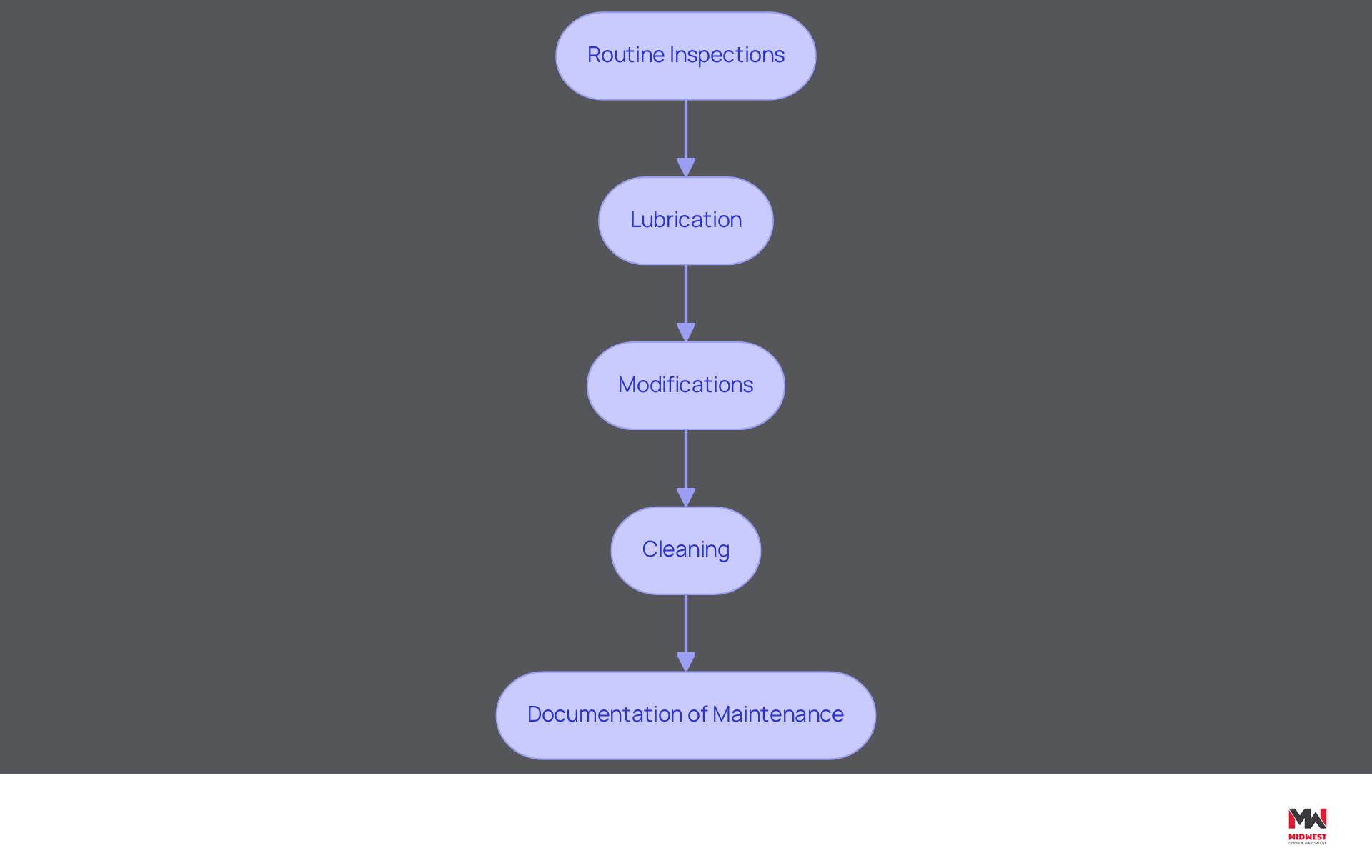
To ensure the longevity and functionality of commercial door frames, robust maintenance protocols are not just beneficial; they are essential:
- Routine Inspections: Conduct regular examinations of entry frames and hardware to identify signs of wear, misalignment, or damage. Look for rust, loose screws, and worn-out seals. Regular inspections can prevent up to 89% of automatic door-related injuries. This underscores their critical role in maintaining safety and functionality. Additionally, buildings with professional maintenance see 67% fewer fire-rated door failures than those without, highlighting the importance of routine checks.
- Lubrication: Regularly lubricate hinges and moving parts to ensure smooth operation. Use appropriate lubricants that do not attract dust and debris, as this can prolong the lifespan of the components.
- Modifications: Make necessary modifications to hinges and structures to maintain proper alignment. This may involve tightening screws or using shims to correct any misalignment, which is crucial for preventing premature wear and ensuring optimal performance.
- Cleaning: Maintain the edges of entrances free from dust and debris. For outer structures, verify that weather stripping is intact and operating to prevent moisture entry, which can cause considerable harm over time.
- Documentation of Maintenance: Keep a log of all maintenance activities, including inspections, repairs, and adjustments. This documentation can be useful for warranty claims and future reference, ensuring accountability and thoroughness in maintenance practices.
Routine maintenance can catch issues before they escalate, preventing citations and ensuring compliance. By implementing these maintenance protocols, contractors can ensure that the commercial door framing for entrances remains functional and visually appealing for years to come. Keeping up with regular maintenance boosts the performance of commercial door framing and can extend its lifespan, ultimately saving on repair and replacement costs.
Conclusion
Neglecting proper practices in commercial door framing can lead to safety hazards and costly errors. Using the right materials and installation techniques is essential for compliance and longevity in door framing. Contractors who focus on these best practices will see improved reliability and functionality in their door systems, contributing to a safer environment for all users.
Choosing the right materials - like steel or aluminum - while meeting industry standards is key to effective door framing. Thorough preparation and precise adjustments during installation can prevent costly errors and ensure smooth operation. Understanding safety regulations and maintaining comprehensive documentation are essential for compliance and operational efficiency. Regular maintenance and timely inspections further safeguard the integrity of door frames, reducing the risk of failures and enhancing overall performance.
Ultimately, the commitment to these best practices will not only safeguard investments but also elevate the standards of safety and performance in commercial door systems.
Frequently Asked Questions
What are the primary materials used for commercial door framing?
The primary materials used for commercial door framing are steel, aluminum, and wood.
What are the advantages of using steel frames?
Steel frames are favored for their exceptional durability and security, particularly in high-traffic environments.
Why is aluminum a suitable choice for exterior applications?
Aluminum is lightweight and corrosion-resistant, making it ideal for exterior applications.
What are the maintenance considerations for wood frames?
Wood frames are visually appealing but require more upkeep to guarantee longevity.
What industry standards should materials comply with?
Materials should comply with industry standards such as ANSI and ASTM. For example, hollow metal entries must meet SDI standards to ensure strength and fire resistance.
How should the installation environment influence material selection?
The installation environment should be evaluated carefully; in humid conditions, materials that resist moisture damage, such as galvanized steel or treated wood, should be prioritized to prevent deterioration.
What are fire ratings, and why are they important?
Fire ratings indicate the fire resistance of materials. It is important to confirm that both the entry and structure adhere to necessary fire ratings as outlined by NFPA 80 guidelines.
How fire-rated can hollow metal entries be?
Hollow metal entries can be fire-rated for up to three hours, making them appropriate for various uses where safety is essential.
List of Sources
- Select Appropriate Materials and Specifications
- Choosing the Right Commercial Door (https://tellmfg.com/articles/choosing-the-right-commercial-door)
- Hollow Metal Manufacturers Association National Association of Architectural Metal Manufacturers (https://naamm.org/division/news/5)
- Case Studies & Completed Projects | Door Control Services (https://doorcontrolservices.com/about-us/case-study-library)
- (PDF) Case study for work structuring: Installation of metal Door Frames (https://researchgate.net/publication/228946168_Case_study_for_work_structuring_Installation_of_metal_Door_Frames)
- aprodoor.com (https://aprodoor.com/guide-to-commercial-exterior-doors)
- Implement Proper Installation Techniques
- Case Studies - Industrial Door Company (https://industrialdoorcompany.com/case-studies)
- (PDF) Case study for work structuring: Installation of metal Door Frames (https://researchgate.net/publication/228946168_Case_study_for_work_structuring_Installation_of_metal_Door_Frames)
- 5 Surprising Stats About Commercial Door Services Failures That Every Property Owner Should Know (https://ohdctexoma.com/5-surprising-stats-about-commercial-door-services-failures-that-every-property-owner-should-know)
- stainlessdoors.com (https://stainlessdoors.com/case-studies)
- Commercial Door Installation | Steel Door Institute (https://steeldoor.org/english-install-commercial-steel-door)
- Ensure Compliance with Safety Regulations and Building Codes
- 5 Surprising Stats About Commercial Door Services Failures That Every Property Owner Should Know (https://ohdctexoma.com/5-surprising-stats-about-commercial-door-services-failures-that-every-property-owner-should-know)
- Important Building Code Laws for Commercial Entry Doors (https://cdfdistributors.com/blog/post/important-building-code-laws-for-commercial-entry-doors)
- Fire Door Requirements (https://vortexdoors.com/blog/fire-door-requirements)
- neuroject.com (https://neuroject.com/2026-construction-regulation)
- northwestfiredoors.com (https://northwestfiredoors.com/blog/categories/fire-door-case-studies)
- Establish Maintenance and Adjustment Protocols
- Commercial Door Maintenance: The Complete Preventive Maintenance Guide for Nashville Businesses (https://nashvilledoorcloser.com/commercial-door-maintenance-the-complete-preventive-maintena)
- Case Studies & Completed Projects | Door Control Services (https://doorcontrolservices.com/about-us/case-study-library)
- Case Studies - Industrial Door Company (https://industrialdoorcompany.com/case-studies)
- In HelloNation, San Diego Engineering Expert Matthew Foley, PE, Highlights the Importance of Annual Fire Door Inspections (https://prnewswire.com/news-releases/in-hellonation-san-diego-engineering-expert-matthew-foley-pe-highlights-the-importance-of-annual-fire-door-inspections-302682969.html)
- 5 Surprising Stats About Commercial Door Services Failures That Every Property Owner Should Know (https://ohdctexoma.com/5-surprising-stats-about-commercial-door-services-failures-that-every-property-owner-should-know)
Related News
Check out more of what we’ve worked on.