
Introduction
Choosing the right materials and installation techniques for public bathroom partitions is essential for ensuring functionality and user satisfaction. This article explores four best practices that enhance the durability and aesthetic appeal of restroom facilities while prioritizing user privacy and compliance with safety standards. Contractors must navigate these choices carefully to enhance both the user experience and compliance with safety standards.
Evaluate Material Options and Design Considerations
Selecting the right materials for public bathroom partitions is essential for ensuring durability and ease of maintenance in high-traffic environments. The most common options include:
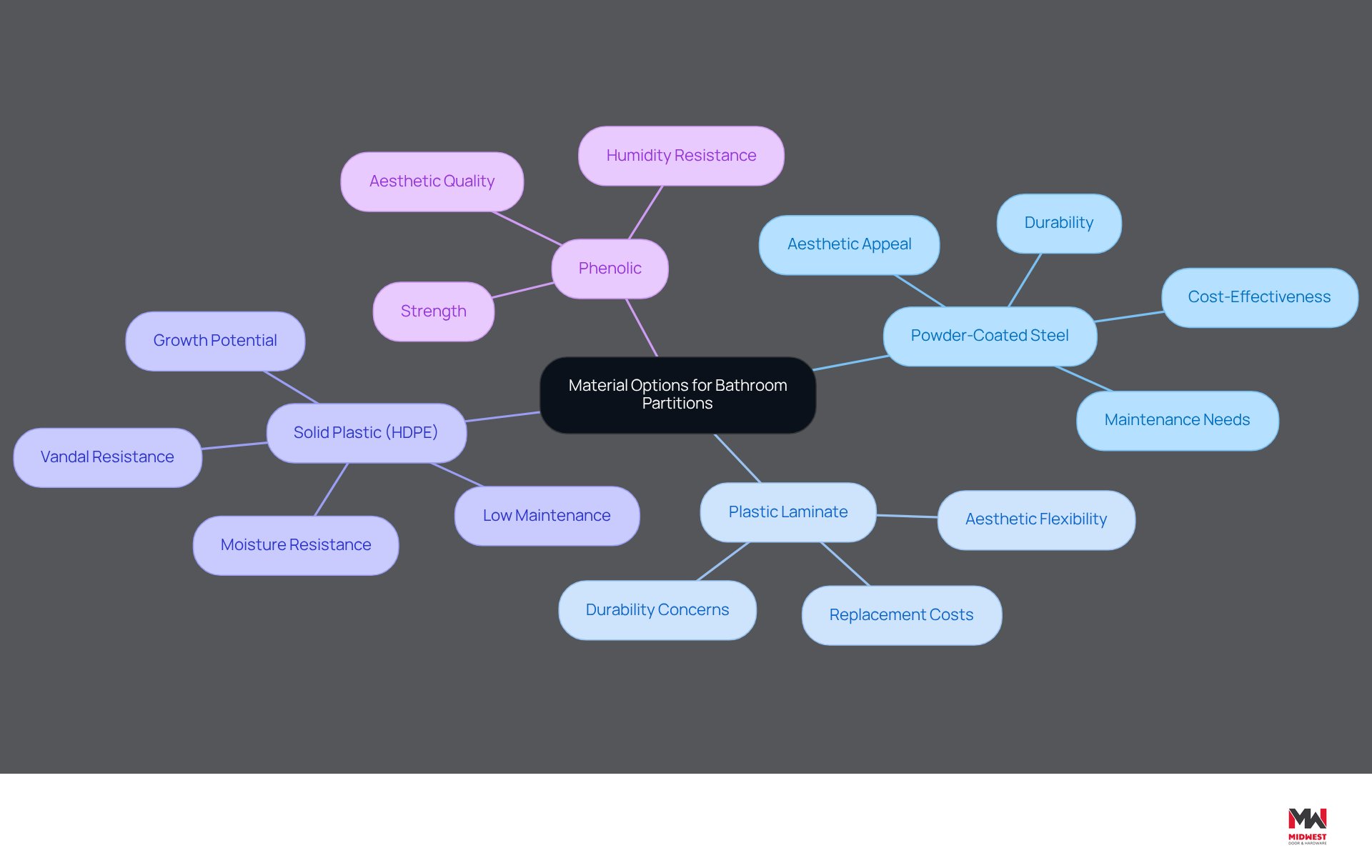
- Powder-Coated Steel: This cost-effective and versatile choice is ideal for high-traffic areas, striking a balance between durability and aesthetic appeal. It typically outlasts plastic laminate options, which may require more frequent replacements due to wear and tear.
- Plastic Laminate: Known for its wide array of colors and patterns, plastic laminate offers aesthetic flexibility, making it suitable for various design themes. However, it may not withstand the demands of high-traffic areas as effectively as other materials, leading to increased replacement costs.
- Solid Plastic (HDPE): Highly resistant to moisture and vandalism, solid plastic is a durable choice that endures the rigors of public use. This material is projected to see significant growth in the coming years, driven by advancements in resin technology and a rising demand for low-maintenance options.
- Phenolic: Renowned for its strength and humidity resistance, phenolic is often selected for upscale environments where durability and aesthetics are paramount.
Design considerations should also focus on the arrangement of the dividers to maximize space and privacy. Aligning the design with the overall restroom aesthetic while meeting functional requirements is crucial. For instance, public bathroom partitions, such as full-height dividers, not only enhance privacy but also reduce noise, making them a favored option in many public facilities.
In terms of lifespan, powder-coated steel partitions generally last longer than plastic laminate options, which may require more frequent replacements due to wear and tear. Moisture-resistant materials, such as solid plastic and phenolic, are particularly advantageous in environments prone to high humidity, ensuring longevity and reducing maintenance needs. Furthermore, integrating touchless fixtures can improve cleanliness and visitor experience, aligning with contemporary washroom design trends. By carefully evaluating these considerations, contractors can significantly enhance the functionality and longevity of public bathroom partitions in restroom installations.
Prioritize Privacy and Compliance Standards
Ensuring privacy in public restroom design is not just a matter of comfort; it is essential for upholding the dignity of all users. To achieve this, consider the following best practices:
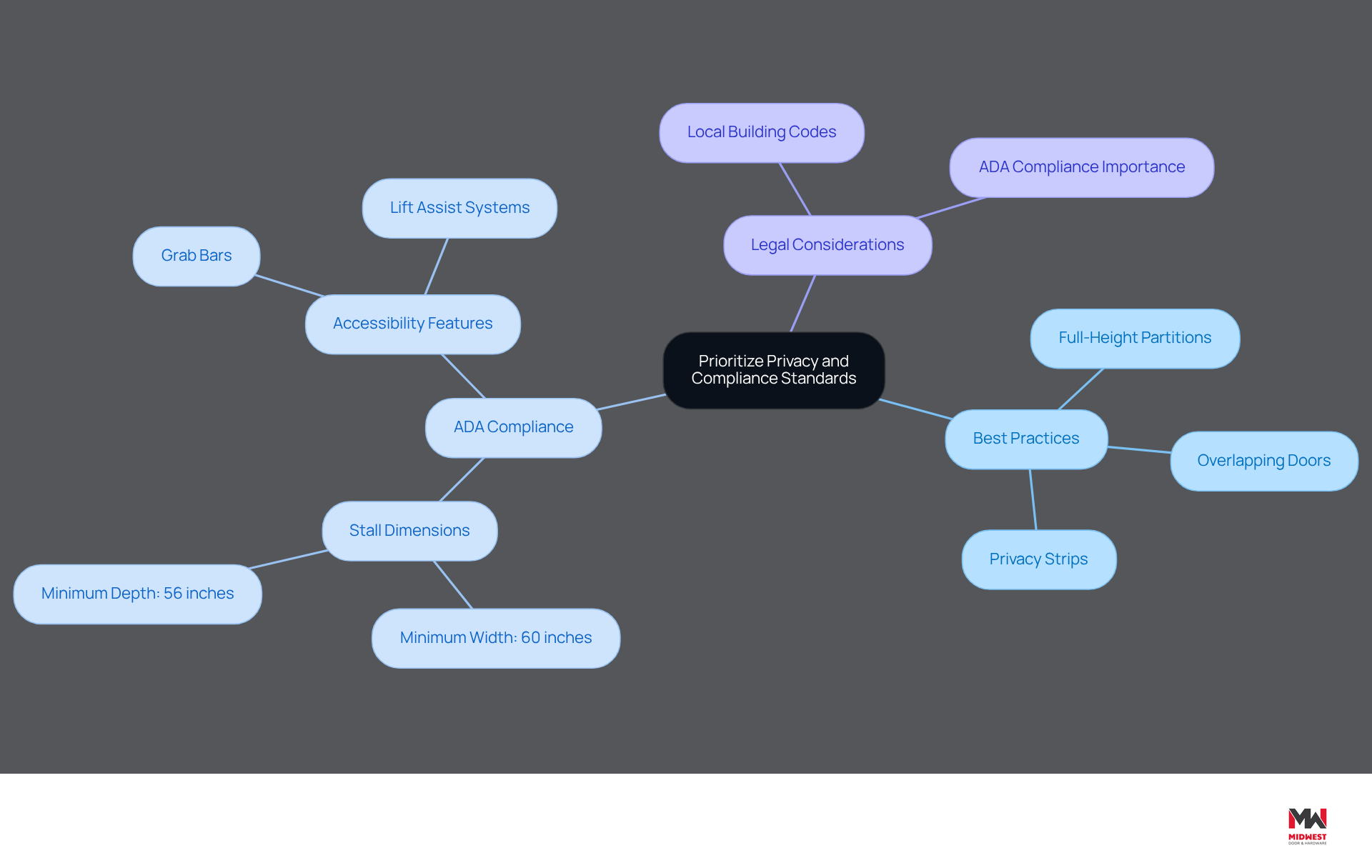
- Full-Height Partitions: These partitions eliminate gaps at the top and bottom, ensuring maximum privacy for users.
- Overlapping Doors: Incorporating overlapping doors can further enhance privacy by preventing sightlines into stalls.
- Privacy Strips: Installing strips between panels can significantly reduce sightlines, further enhancing the sense of privacy.
- ADA Compliance: It's important to guarantee that at least one stall is accessible, fulfilling the necessary dimensions for individuals using wheelchairs. This includes a minimum width of 60 inches and a depth of 56 inches for standard stalls. If ADA-compliant accommodations aren't in place, individuals with disabilities may face challenges that limit their independence and create safety risks.
Regularly checking local building codes and regulations is crucial to stay compliant. This not only protects individuals but also helps reduce potential legal concerns for facility owners. Additionally, adherence to the Americans with Disabilities Act (ADA) standards is critical, as non-compliance can limit accessibility for individuals with disabilities, posing safety risks and legal challenges. Statistics show that 72% of adults believe that public bathroom partitions don’t offer sufficient personal space protection, highlighting the significance of privacy in facility design. By prioritizing privacy and compliance, contractors can significantly enhance user experience and mitigate potential legal issues.
Implement Effective Installation Techniques
To achieve a successful installation of bathroom partitions, adherence to best practices is essential:
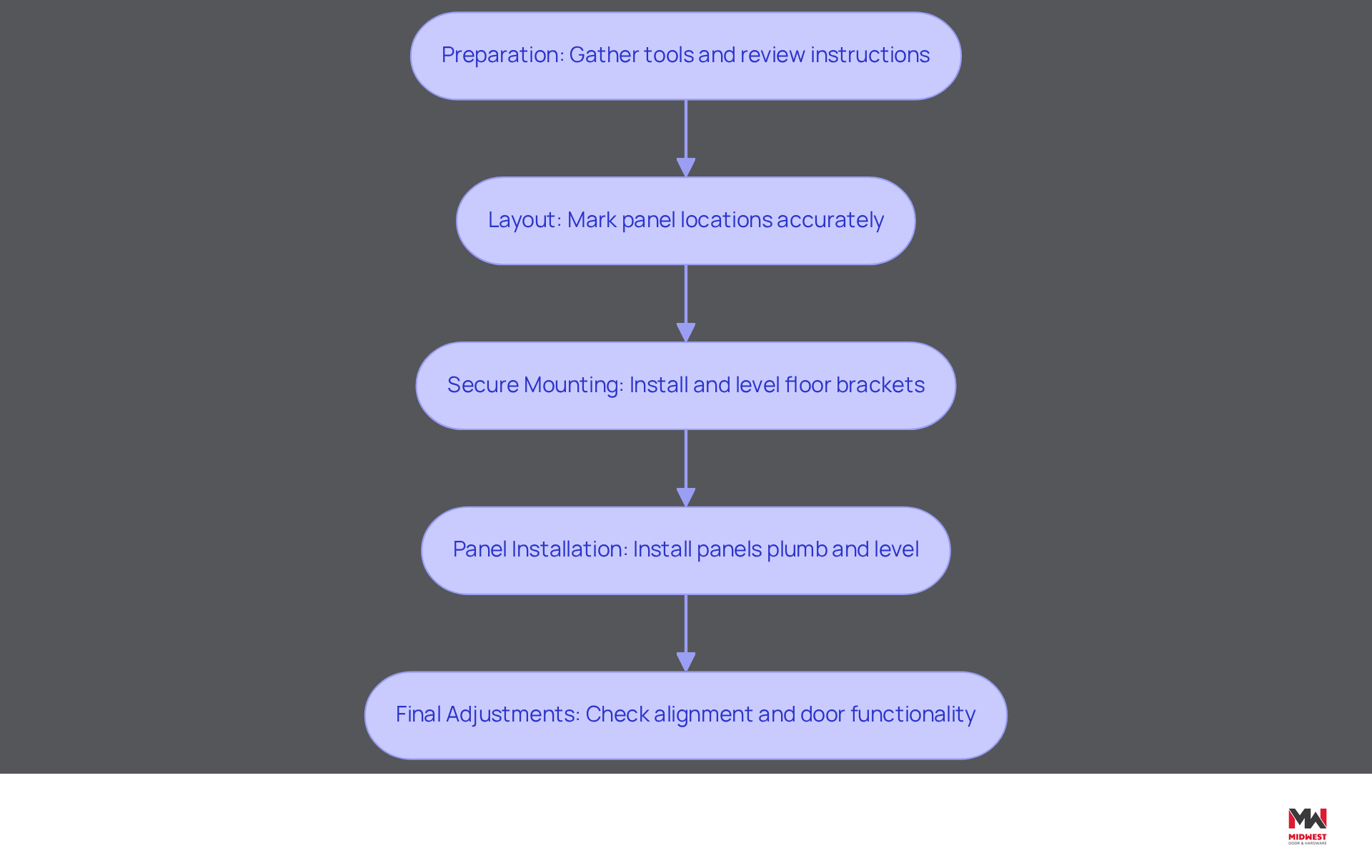
- Preparation: Gather all necessary tools, including a tape measure, drill, and level. Review the installation instructions provided by the manufacturer to familiarize yourself with the specific requirements.
- Layout: Mark the locations for the panels and pilasters based on the shop drawings. Use a chalk line to ensure accuracy in your measurements, as precise layout is crucial for a professional finish.
- Secure Mounting: Install floor brackets and ensure they are anchored securely to the floor. Utilize shims if necessary to achieve level installations. If panels are not installed level, it may result in misalignment and operational challenges.
- Panel Installation: Begin with the end panels and work towards the center. Ensure that each panel of the public bathroom partitions is plumb and level before securing it in place, as this will affect the overall alignment and functionality of the public bathroom partitions.
- Final Adjustments: After all panels are installed, check for alignment and make any necessary adjustments. Ensure that doors open and close smoothly without obstruction, as this enhances user experience and satisfaction.
Alongside these measures, it is crucial to invest in high-quality sanitation amenities, as they enhance customer loyalty and encourage repeat business. For high-traffic areas, consider using durable materials such as phenolic or solid plastic. These materials help deter vandalism and ensure longevity. Moreover, creating recorded upkeep programs for washroom structures is essential for adherence and the durability of the installations.
Midwest Door & Hardware offers comprehensive installation support, including pre-installation services, field assistance, and ongoing maintenance, ensuring that every detail is attended to. When installed correctly, partitions not only meet user expectations but also improve how the facility is perceived, which can positively impact the contractor's reputation and lead to increased business opportunities.
Establish Maintenance and Care Protocols
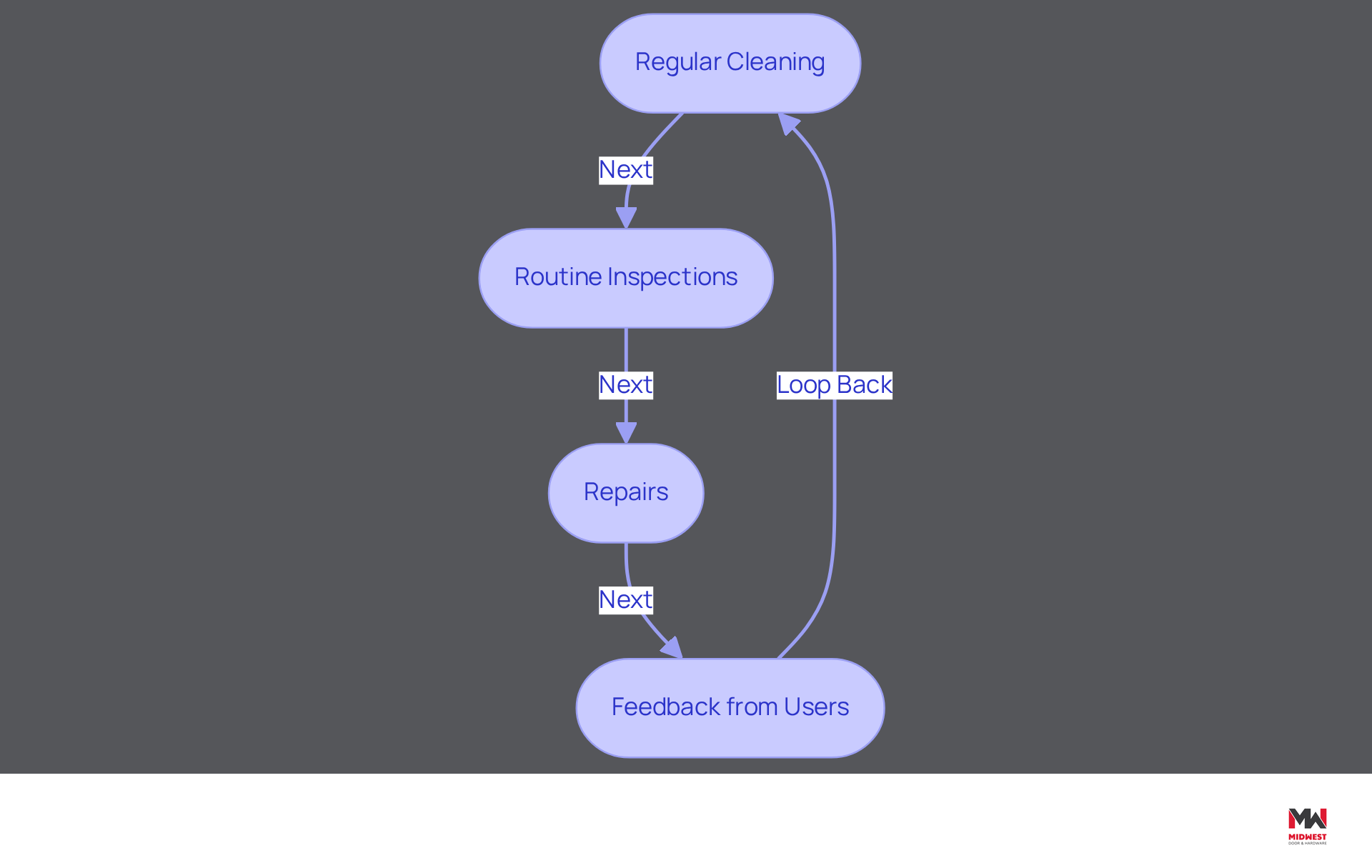
To maintain the quality and appearance of bathroom partitions, facility managers must implement effective care protocols:
- Regular Cleaning: Establish a cleaning schedule based on restroom traffic. Use appropriate cleaning solutions for each material type to avoid damage. For example, avoid abrasive cleaners on plastic laminate surfaces. A 2024 study found that 90% of customers may avoid a business if they find it unsanitary, underscoring the need for cleanliness.
- Routine Inspections: Conduct regular inspections to identify any signs of wear or damage. Address issues promptly to prevent further deterioration. Regular inspections can reduce inspection failures by up to 80%, ensuring that facilities remain compliant with safety standards.
- Repairs: Have a plan in place for minor repairs, such as fixing scratches or replacing damaged panels. This approach keeps the facility looking good and functioning well. Ignoring repairs can hurt a business's reputation and lead to financial losses.
- Feedback from Users: Encourage individuals to report any issues they encounter. This feedback can assist in identifying areas requiring attention and enhance overall customer satisfaction. Using an anonymous feedback tool can make it easier to report issues.
With these maintenance protocols, facility managers can keep the areas around public bathroom partitions clean and welcoming, enhancing the user experience. Prioritizing these protocols can lead to better user satisfaction and smoother operations.
Conclusion
Selecting and installing public bathroom partitions is essential for enhancing user experience and maintaining facility reputation. Contractors can create functional and appealing restroom environments by selecting the right materials, ensuring privacy, complying with standards, and following effective installation and maintenance protocols.
Key insights from this article highlight the importance of choosing durable materials like powder-coated steel, solid plastic, and phenolic, which not only enhance longevity but also reduce maintenance costs. Prioritizing privacy through full-height partitions and overlapping doors is essential for user comfort, while compliance with ADA standards ensures accessibility for all individuals. Effective installation techniques and regular maintenance protocols further contribute to the overall success of restroom facilities.
Investing in quality bathroom partitions and following best practices goes beyond basic compliance; it creates a welcoming and safe environment for all users. Working with reliable suppliers like Midwest Door & Hardware helps facilities ensure their public restrooms are functional and inviting. By prioritizing these practices, facilities can transform their restrooms into spaces that truly reflect their commitment to quality and user satisfaction.
Frequently Asked Questions
What are the common material options for public bathroom partitions?
The common material options include powder-coated steel, plastic laminate, solid plastic (HDPE), and phenolic.
What are the advantages of using powder-coated steel for bathroom partitions?
Powder-coated steel is cost-effective, versatile, and ideal for high-traffic areas, offering a balance between durability and aesthetic appeal. It typically lasts longer than plastic laminate.
What are the characteristics of plastic laminate as a partition material?
Plastic laminate is known for its wide array of colors and patterns, providing aesthetic flexibility. However, it may not withstand high-traffic demands as effectively as other materials, leading to increased replacement costs.
Why is solid plastic (HDPE) considered a durable choice for public bathrooms?
Solid plastic is highly resistant to moisture and vandalism, making it durable for public use. Its projected growth is driven by advancements in resin technology and a rising demand for low-maintenance options.
What makes phenolic a preferred material for upscale environments?
Phenolic is renowned for its strength and humidity resistance, making it an ideal choice for upscale environments where durability and aesthetics are important.
What design considerations should be taken into account for bathroom partitions?
Design considerations should focus on the arrangement of dividers to maximize space and privacy, aligning with the overall restroom aesthetic while meeting functional requirements.
How do full-height dividers enhance public restroom functionality?
Full-height dividers enhance privacy and reduce noise, making them a favored option in many public facilities.
What is the lifespan comparison between powder-coated steel and plastic laminate partitions?
Powder-coated steel partitions generally last longer than plastic laminate options, which may require more frequent replacements due to wear and tear.
Why are moisture-resistant materials important in public bathrooms?
Moisture-resistant materials, such as solid plastic and phenolic, are advantageous in high humidity environments, ensuring longevity and reducing maintenance needs.
How can integrating touchless fixtures improve public bathroom design?
Integrating touchless fixtures can improve cleanliness and enhance the visitor experience, aligning with contemporary washroom design trends.
List of Sources
- Evaluate Material Options and Design Considerations
- 2026 Restroom Design Ideas: Trends and Inspirations (https://thepartitionpros.com/blog/2026-restroom-design-ideas-trends-and-inspirations)
- Toilet Partitions Market Size & Share Trends, 2035 (https://businessresearchinsights.com/market-reports/toilet-partitions-market-100705)
- Toilet Partition Market Size, Share, Trends & Analysis, 2034 (https://marketdataforecast.com/market-reports/toilet-partition-market)
- Top 10 Corporate Restroom Partition Trends for offices in 2026 (https://restloo.com/corporate-restroom-partition-trends-2026?srsltid=AfmBOord5XTyGBfKTyBkCthO8BnBQ36cHFrQVm8mvmmfyeQ5hVTQv0ZL)
- Prioritize Privacy and Compliance Standards
- ADA Requirements for Accessible Bathrooms | BraunAbility (https://braunability.com/us/en/blog/disability-rights/handicap-accessible-toilet.html)
- Ensuring Equitable Mobility: Changing Facilities Now Required by Law in Public Buildings Across Maryland - Arium AE (https://ariumae.com/news/ensuring-equitable-mobility-changing-facilities-now-required-by-law-in-public-buildings-across-maryland)
- High Privacy Toilet Partitions: Privacy by Design for Modern Restrooms (https://asi-globalpartitions.com/high-privacy-toilet-partitions-privacy-by-design-for-modern-restrooms)
- Consumers Want More Restroom Privacy (https://convenience.org/stay-current/news/2025/march/6/5-consumers-want-more-restroom-privacy_research)
- Need For Greater Privacy Influencing Restroom Design (https://facilitiesnet.com/plumbingrestrooms/article/Need-For-Greater-Privacy-Influencing-Restroom-Design--17229)
- Implement Effective Installation Techniques
- Toilet Partition Installation Issues - One Point Partitions (https://onepointpartitions.com/blog/2019/05/15/common-installation-issues?srsltid=AfmBOoqM-abBa6yx9osyozUPZBEQKjwM7YxHcUzqN1w7ZMLJMiUVgx2W)
- Blog — Commercial Restroom Solutions & Industry Insights (https://thepartitionpros.com/blog)
- Global Partitions (https://asi-globalpartitions.com/product/ASI-GLOBAL-PARTITIONS-Bathroom-Partition-Components-1FBL5)
- Bathroom partitions, expertly installed, are vital to amenity areas - CIP Finishes (https://cipfinishes.com/bathroom-partitions-expertly-installed-are-vital-to-amenity-areas)
- Blog (https://fastpartitions.com/blog?srsltid=AfmBOooEBqthN8YmLz1FXY9UUNi_wtS9fmdt8zP-u9T9sXG2KyS-lxVN)
- Establish Maintenance and Care Protocols
- Maximizing Efficiency: How Smart Restroom Technology Reduces Costs in High-Traffic Venues (https://kcprofessional.com/en-us/workplace-insights/productivity-and-efficiency/how-smart-restroom-technology-reduces-costs-in-high-traffic-venues)
- Mamdani Pitches New Public Toilets While 50 Park Bathrooms Sit Closed (https://thecity.nyc/2026/03/03/public-bathrooms-parks-closed-repairs)
- The Importance of Clean Restrooms (https://opiniator.com/impact-of-clean-restrooms-on-customer-satisfaction-and-success)
- The Impact of Restrooms on Customer Satisfaction | Hydro Systems (https://hydrosystemsco.com/blogs-and-articles/facility-cleaning/the-impact-of-restrooms-on-customer-satisfaction.html)
- Mamdani moves to expand public bathroom access citywide (https://ny1.com/nyc/all-boroughs/politics/2026/01/10/mamdani-moves-to-expand-public-bathroom-access-citywide)
Related News
Check out more of what we’ve worked on.