
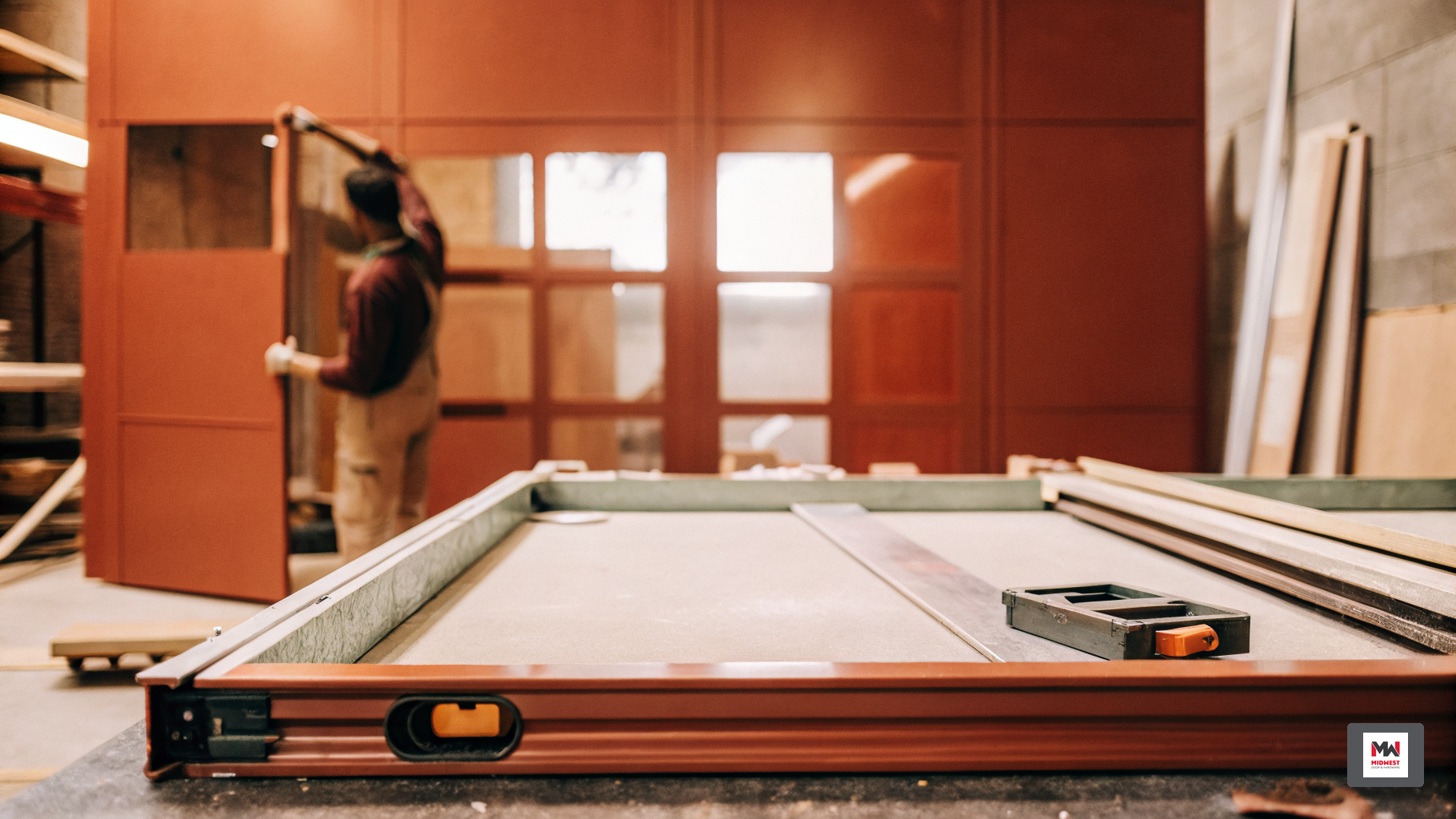
Introduction
Selecting the appropriate security door frame is crucial for ensuring safety and durability in various environments. As the demand for robust security solutions continues to rise, contractors often face challenges in selecting security door frames that balance aesthetics with safety and durability.
How can contractors ensure their installations surpass safety standards? This article explores effective techniques and materials that ensure the reliability and longevity of security door frames. These practices are vital for enhancing protection against potential threats.
Evaluate Material Strength and Durability
Choosing the appropriate security door frames is crucial for ensuring safety and longevity in high-traffic environments. It is crucial to focus on materials recognized for their strength and durability.
- Steel is often the preferred choice due to its high tensile strength and exceptional resistance to impact.
- For instance, hollow metal entries not only provide robust protection but are also lightweight, facilitating easier handling during installation.
- It's also important to consider environmental conditions; for instance, galvanized steel provides excellent corrosion resistance in humid settings.
- Ensuring that materials comply with industry standards, such as ASTM or UL certifications, is vital for guaranteeing their ability to withstand the demands of their intended use.
- Real-world examples demonstrate that installations using high-quality materials can significantly reduce maintenance expenses and enhance safety over time.
- Steel entrances, known for their longevity, resist warping and cracking, making them a reliable choice for high-traffic areas.
- Furthermore, research indicates that steel entrances can offer up to 25% greater durability compared to wooden alternatives, underscoring their suitability for protective applications.

Implement Proper Installation Techniques
To ensure the effective installation of security door frames, it is crucial to adhere to best practices that guarantee safety and functionality:
- Preparation: Begin by verifying that the opening is square and level. Utilize shims to make necessary adjustments to the structure, ensuring a precise fit. Consider utilizing pre-installation services to streamline this process.
- Alignment: Position the structure precisely within the opening, confirming that it is plumb and level. Utilize a level to verify both vertical and horizontal alignment. Misalignment can lead to costly repairs and safety risks. Field assistance can help ensure proper installation, minimizing the likelihood of such problems.
- Securing the Structure: Use suitable fasteners and anchors rated for the wall material and structure type. For instance, masonry screws are perfect for fastening structures to brick or concrete walls, offering the required strength to endure daily use. Guidance on selecting the right fasteners for your specific project needs is available.
- Final Adjustments: After securing the frame, test the functioning of the entrance. It should open and close smoothly without binding. Make any necessary adjustments to ensure optimal functionality before completing the setup. Consider utilizing our support for final adjustments to ensure optimal operation.
In the words of Paul Bianchina, a specialist in the field, "Correct setup methods are essential for guaranteeing that protective barriers operate efficiently and offer the defense they are intended for." By following these methods and utilizing the extensive installation assistance from Midwest Door & Hardware, contractors can improve the safety and functionality of the installation with security door frames, greatly minimizing the chances of future problems. By implementing these best practices, contractors can significantly enhance the reliability of their installations, fostering client confidence in their expertise.

Select Advanced Locking Systems and Security Features
Selecting the right locking mechanisms is essential for ensuring the security of security door frames in entry structures. Here are key options to consider:
- Deadbolts: A high-quality deadbolt is crucial for any protective entrance. Choose models that extend at least one inch into the entrance structure to maximize resistance against forced entry.
- Multi-Point Locking Systems: These systems engage at various points along the door frame, significantly improving protection compared to traditional single-point locks. These locks are great at preventing forced entry, especially in busy areas or properties that are often targeted. For example, statistics show that properties fitted with multi-point locks encounter a 50% reduced rate of break-ins in comparison to those with single-point systems, reinforcing their worth in contemporary protection solutions. Furthermore, specialists observe that upgrading to a multipoint lock may reduce insurance costs, as numerous providers acknowledge the enhanced protection it provides.
- Smart Locks: Integrating smart technology can enhance both convenience and protection. Features such as remote access, real-time alerts, and compatibility with home protection systems provide additional layers of defense. By 2026, advancements in smart locks are anticipated to feature real-time learning abilities, improving protection over time through advanced technologies. This will allow users to control access and receive notifications from any location, further improving protective measures.
- Reinforced Strike Plates: Ensure that strike plates are reinforced to withstand impact. This seemingly minor detail can significantly enhance the overall protection of the entrance, preventing forced entry.
By choosing advanced locking systems and features, contractors can enhance security by selecting advanced locking systems that meet modern safety standards, providing clients with peace of mind. The efficiency of multi-point locking systems is emphasized by their capacity to distribute locking pressure across various points, making it significantly more difficult for intruders to penetrate the entry. Ultimately, the right locking solutions, including security door frames, can transform a property’s security profile, making it a wise investment for any contractor.

Ensure Compliance with Building Codes and Regulations
Neglecting building regulations in security entrance setups can lead to significant safety risks and legal repercussions. Here are key considerations:
- Local Regulations: Familiarize yourself with the local building regulations that oversee entryway setups. These regulations outline criteria for materials, assembly methods, and safety features, ensuring that setups meet community standards.
- Fire Ratings: Both the door and frame must comply with the fire ratings set by the National Fire Protection Association (NFPA). Recent compliance statistics indicate that adherence to these ratings significantly reduces risks associated with fire hazards.
- Accessibility Standards: Ensure that setups meet accessibility standards, such as those outlined in the Americans with Disabilities Act (ADA). This may involve specific hardware requirements and setup heights to accommodate all users effectively.
- Documentation: Maintain thorough records of compliance, including product certifications and [installation documentation](https://designingbuildings.co.uk/wiki/The 2026 Compliance Landscape: Why 'Business as Usual' is a Liability). This not only provides proof of adherence to regulations but also protects contractors from potential liabilities.
By prioritizing compliance with these codes and regulations, contractors can enhance the safety and security of the buildings they work on. Ultimately, [ensuring compliance](https://designingbuildings.co.uk/wiki/The 2026 Compliance Landscape: Why 'Business as Usual' is a Liability) not only protects the integrity of the project but also reinforces the contractor's reputation in the industry.

Conclusion
Selecting the right practices for installing security door frames is not just a matter of preference; it’s essential for ensuring safety and compliance. High-quality materials, such as steel, provide superior strength and resilience, while proper installation techniques are crucial for maximizing the effectiveness of security measures. Ensuring that frames are aligned, secured, and functioning optimally is key to their performance.
Advanced locking systems, including deadbolts and multi-point locking mechanisms, are essential as they significantly deter forced entry, providing an additional layer of security. Adhering to local building codes and regulations is crucial for safeguarding the structure and its occupants, while also protecting contractors from legal repercussions and financial losses. Integrating these best practices allows contractors to enhance their installation confidence and provide clients with peace of mind regarding safety.
The installation of security door frames is a critical investment in property protection. Prioritizing material selection, installation accuracy, and compliance with regulations enhances the security profile of buildings and contributes to a safer environment for all. Embracing these practices leads to long-term benefits, such as reduced maintenance costs and improved safety outcomes, underscoring the importance of staying informed and committed to excellence in installations.
Frequently Asked Questions
Why is it important to choose the right security door frames?
Choosing the appropriate security door frames is crucial for ensuring safety and longevity in high-traffic environments.
What material is often preferred for security door frames and why?
Steel is often the preferred choice due to its high tensile strength and exceptional resistance to impact.
What are the advantages of hollow metal entries?
Hollow metal entries provide robust protection while being lightweight, which facilitates easier handling during installation.
How do environmental conditions affect the choice of materials for door frames?
Environmental conditions are important to consider; for example, galvanized steel offers excellent corrosion resistance in humid settings.
Why is compliance with industry standards important for door materials?
Ensuring that materials comply with industry standards, such as ASTM or UL certifications, is vital for guaranteeing their ability to withstand the demands of their intended use.
What are the benefits of using high-quality materials for installations?
Installations using high-quality materials can significantly reduce maintenance expenses and enhance safety over time.
How do steel entrances compare to wooden alternatives in terms of durability?
Research indicates that steel entrances can offer up to 25% greater durability compared to wooden alternatives, making them more suitable for protective applications.
What long-term benefits do steel entrances provide?
Steel entrances resist warping and cracking, contributing to their reliability and longevity in high-traffic areas.
List of Sources
- Evaluate Material Strength and Durability
- robotroles.com (https://robotroles.com/blog/best-steel-metal-doors-for-security-and-durability-2026)
- intelmarketresearch.com (https://intelmarketresearch.com/commercial-security-door-market-41844)
- beewindowinfo.com (https://beewindowinfo.com/blog/2026-best-steel-metal-doors-durability-security)
- bradbury-group.com (https://bradbury-group.com/blog/steel/the-durability-and-strength-of-steel-door-frames-and-doors)
- Steel Door Performance Study – DCI Hollow Metal on Demand (https://dcihollowmetal.com/resources/steel-door-performance-study)
- Implement Proper Installation Techniques
- arcanawindows.com (https://arcanawindows.com/how-the-right-door-installation-improves-home-security-and-insulation)
- The Essentials of Steel Door Installation: Frames & Fit Guide | SIMPAS (https://simpasus.com/steel-door-installation-essentials-frames-fit-performance)
- american-apartment-owners-association.org (https://american-apartment-owners-association.org/property-management/latest-news/security-door-an-easy-update?srsltid=AfmBOopw5ggcdfQYLIoYwehK4lUo1W3Qjiw6eQdzbJs1QoT9qNlgYVSS)
- Doors Market Expectations and Trends for 2026 to 2030 (https://hiri.org/blog/doors-market-expectations-trends)
- Select Advanced Locking Systems and Security Features
- plastproinc.com (https://plastproinc.com/inspiration-insights/ideas-and-inspiration/benefits-of-multipoint-locks)
- davisdecorativehardware.com (https://davisdecorativehardware.com/elevating-security-and-functionality-the-advantages-of-multi-point-door-hardware)
- theconnectedshop.com (https://theconnectedshop.com/blogs/tech-talk/smart-lock-innovations-what-s-coming-in-2026?srsltid=AfmBOoooW7N43M9DTEpd-vp5lHjctOkzsUZC8Q7M--8SavzUww3pK4kZ)
- Smart Digital Locks Are Redefining Home Security Standards in 2026 (https://metrowestdailynews.com/press-release/story/463084/smart-digital-locks-are-redefining-home-security-standards-in-2026)
- usatoday.com (https://usatoday.com/press-release/story/32083/lockly-releases-2026-guide-to-keyless-front-door-security-as-smart-lock-market-approaches-8-billion)
- Ensure Compliance with Building Codes and Regulations
- spacial.io (https://spacial.io/blueprint/building-codes-in-2026)
- Fire-Rated Door Specifications in 2026: Critical Updates Every Architect Must Know (https://vetrotech.com/en-in/education/fire-rated-door-specifications-2026-critical-updates-every-architect-must-know)
- Access Control Compliance Requirements (2026 Update) | DOOR (https://door.com/article/access-control-compliance-requirements-2026)
- Fire Door Requirements (https://vortexdoors.com/blog/fire-door-requirements)
- The 2026 Compliance Landscape: Why 'Business as Usual' is a Liability (https://designingbuildings.co.uk/wiki/The 2026 Compliance Landscape: Why 'Business as Usual' is a Liability)
Related News
Check out more of what we’ve worked on.