
Introduction
For midsize contractors, mastering door closer tension is essential for ensuring safety and compliance in commercial settings. Properly adjusted door closers not only enhance functionality but also play a crucial role in energy efficiency and adherence to building codes. Contractors often struggle to find the right balance in door closer tension; too loose can lead to safety hazards, while too tight can hinder accessibility. Understanding how to navigate this adjustment process is essential for optimizing performance and safety in projects.
Understand Door Closer Tension and Its Importance
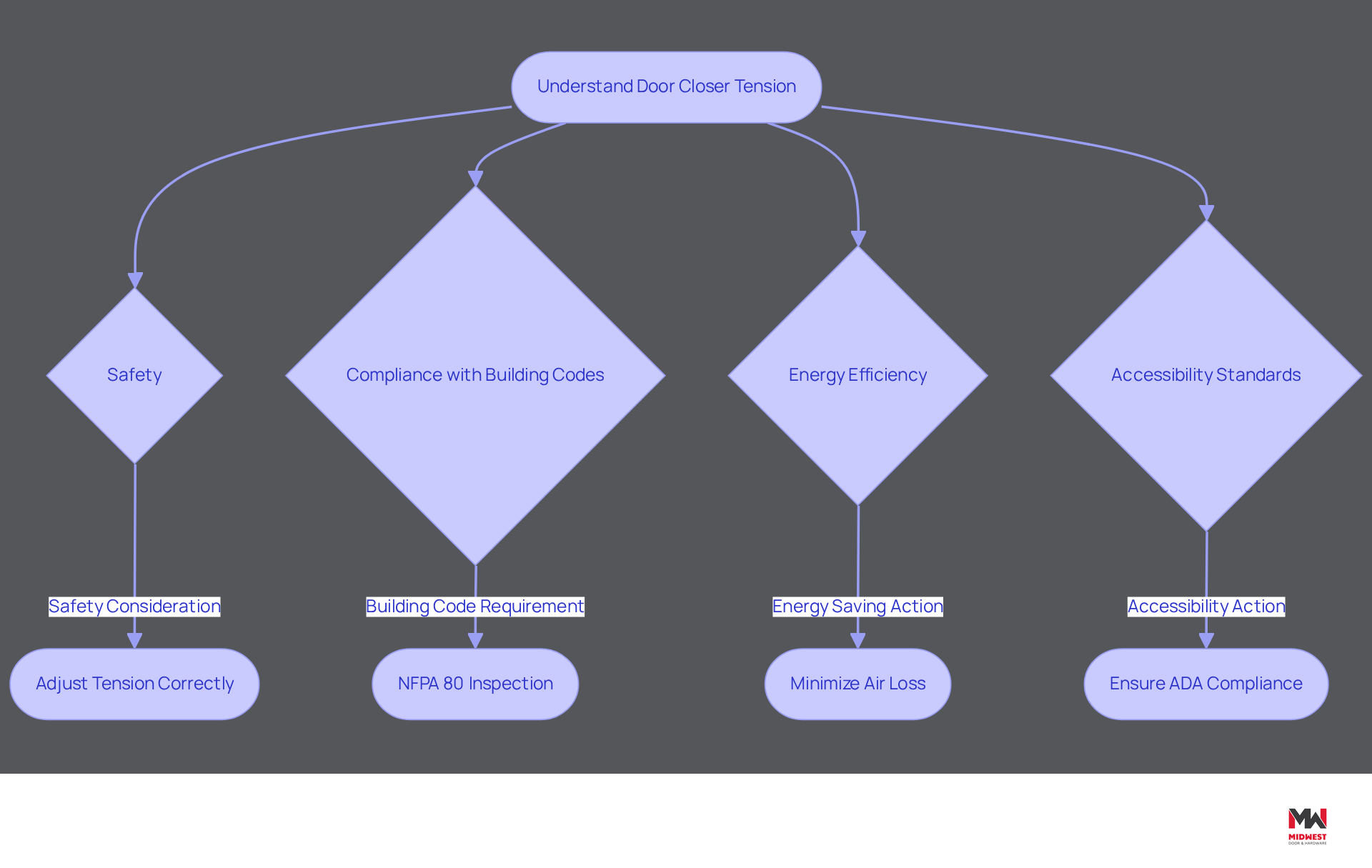
Understanding the proper adjustment of closer force is essential for ensuring safety and compliance in commercial entrances. Proper tension is crucial for ensuring that entrances close effectively, preventing them from slamming shut or remaining ajar. For contractors, understanding the significance of this adjustment is essential, as it directly impacts safety, energy efficiency, and compliance with building codes. An entrance that shuts too quickly can pose safety risks, while one that shuts too slowly may not comply with accessibility standards, especially in environments such as schools and hospitals.
Knowing how to adjust door closer tension is crucial for ensuring entrances function correctly and safely. Adherence to regulations like the NFPA 80, which requires yearly inspection and testing of fire-rated assemblies, is crucial for upholding safety standards. Additionally, strict adherence to ICC 500 standards for tornado-rated entries is essential, especially in designated storm shelters, where non-listed hardware is unacceptable.
Furthermore, when adjusted correctly, these devices can save energy by keeping heated or cooled air inside. Properly adjusted devices help conserve energy by minimizing the loss of heated or cooled air from buildings, contributing to lower energy bills and a reduced environmental footprint. Consequently, contractors must prioritize the modification of entrance mechanism pressure to improve safety, guarantee adherence to accessibility standards, and encourage energy efficiency in their projects.
Gather Necessary Tools and Materials
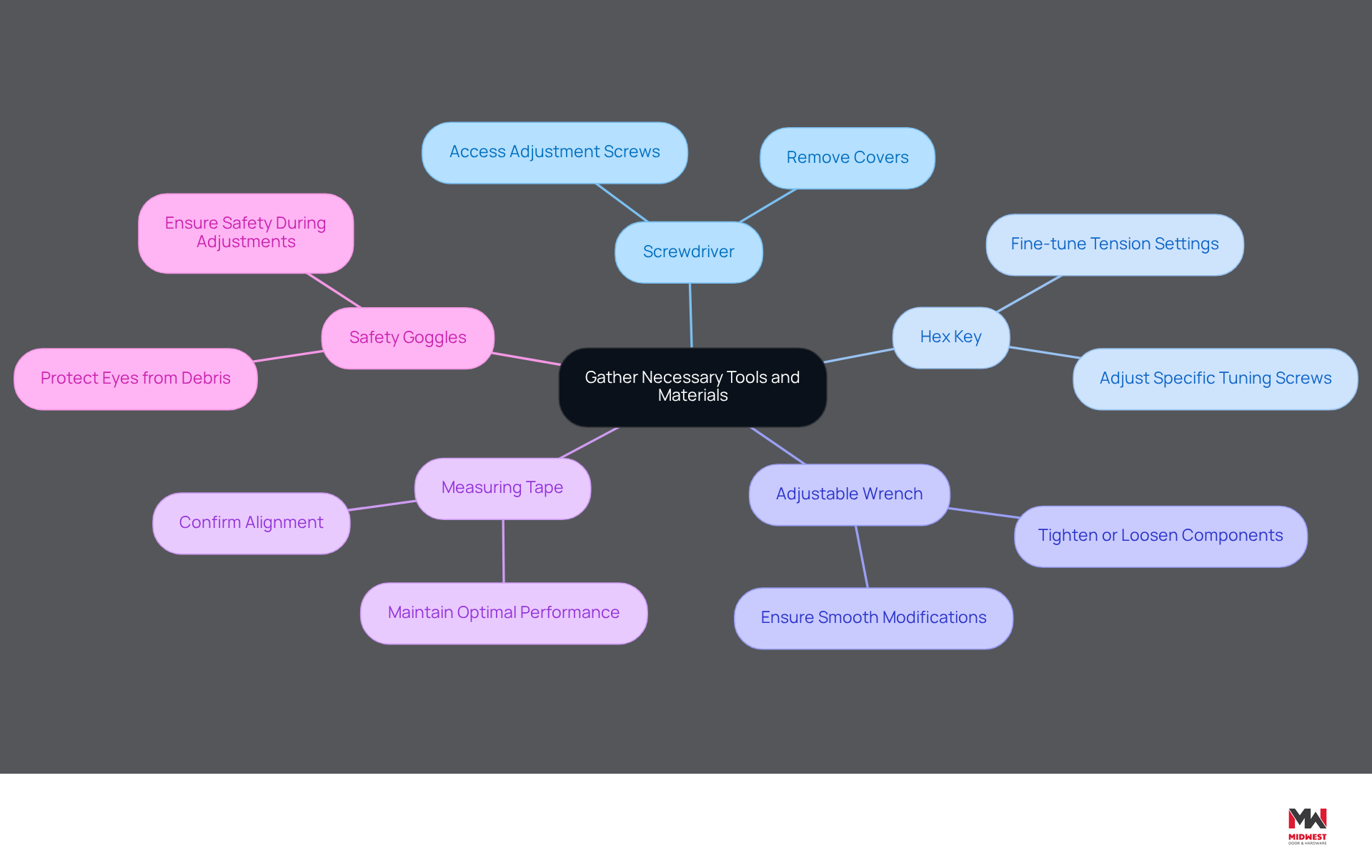
Before learning how to adjust door closer tension, having the right tools on hand is crucial to ensure a smooth and efficient process. Gather the following tools and materials:
- Screwdriver (flathead or Phillips): Essential for accessing the adjustment screws of the door closer.
- Hex key (Allen wrench): Necessary for fine-tuning the tension settings on most door closers, ensuring proper operation.
- Adjustable wrench: Helpful for tightening or loosening extra components, enabling smooth modifications.
- Measuring tape: Essential for confirming alignment and functionality after modifications, assisting in maintaining optimal performance.
- Safety goggles: Crucial for eye protection while working, safeguarding against debris and potential hazards.
Ensuring you have the proper tools not only streamlines the modification process but also safeguards against potential safety hazards and costly repairs. Additionally, it is vital to ensure compliance with safety regulations and building codes, as 73% of building code infractions arise from defective closures. Understanding how to adjust door closer tension can enhance functionality while also averting safety risks and expensive repairs.
Follow Step-by-Step Instructions for Adjustment
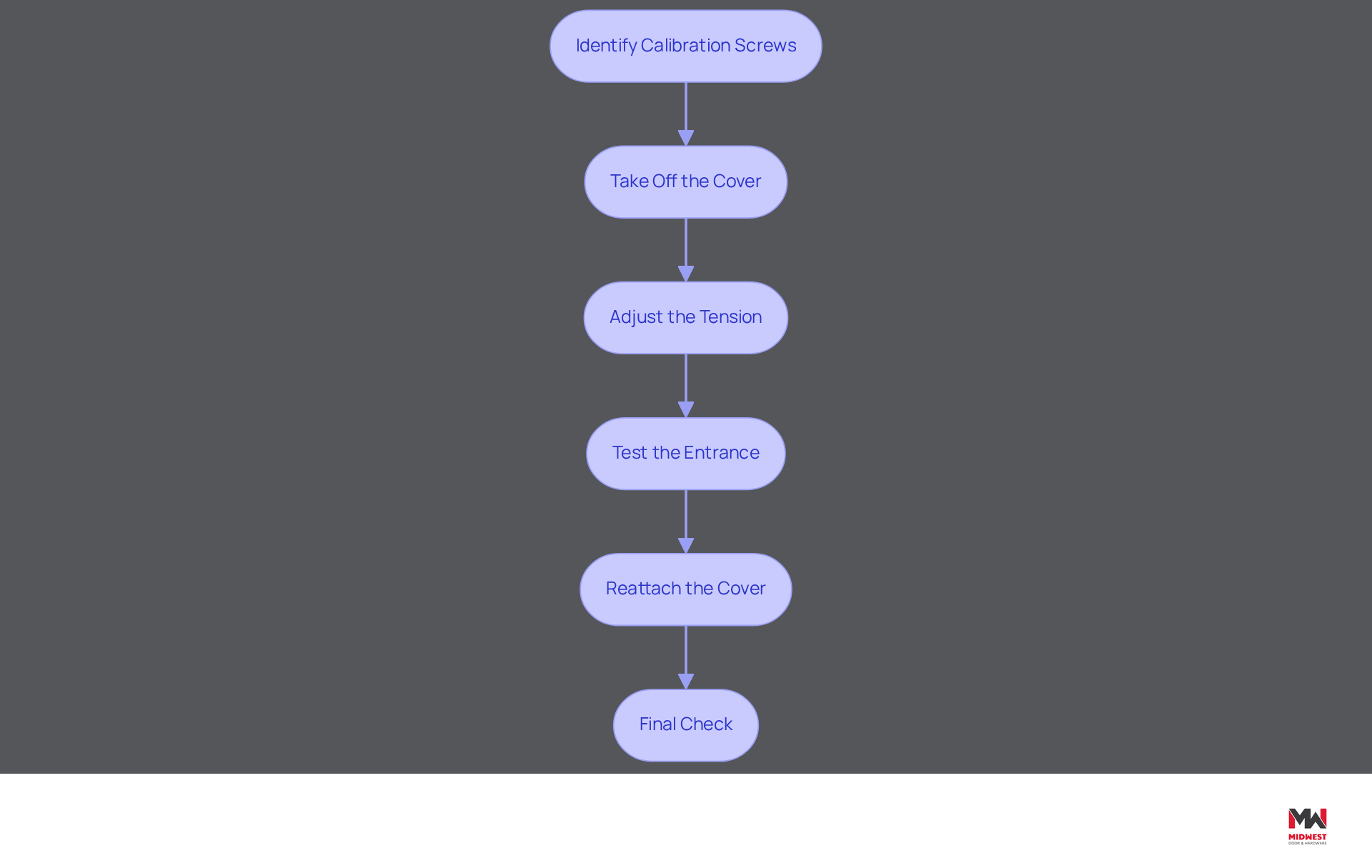
It is essential for ensuring safety and compliance in commercial environments to know how to adjust door closer tension properly. To adjust the door closer tension effectively, follow these detailed steps:
-
Identify the Calibration Screws: Locate the calibration screws on the entry mechanism. Typically, there are two or three screws labeled for different functions, such as sweep speed, latch speed, and backcheck.
-
Take Off the Cover: If necessary, use a screwdriver to remove the cover of the door closer, providing access to the tuning screws.
-
- Use a hex key to turn the tension adjustment screw. Generally, turning it clockwise increases the tension, while turning it counterclockwise decreases it.
- Make minor adjustments of approximately 1/4 turn and test the entry's operation after each modification to ensure optimal performance.
-
Test the Entrance: Open and close the entrance several times to confirm it operates smoothly. Ensure that it closes securely without slamming or remaining ajar, which is crucial for safety compliance.
-
Reattach the Cover: Once satisfied with the modifications, securely reattach the cover of the closer if it was removed.
-
Final Check: Conduct a comprehensive examination to confirm the entryway complies with safety and accessibility standards, making additional modifications if necessary. Regular maintenance inspections are crucial, as documented maintenance programs are mandated per NFPA 80 for fire-rated entry assemblies.
Ultimately, these adjustments not only enhance safety but also contribute to the overall success of commercial projects.
Troubleshoot Common Adjustment Issues
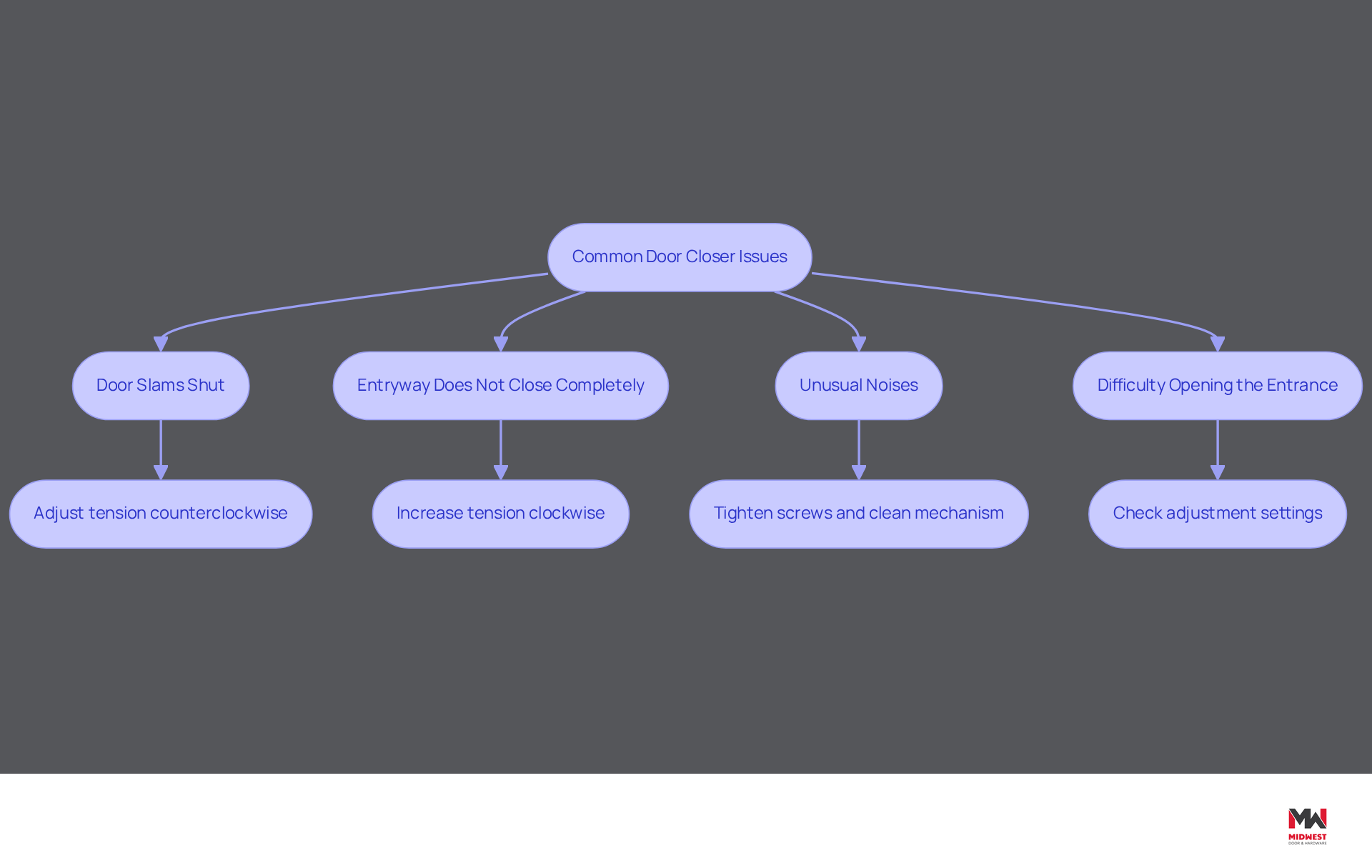
Common issues with door closers can lead to safety hazards and operational inefficiencies if not addressed promptly. Here are some common problems and their solutions:
- Door Slams Shut: A door that slams shut can lead to safety hazards and costly repairs. If the door closes too quickly, you should know how to adjust door closer tension by turning the adjustment screw counterclockwise to reduce it. This adjustment helps prevent damage and enhances safety. Properly adjusted closures prevent costly damage from slamming and ensure compliance with accessibility standards, fostering a secure environment for all users.
- Entryway Does Not Close Completely: If the entryway remains ajar, increase the tension by turning the screw clockwise. Ensure that the entrance is properly aligned with the frame to facilitate a complete closure.
- Unusual Noises: Grinding or squeaking sounds may indicate loose screws or debris in the closer mechanism. Tighten screws and clean the mechanism as needed to maintain optimal performance.
- Difficulty Opening the Entrance: If you find the entrance hard to open, take a moment to check the adjustment settings. Learning how to adjust door closer tension by lowering it may assist in lessening the effort needed to open the entrance, ensuring accessibility for all users.
Following these troubleshooting suggestions helps ensure that closers operate efficiently, enhancing safety and accessibility in commercial settings. Regular maintenance checks are crucial, as they can prevent up to 89% of automatic door-related injuries and ensure compliance with safety standards. Additionally, routine maintenance and modifications can prevent up to 85% of failures in door closures, demonstrating how regular maintenance can prevent issues before they arise.
Conclusion
Adjusting door closer tension is essential for midsize contractors to ensure safety and compliance in commercial environments. Properly adjusted door closers enhance entrance functionality. They also play a crucial role in adhering to building codes and safety regulations. Mastering this skill allows contractors to improve door mechanism performance, benefiting their projects and clients.
Throughout this guide, key steps have been outlined, from gathering the necessary tools to troubleshooting common issues. Neglecting regular maintenance can lead to safety hazards and operational inefficiencies. The insights provided highlight how proper tension settings can prevent doors from slamming shut or remaining ajar, ensuring compliance with accessibility standards and enhancing overall safety.
In conclusion, the significance of door closer tension cannot be overstated. For contractors working in Nebraska's unique climate, where tornado preparedness is essential, understanding and implementing these adjustments is crucial. By prioritizing these adjustments, contractors can create safer environments that meet the needs of all users.
Frequently Asked Questions
Why is understanding door closer tension important?
Understanding door closer tension is essential for ensuring safety and compliance in commercial entrances, as it affects how effectively doors close, preventing them from slamming shut or remaining ajar.
What are the safety risks associated with improper door closer tension?
An entrance that shuts too quickly can pose safety risks, while one that shuts too slowly may not comply with accessibility standards, particularly in environments like schools and hospitals.
What regulations must be adhered to regarding door closer tension?
Regulations such as NFPA 80 require yearly inspection and testing of fire-rated assemblies, while ICC 500 standards are crucial for tornado-rated entries, especially in designated storm shelters.
How does proper door closer tension contribute to energy efficiency?
Properly adjusted door closers help conserve energy by minimizing the loss of heated or cooled air from buildings, which can lead to lower energy bills and a reduced environmental footprint.
What should contractors prioritize regarding door closer adjustments?
Contractors must prioritize the modification of entrance mechanism pressure to improve safety, ensure compliance with accessibility standards, and promote energy efficiency in their projects.
List of Sources
- Understand Door Closer Tension and Its Importance
- Door Closer Adjustments: Why Are They Important? (https://beaconcdl.com/blogs/news/door-closer-adjustments-why-are-they-important?srsltid=AfmBOorNXjpxJoirj4weKaDnwibaai5VzHoi3fYgWADqG2dpCAujAIQB)
- Importance and Benefits of Door Closers in Commercial Settings (https://qualitydoor.com/blogs/guide/door-closers?srsltid=AfmBOopaZdJuR5Nm6npmkDdj1mZ644c97uQI9t1hU8YXkSUvheRWicfg)
- How to Adjust a Commercial Door Closer: Complete Guide for General Contractors (https://cdfdistributors.com/blog/post/how-to-adjust-a-commercial-door-closer-complete-guide-for-general-contractors)
- How Does a Door Closer Work? Key Steps for Contractors (https://midwestdoor.net/news/how-does-a-door-closer-work-key-steps-for-contractors)
- Gather Necessary Tools and Materials
- How to Adjust a Standard Door Closer in 6 Steps - LaForce, LLC (https://laforceinc.com/blog/how-to-adjust-a-standard-door-closer-in-6-steps)
- How To Adjust Commercial Door Closers - News Co., Ltd - Haida Door Control (https://heinda-cn.com/news/how-to-adjust-commercial-door-closers-55749784.html)
- How to Adjust Door Closers: A Step-by-Step Guide for Contractors (https://midwestdoor.net/news/how-to-adjust-door-closers-a-step-by-step-guide-for-contractors)
- How to Adjust a Commercial Door Closer: Complete Guide for General Contractors (https://cdfdistributors.com/blog/post/how-to-adjust-a-commercial-door-closer-complete-guide-for-general-contractors)
- Follow Step-by-Step Instructions for Adjustment
- How to Adjust a Commercial Door Closer: Complete Guide for General Contractors (https://cdfdistributors.com/blog/post/how-to-adjust-a-commercial-door-closer-complete-guide-for-general-contractors)
- Door Closer Adjustments: When They’re Needed and Why Expertise Matters (https://vortexdoors.com/blog/door-closer-adjustments)
- How to Adjust Door Closers: A Step-by-Step Guide for Contractors (https://midwestdoor.net/news/how-to-adjust-door-closers-a-step-by-step-guide-for-contractors)
- Master Door Closure Adjustment: Essential Steps for Contractors (https://midwestdoor.net/news/master-door-closure-adjustment-essential-steps-for-contractors)
- Troubleshoot Common Adjustment Issues
- Master Door Closure Adjustment: Essential Steps for Contractors (https://midwestdoor.net/news/master-door-closure-adjustment-essential-steps-for-contractors)
- Commercial Door Closer Problems: Signs & Solutions (https://fdsus.com/commercial-door-closer-problems-signs-solutions)
- Door Closer Repair: How to Know When to Repair vs. Replace Your Commercial Door Closer (https://nashvilledoorcloser.com/door-closer-repair-how-to-know-when-to-repair-vs-replace-you)
- 5 Surprising Stats About Commercial Door Services Failures That Every Property Owner Should Know (https://ohdctexoma.com/5-surprising-stats-about-commercial-door-services-failures-that-every-property-owner-should-know)
Related News
Check out more of what we’ve worked on.