
Introduction
Selecting the right anchors for metal applications is crucial for ensuring project safety and longevity. With various types of metal anchors available, understanding their specific uses and load capacities is essential for maintaining structural integrity. Contractors often struggle with the complexities of anchor selection, which can lead to costly errors. Understanding best practices can help mitigate risks and enhance project safety.
Define Metal Anchors and Their Importance in Construction
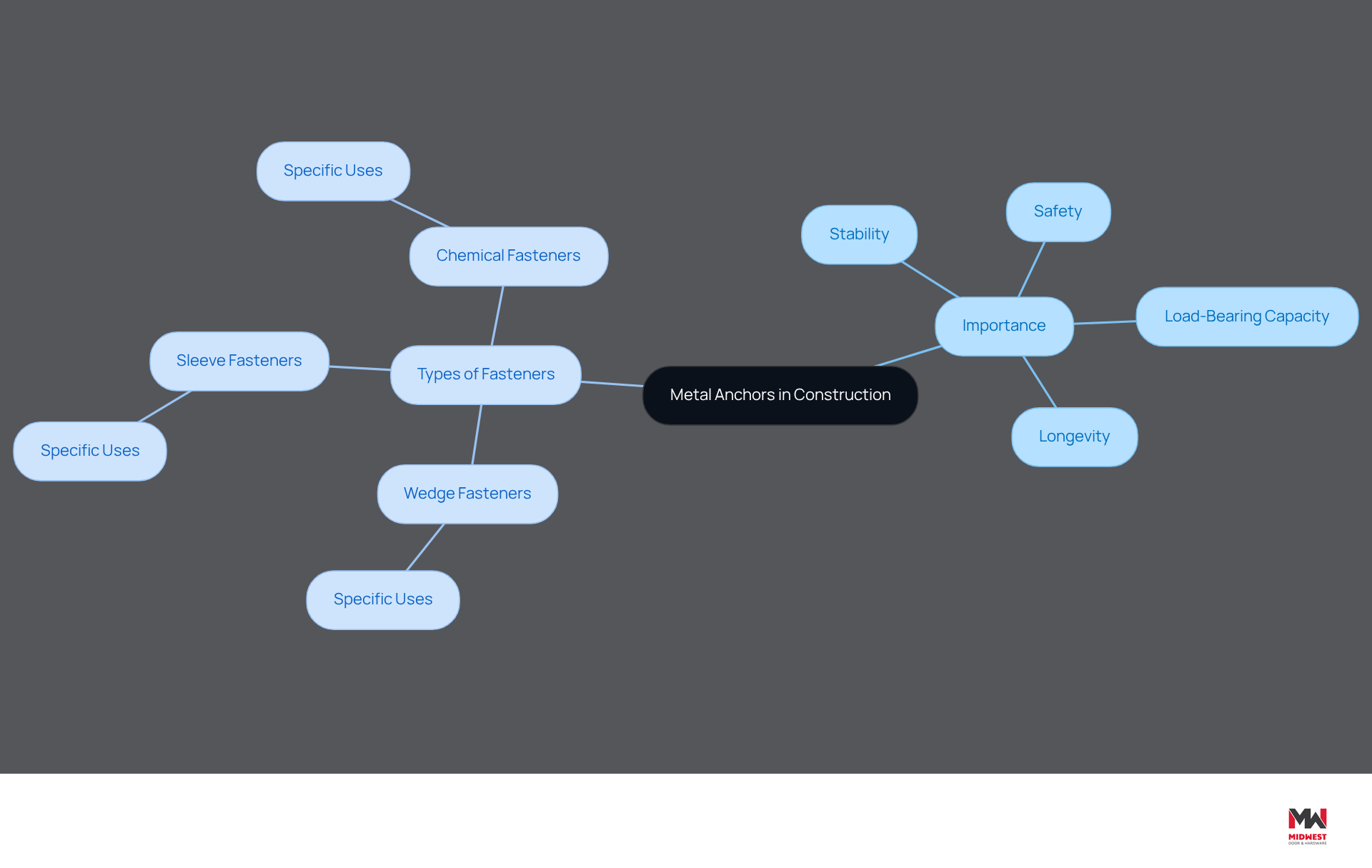
Choosing the right metal fasteners is crucial for ensuring the stability and safety of your construction projects. Metal fasteners are devices intended to secure objects to different substrates, including concrete, masonry, and metal structures. They are essential in construction for providing stability and strength to installations, particularly in environments where load-bearing capacity is critical.
Available in various types, such as:
- Wedge fasteners
- Sleeve fasteners
- Chemical fasteners
Each is designed for specific uses and weight specifications. Without the right metal fasteners, the stability of your installations could be compromised, leading to potential safety hazards. Their ability to withstand dynamic loads, resist corrosion, and maintain structural integrity over time makes them indispensable in commercial and industrial settings.
Investing in quality metal fasteners not only enhances safety but also contributes to the longevity of your installations, ultimately safeguarding your project’s success.
Select Appropriate Anchors for Metal Applications
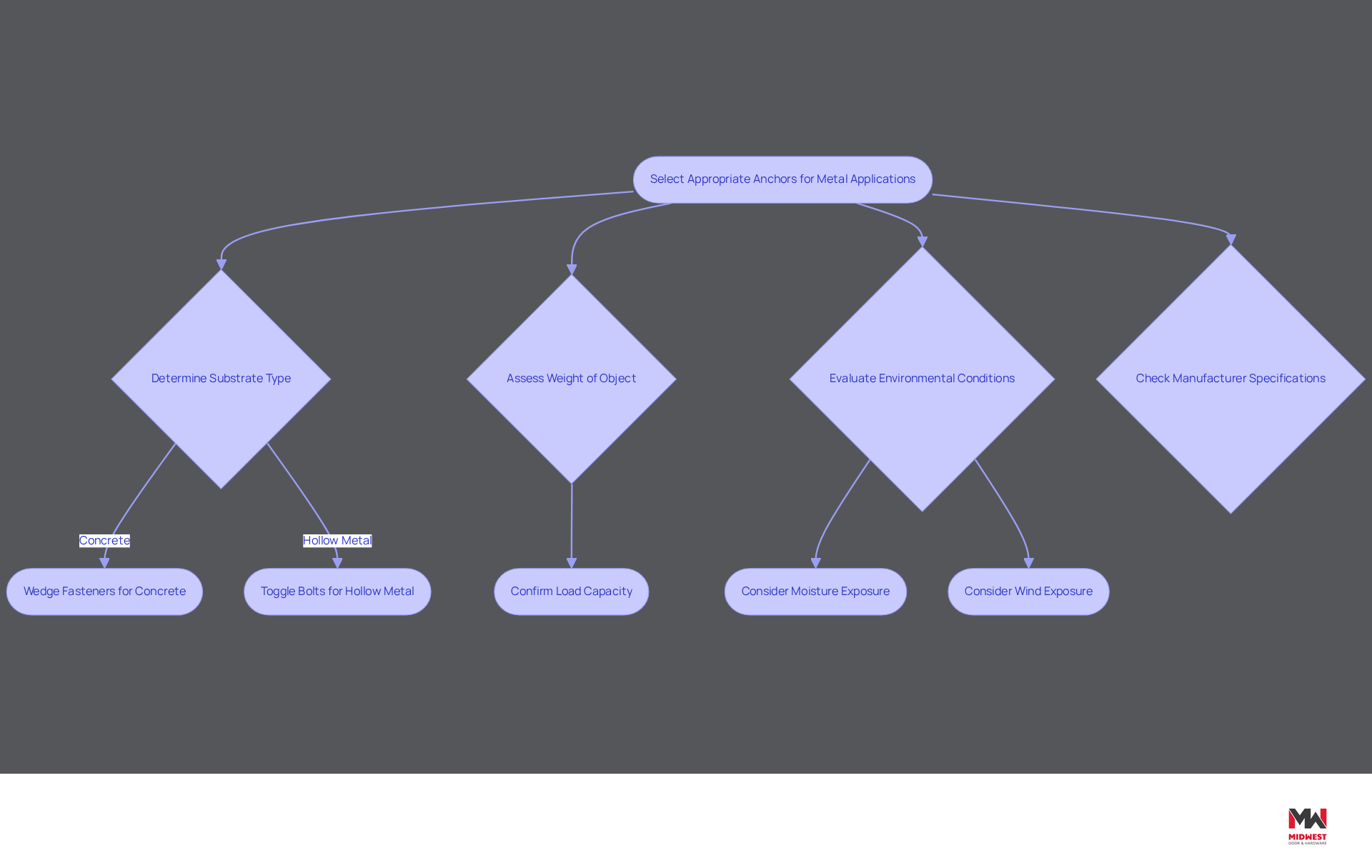
Selecting the right fasteners, such as an anchor for metal applications, is critical to ensuring structural integrity and safety. First, determine the type of substrate involved, as this will influence your fastener selection. For instance, wedge fasteners are particularly effective for securing heavy loads in concrete, while toggle bolts are better suited for hollow metal structures. Additionally, assess the weight of the object being secured and the environmental conditions it will face, such as moisture or wind exposure.
Ensure that the selected fasteners can support the required load capacity for your project to prevent structural failure. For example, using an anchor for metal in a thin metal application may not provide the necessary grip, which could lead to failure. Always refer to manufacturer specifications and guidelines to confirm compatibility and safety.
Proper positioning of supports is essential; they should be uniformly spaced along base rails and placed at corners and load-bearing points to enhance stability. Inadequate or misplaced supports can create weak points in the structure, leading to potential failure under stress, particularly in storm-prone areas.
Experts emphasize that selecting the appropriate supports is vital for structural stability, minimizing the likelihood of future repairs, and preventing code violations. As Brandon pointed out, "Without the proper supports, your steel garage is susceptible to moving, tilting, or worse during storms." Therefore, thorough evaluation of fastener types and installation methods is vital to avoid costly structural failures and ensure compliance with building codes.
Implement Effective Installation Techniques for Metal Anchors
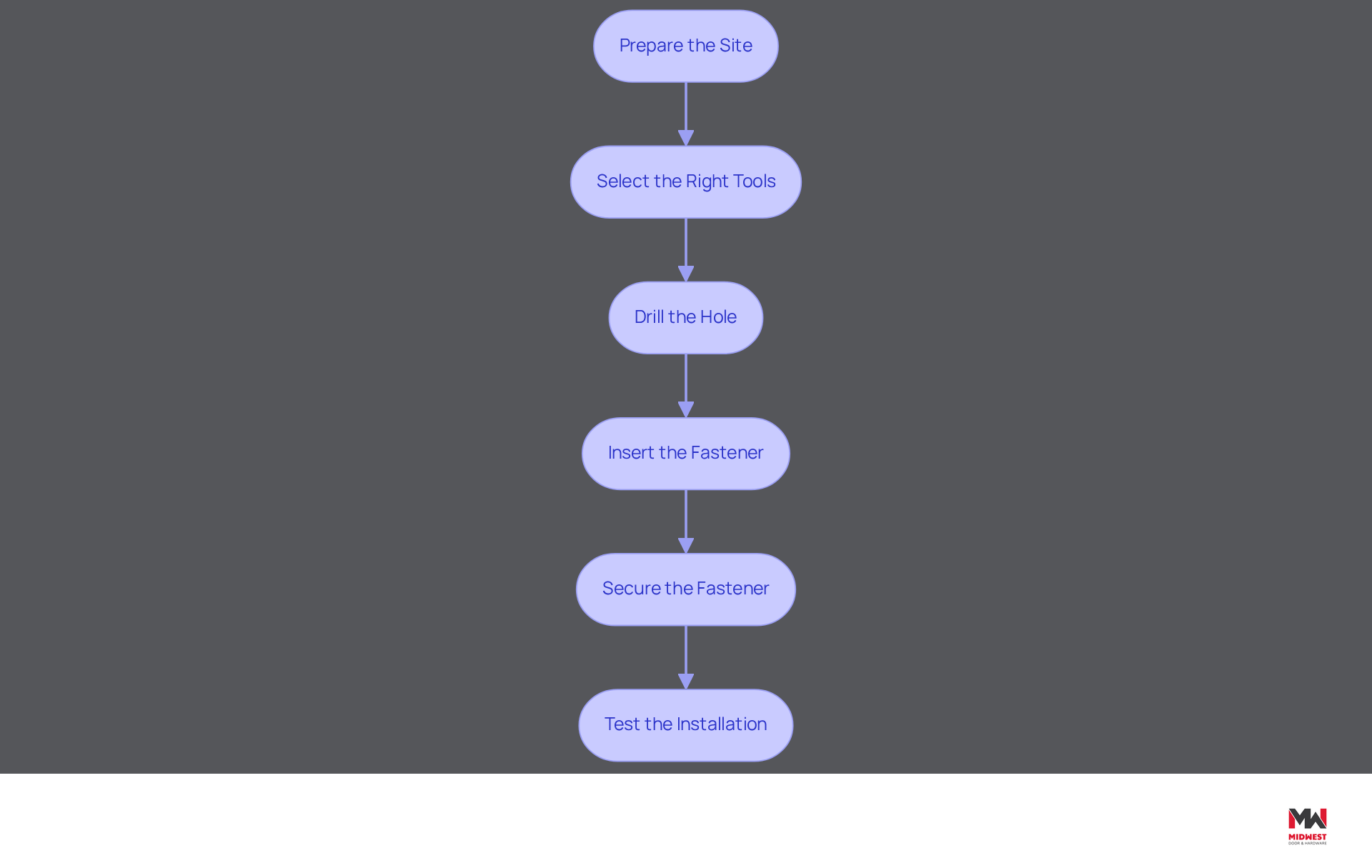
To ensure effective installation of metal supports, a systematic approach is essential. Follow these steps:
- Prepare the Site: Ensure the surface is clean and free of debris.
- Select the Right Tools: Use the appropriate drill bits and installation tools as specified by the fastener manufacturer.
- Drill the Hole: Create a hole that corresponds to the size of the fastener, ensuring the depth is suitable for the type of fastener.
- Insert the Fastener: Place the fastener into the hole, ensuring it is flush with the surface.
- Secure the Fastener: Depending on the type, either tighten the fastener using a wrench or hammer it into place.
- Test the Installation: After installation, test the support's hold by applying a load to ensure it is secure.
By adhering to these steps, you can significantly reduce the risk of installation errors and enhance the support's reliability.
Conduct Regular Maintenance and Inspections of Metal Anchors
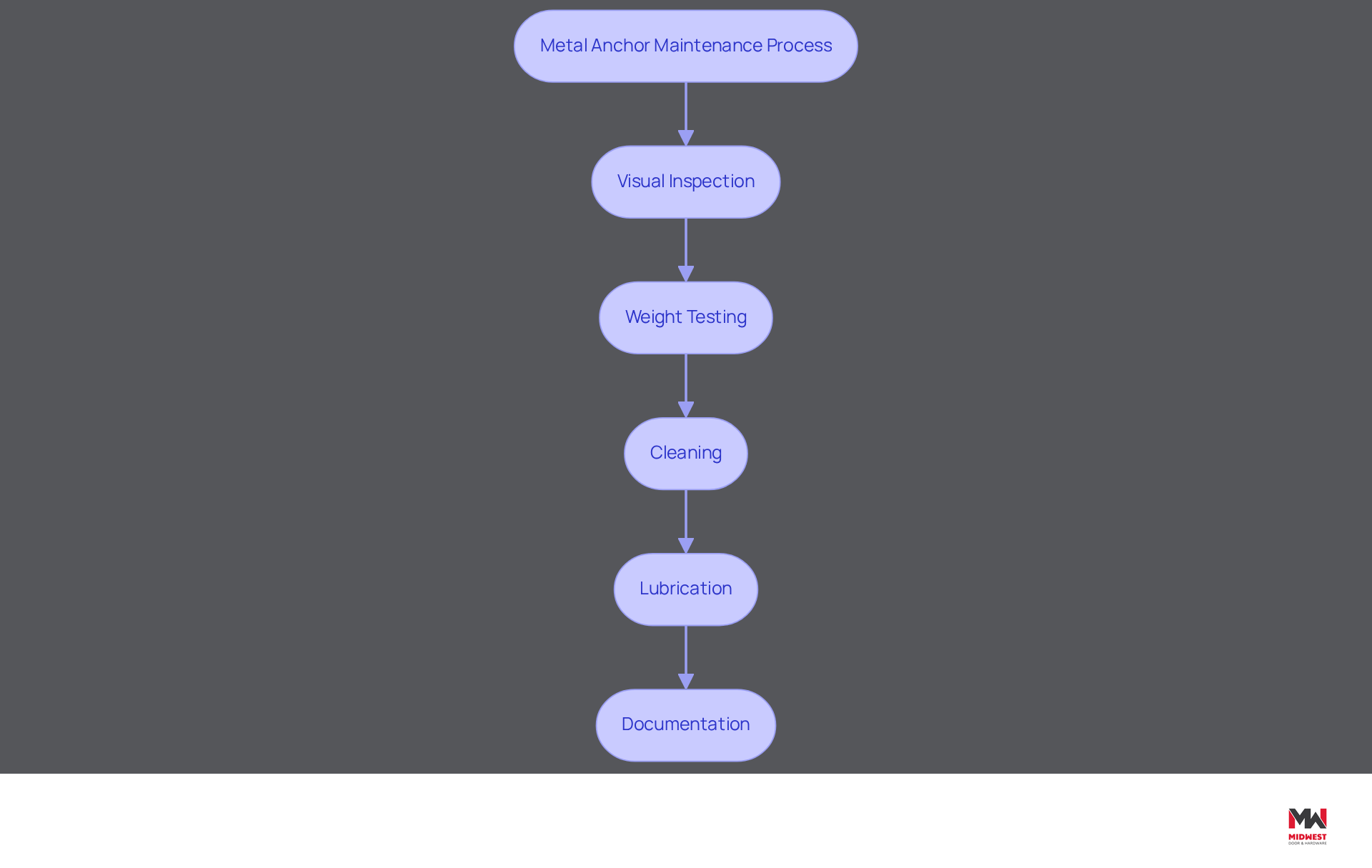
Regular maintenance and inspections of metal supports, particularly those involving an anchor for metal, are critical to ensuring safety and reliability in commercial construction projects. The following steps should be incorporated into a comprehensive maintenance program:
- Visual Inspection: Conduct thorough checks for signs of corrosion, rust, or physical damage that could compromise the integrity of the support.
- Weight Testing: Periodically assess the supports under stress to verify they can bear the necessary weight, following OSHA regulations that require supports to sustain a minimum of 2,000 pounds per employee. Permanent roof supports must also be load tested for either 5-year or 10-year recertification.
- Cleaning: Remove any debris or contaminants that may impact the performance of the support, ensuring a clean working environment.
- Lubrication: Apply suitable lubricants to moving components to prevent wear and tear, enhancing the durability of the supports.
Documentation: Maintain detailed records of inspections and maintenance activities to track the condition of the anchor for metal over time, which is essential for compliance and verification of security.
Annual Roof Anchor Inspections are an OSHA requirement that acts as an anchor for metal, ensuring the protection of thousands of maintenance and construction professionals each year. These practices extend the lifespan of installations while ensuring ongoing security and reliability. This approach safeguards workers and minimizes liability risks. Routine evaluations help identify potential issues before they lead to incidents, underscoring the importance of following OSHA regulations and industry standards. As OSHA regulations state, "permanent roof anchor inspections must be conducted at least once a year or more frequently," highlighting the necessity of these inspections for maintaining safety.
Conclusion
Selecting the right anchors for metal applications is critical to ensuring construction safety and stability. The effectiveness of these fasteners directly impacts the structural integrity of installations, making informed choices essential for successful outcomes. By understanding the various types of metal anchors and their specific applications, construction professionals can significantly enhance the reliability of their projects.
Key considerations for choosing metal anchors include:
- Assessing substrate types
- Load capacities
- Environmental conditions
Effective installation techniques and regular maintenance practices are vital, emphasizing the need for thorough inspections and adherence to safety regulations. Following these practices helps avoid costly failures and keeps projects compliant with industry standards, especially in areas with severe weather.
Ultimately, focusing on the selection and maintenance of metal anchors is essential for protecting structural integrity and worker safety. By implementing these best practices, construction professionals can foster a culture of safety and reliability, ensuring that their projects stand the test of time. By adhering to these guidelines, construction professionals can significantly mitigate risks and enhance the longevity of their projects.
Frequently Asked Questions
What are metal anchors in construction?
Metal anchors are devices used to secure objects to various substrates, such as concrete, masonry, and metal structures, ensuring stability and safety in construction projects.
Why are metal fasteners important in construction?
Metal fasteners are crucial for providing stability and strength to installations, especially in environments where load-bearing capacity is critical. They help prevent safety hazards by ensuring that installations remain secure.
What types of metal fasteners are available?
The main types of metal fasteners include wedge fasteners, sleeve fasteners, and chemical fasteners, each designed for specific uses and weight specifications.
What are the benefits of using quality metal fasteners?
Investing in quality metal fasteners enhances safety, contributes to the longevity of installations, and helps maintain structural integrity over time, ultimately safeguarding the success of construction projects.
How do metal fasteners perform under dynamic loads?
Metal fasteners are designed to withstand dynamic loads, making them reliable for use in various construction applications where stability is essential.
List of Sources
- Define Metal Anchors and Their Importance in Construction
- Molins: líder en soluciones y materiales de construcción (https://molins.es/construction-solutions/en/fillings-and-anchors/metal-anchors-and-their-importance-in-the-construction-industry)
- Chemical Concrete Anchors Play Important Role in Construction Building Projects (https://forconstructionpros.com/concrete/equipment-products/concrete-accessories/article/10719580/chemical-concrete-anchors-play-important-role-in-construction-building-projects)
- Construction Anchor Industry Analysis in United Kingdom | Global Market Analysis Report - 2036 (https://futuremarketinsights.com/reports/construction-anchor-industry-analysis-in-united-kingdom)
- tsfasteners.com (https://tsfasteners.com/industrial-fasteners-news/the-uses-and-applications-of-anchor-bolts-for-industrial-applications)
- Select Appropriate Anchors for Metal Applications
- Best Anchoring Systems for Metal Garages | Expert Guide (https://americanmetalgarages.com/anchoring-systems-for-metal-garages-one-detail-you-cant-afford-to-overlook)
- Types of Anchors for Metal Buildings: 2026 Complete Guide (https://bulldogsteelstructures.com/blog/types-of-anchors)
- Choosing Anchors: The Factors to Consider (https://allfasteners.com/news/post/choosing-anchors-the-factors-to-consider?srsltid=AfmBOoqE62OvTWqD8gk--gTu6iB9CgDM-baJGasadWh82TNQyVPSkhNk)
- Choosing Anchors: The Factors to Consider (https://allfasteners.com/news/post/choosing-anchors-the-factors-to-consider?srsltid=AfmBOoryiqEois5GJl2eDa4_p-ocbxnEixzhxig7AwKNUZsVRdAPXw4o)
- Load Capacities in Anchor Bolt Selection (https://lrkdindustries.com/blogs/news/understanding-load-capacities-in-anchor-bolt-selection)
- Implement Effective Installation Techniques for Metal Anchors
- The Latest in Building Anchors (https://masonrymagazine.com/blog/2017/12/01/the-latest-in-building-anchors)
- The Ultimate Guide to Anchoring Metal Buildings and Carports: Methods, Benefits & Best Practices - Carport Solution (https://carportsolution.com/news/the-ultimate-guide-to-anchoring-metal-buildings-and-carports-methods-benefits-best-practices)
- How to avoid common anchor installation mistakes (https://walraven.com/en/how-to-guides/how-to-avoid-common-anchor-installation-mistakes)
- 10 Tips to Ensure Successful Concrete Anchor Installation on Overhead Surfaces (https://setitfast.com/blogs/news/10-tips-to-ensure-successful-concrete-anchor-installation-on-overhead-surfaces?srsltid=AfmBOopDCEvnO9CmhnA4Q9WI_DkH9xQBZf9JvCgoNb9u7a8rs5yCy0EI)
- Anchoring Installation Procedure (https://hilti.com.bb/company/company-news-2/anchoring-with-hilti/anchoring-installation-procedure)
- Conduct Regular Maintenance and Inspections of Metal Anchors
- Permanent Roof Anchors Maintenance and Inspection (https://pro-bel.com/blog/maintenance-and-inspection-of-permanent-roof-anchors)
- Setting the Standard in Fall Protection: How Roof Anchor Inspections Help Build Safer Worksites (https://atslab.com/2025/12/10/setting-the-standard-in-fall-protection-how-roof-anchor-inspections-help-build-safer-worksites)
- Roof Anchor Testing Requirements: Facts About Fall Protection Anchors (https://edgefallprotection.com/roof-anchor-testing-requirements)
- Maintaining, inspecting and re-certifying permanent anchorage systems (https://worksafe.govt.nz/about-us/news-and-media/maintaining-inspecting-and-re-certifying-permanent-anchorage-systems)
- The Importance of Annual Roof Anchor Inspections | Shine On Anchors (https://shineonanchors.com/blog/osha/the-importance-of-annual-roof-anchor-inspections)
Related News
Check out more of what we’ve worked on.