

Introduction
Selecting and installing standard back doors is crucial for ensuring the security and functionality of commercial spaces. Contractors must navigate a variety of materials, from robust steel to low-maintenance fiberglass, while ensuring compliance with local building codes and safety regulations. Understanding best practices for installation can help ensure these doors meet standards and provide lasting performance. This article outlines essential techniques for installing back doors, emphasizing the importance of:
- Material selection
- Installation methods
- Ongoing maintenance for durability
Select Appropriate Back Door Materials and Standards
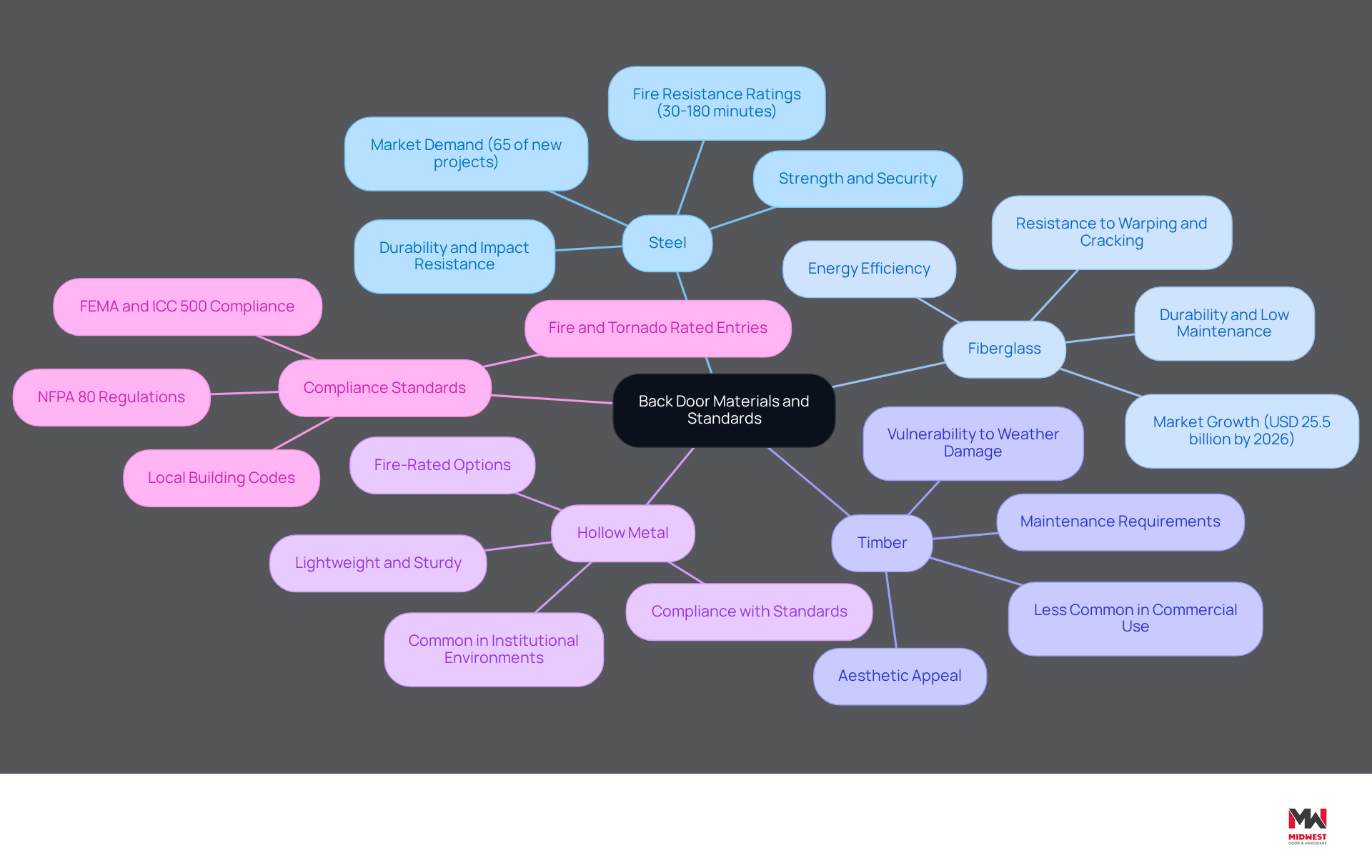
Selecting the right materials for a standard back door in commercial settings is critical for ensuring security, durability, and compliance with safety regulations. Contractors should consider the following options:
- Steel: Known for its strength and security, steel entrances are ideal for high-traffic areas, providing excellent resistance to impact and adverse weather conditions. In commercial settings that prioritize security, the standard back door is commonly used, with over 65% of newly approved commercial construction projects specifying steel entries due to their durability and fire resistance ratings ranging from 30 to 180 minutes.
- Fiberglass: This material is celebrated for its durability and low maintenance requirements, making it suitable for various climates. Fiberglass entries resist warping, cracking, and rust, offering a robust solution for back entrances. The fiberglass entryway market is anticipated to reach USD 25.5 billion in 2026, indicating a growing demand for energy-efficient and visually appealing choices.
- Timber: While timber entries look great, they often need more maintenance and can be vulnerable to weather damage. However, they can be treated for enhanced durability and are often favored in residential applications. Their use in commercial settings is less common due to maintenance concerns.
- Hollow metal entries, which can serve as a standard back door, are lightweight yet sturdy and are a favored option for commercial structures. They can be fire-rated and are often utilized in institutional environments, conforming to compliance standards that require fire-rated entries in over 70% of developed economies.
- Compliance Standards: It is crucial to ensure that selected materials meet local building codes and standards, including fire ratings and energy efficiency requirements. Adherence to FEMA, ICC 500, NFPA 80, and local building regulations is essential for fire-rated and tornado-rated entries. Proper labeling, hardware compatibility, and setup standards must be followed, as tornado-rated shelter hardware must be listed and compliant with interior egress requirements; non-listed hardware is unacceptable.
By prioritizing material selection and compliance, contractors can enhance project outcomes and client satisfaction, ultimately leading to long-term success in their endeavors.
Implement Proper Installation Techniques for Durability
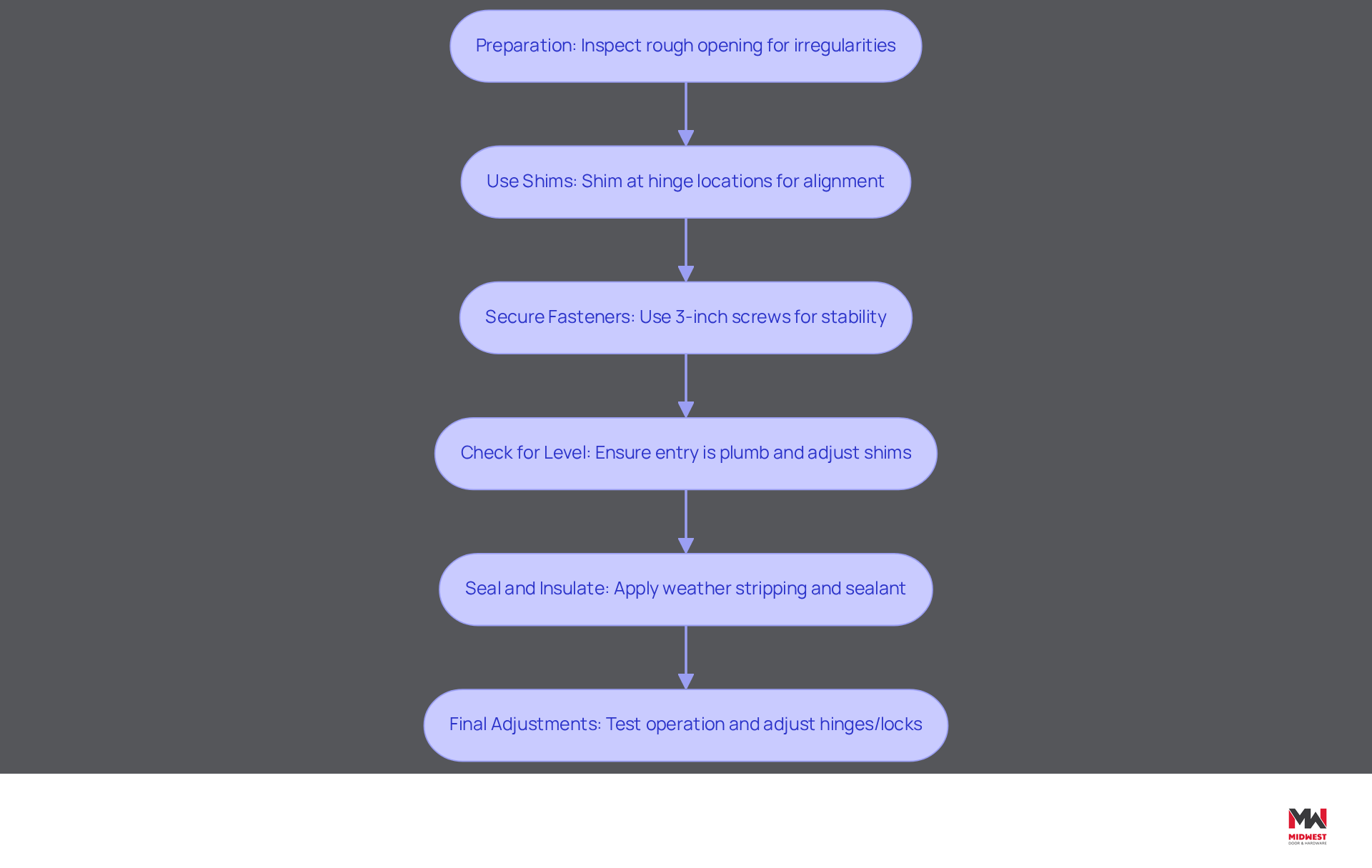
To ensure a successful installation of back doors, contractors must adhere to best practices that guarantee durability and functionality:
- Preparation: Inspect the rough opening for irregularities, ensuring it is square, level, and free from debris.
- Use Shims: Properly shim the entry at hinge locations to maintain alignment, which is crucial for smooth swinging and sealing against the frame.
- Secure Fasteners: Use appropriate fasteners, such as 3-inch screws, to attach the frame to the wall. This enhances stability and prevents sagging over time.
- Check for Level: After positioning the entry in the opening, use a level to ensure it is plumb. Adjust shims as necessary for correct alignment.
- Seal and Insulate: Apply weather stripping and sealant around the frame to prevent air and water infiltration. This enhances energy efficiency and safeguards the entry from moisture damage.
- Final Adjustments: Once installed, test the entry's operation and make necessary adjustments to hinges and locks for smooth functionality.
Following these methods helps contractors enhance the durability and functionality of the standard back door. This leads to long-term client satisfaction. Additionally, contractors should also conduct annual inspections and testing of fire-rated entry assemblies according to NFPA 80, ensuring compliance with safety standards. This involves confirming that all components are correctly labeled and that the setup meets the required specifications. For tornado-rated entries, strict adherence to ICC 500 standards is mandatory, with no substitutions or equivalents allowed. Ensure that all hardware used is compliant with interior egress requirements, as non-listed hardware is unacceptable. Following these guidelines not only ensures compliance with safety standards but also enhances the overall quality and reliability of the installation.
Ensure Compliance with Local Building Codes and Regulations
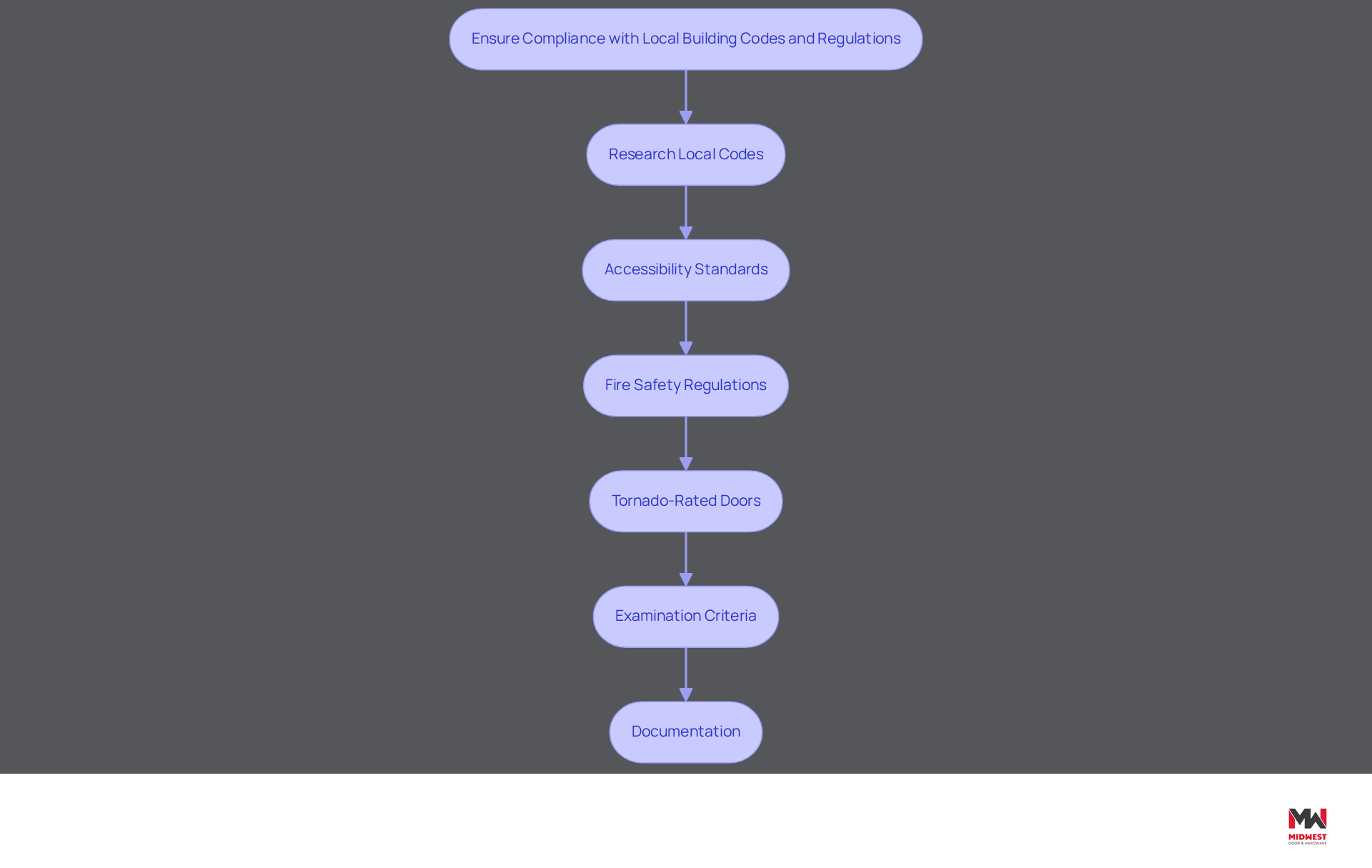
Ensuring compliance with local building codes is crucial for the successful installation of a standard back door. Consider the following best practices:
- Research Local Codes: Familiarize yourself with the specific building regulations in your area, including requirements for entry sizes, materials, and installation methods. This information is typically available on local government websites or through building departments.
- Accessibility Standards: Ensure that the installed entrances meet accessibility standards, such as the Americans with Disabilities Act (ADA), which mandates specific widths and hardware requirements for ease of use.
- Fire Safety Regulations: For fire-rated assemblies, the back entrance must meet specific fire resistance ratings. Installation should follow the manufacturer's specifications. Annual inspection and testing of fire-rated entry assemblies per NFPA 80 is essential, along with documented maintenance programs to ensure ongoing compliance.
- Tornado-Rated Doors: For setups in designated storm shelters, strict adherence to ICC 500 standards is mandatory. Tornado-rated shelter door hardware must be listed and compliant with interior egress requirements; non-listed hardware is unacceptable.
- Examination Criteria: Be aware of any examination criteria that may apply to your setup. Certain areas mandate evaluations for new setups, particularly in commercial structures.
- Documentation: Keep thorough records of compliance, including permits, evaluation reports, and material specifications. This documentation is essential for upcoming renovations or evaluations and aids in guaranteeing that all setups are secure, lawful, and dependable.
By adhering to these guidelines, contractors not only safeguard their projects but also enhance their reputation for quality and reliability.
Establish Regular Maintenance and Inspection Protocols
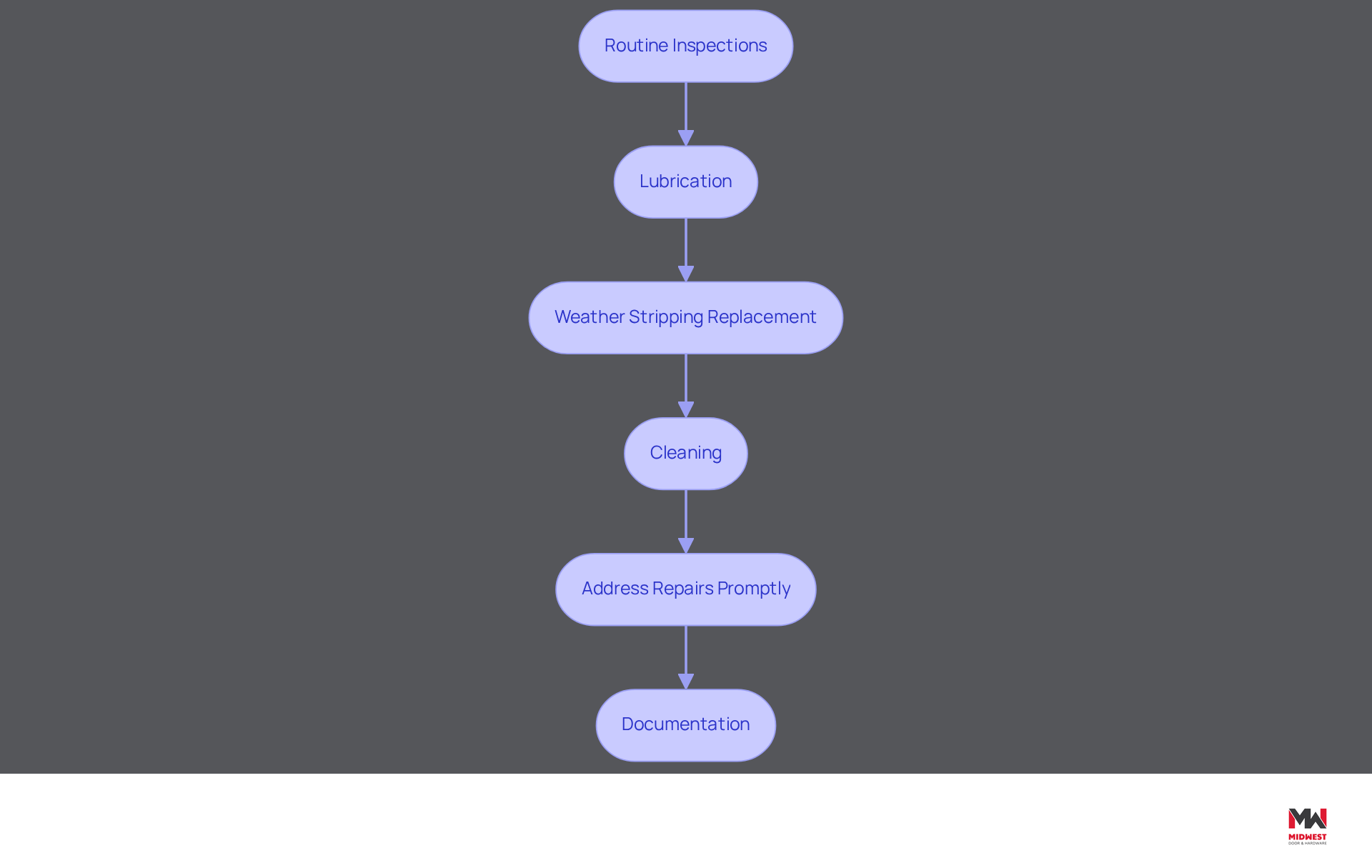
To ensure the integrity and functionality of back doors, a structured maintenance and inspection protocol is essential:
- Routine Inspections: Schedule regular inspections at least twice a year to check for signs of wear, damage, or misalignment. Look for issues such as rust, peeling paint, or damaged weather stripping. Regular maintenance helps catch small issues before they turn into bigger problems, ensuring that entrances remain functional and safe.
- Lubrication: Regularly lubricate hinges, locks, and other moving parts to ensure smooth operation. Use a silicone-based lubricant to prevent dust and debris buildup, which can hinder functionality and lead to premature wear.
- Weather Stripping Replacement: Inspect weather stripping for wear and replace it as needed to maintain energy efficiency and prevent drafts. Proper sealing is crucial for minimizing energy loss and enhancing comfort within the building.
- Cleaning: Clean the surface of the entryway regularly to remove dirt and grime. Use a mild soap solution and a soft cloth to avoid damaging the finish. Keeping doors clean not only improves aesthetics but also prolongs their lifespan.
- Address Repairs Promptly: If any issues are identified during evaluations, address them immediately to prevent further damage. This includes tightening loose hardware, replacing damaged components, and repainting or refinishing as necessary. Prompt action can save costs and ensure safety.
- Documentation: Keep a service log to track inspections, repairs, and replacements. This documentation can be valuable for warranty claims and future upkeep planning, ensuring compliance with industry standards and enhancing accountability.
By following these protocols, contractors can ensure the standard back door remains functional and safe, which directly contributes to client satisfaction and project success. Regular maintenance not only protects the investment in commercial door systems but also aligns with best practices for safety and compliance.
Conclusion
Effective selection and installation of standard back doors are critical to ensuring security and compliance in commercial environments. Understanding best practices for material selection, installation techniques, and ongoing maintenance helps contractors enhance the performance and longevity of these critical entry points.
Key insights emphasize the importance of choosing the right materials, such as steel, fiberglass, and hollow metal, which meet safety standards and cater to the specific needs of commercial environments. Proper installation techniques, including the use of shims and secure fasteners, are crucial for maintaining door alignment and functionality. Additionally, adherence to local building codes and regular maintenance protocols ensures that back doors remain compliant and operational over time.
By committing to best practices in back door installation and maintenance, contractors safeguard the building's integrity and foster client trust. By prioritizing quality and compliance, contractors can position themselves as reliable partners in the construction process, paving the way for successful projects and lasting relationships. By embracing these practices, contractors can enhance safety, efficiency, and overall project success in commercial construction.
Frequently Asked Questions
What materials are commonly used for standard back doors in commercial settings?
Common materials include steel, fiberglass, timber, and hollow metal. Each material has its own advantages in terms of security, durability, and maintenance.
Why is steel a popular choice for back doors in commercial settings?
Steel is known for its strength and security, making it ideal for high-traffic areas. It offers excellent resistance to impact and adverse weather conditions, with over 65% of newly approved commercial construction projects specifying steel due to its durability and fire resistance ratings ranging from 30 to 180 minutes.
What are the benefits of using fiberglass for back doors?
Fiberglass is celebrated for its durability and low maintenance requirements. It resists warping, cracking, and rust, making it suitable for various climates. The fiberglass entryway market is expected to grow significantly, indicating a demand for energy-efficient and visually appealing options.
What are the drawbacks of using timber for back doors?
While timber entries are aesthetically pleasing, they often require more maintenance and can be vulnerable to weather damage. Their use in commercial settings is less common due to these maintenance concerns, although they can be treated for enhanced durability.
What are hollow metal entries, and why are they favored in commercial structures?
Hollow metal entries are lightweight yet sturdy doors that can serve as standard back doors. They are often fire-rated and are commonly used in institutional environments, conforming to compliance standards that require fire-rated entries.
What compliance standards should be considered when selecting back door materials?
It is essential to ensure that selected materials meet local building codes and standards, including fire ratings and energy efficiency requirements. Compliance with FEMA, ICC 500, NFPA 80, and local building regulations is crucial for fire-rated and tornado-rated entries.
What are the requirements for tornado-rated shelter hardware?
Tornado-rated shelter hardware must be properly labeled and compliant with interior egress requirements. Non-listed hardware is unacceptable, and it is important to ensure compatibility with the selected door materials.
List of Sources
- Select Appropriate Back Door Materials and Standards
- Commercial Doors & Architectural Hardware | Mills & Nebraska (https://millsnebraska.com/blog/fiberglass-doors-for-florida-commercial-projects)
- Fiberglass Doors Market Size & Share, Industry Report 2035 (https://gminsights.com/industry-analysis/fiberglass-doors-market)
- Why Fiberglass Doors Are a Smart Upgrade for 2026 – Plastpro Inc (https://plastproinc.com/inspiration-insights/ideas-and-inspiration/why-fiberglass-doors-are-a-smart-upgrade-for-2026)
- Steel Door Market Size, Share, Forecast, 2034 (https://marketreportsworld.com/market-reports/steel-door-market-14722759)
- Hollow Metal Manufacturers Association National Association of Architectural Metal Manufacturers (https://naamm.org/division/news/5)
- Implement Proper Installation Techniques for Durability
- Commercial Door Trends for 2026: What Businesses Need to Know - Insights from Align Doors & Maintenance Ltd. (https://aligndoors.ca/post/commercial-door-trends-for-2026-what-businesses-need-to-know)
- Fire Door Installation Guide: Expert Tips For 2026 | UK Wide Coverage | Logic Fire & Security (https://logicfireandsecurity.com/news/fire-door-installation)
- How to Prepare for Commercial Door Installation | Select Door (https://selectdoor.ca/blog/2023/01/09/5-tips-for-getting-commercial-doors-installed)
- Best Practices for Selecting and Installing Commercial Grade Doors (https://midwestdoor.net/news/best-practices-for-selecting-and-installing-commercial-grade-doors)
- Ensure Compliance with Local Building Codes and Regulations
- Miami-Dade Hurricane Impact Door Installation Guide 2026 (https://gladiatorwindowanddoors.com/blogs/news/miami-dade-hurricane-impact-door-installation-guide-2026?srsltid=AfmBOooneA8XiQHkK-RmPYskTKi8qhBppbCkys-LY6E0Zcvlt49Zox3-)
- DOJ Extends Public Entities’ Compliance Deadline for ADA-Related Website Accessibility, But HHS’s May 2026 Deadline Still Looms - Jackson Lewis (https://jacksonlewis.com/insights/doj-extends-public-entities-compliance-deadline-ada-related-website-accessibility-hhss-may-2026-deadline-still-looms)
- Adopted Building Codes | City of San José (https://sanjoseca.gov/your-government/departments-offices/planning-building-code-enforcement/building-division/adopted-building-codes)
- Latest California Building Codes for 2026 - A Complete Guide (https://vulcanvents.com/latest-california-building-codes-for-2026-a-complete-guide)
- Establish Regular Maintenance and Inspection Protocols
- Creating an In-House Fire Door Inspection and Maintenance Program (https://soleran.com/blog-posts/creating-an-in-house-fire-door-inspection-and-maintenance-program)
- In HelloNation, San Diego Engineering Expert Matthew Foley, PE, Highlights the Importance of Annual Fire Door Inspections (https://prnewswire.com/news-releases/in-hellonation-san-diego-engineering-expert-matthew-foley-pe-highlights-the-importance-of-annual-fire-door-inspections-302682969.html)
- Emphasizing Fire Door Safety with Vortex Doors (https://vortexdoors.com/blog/emphasizing-fire-door-safety-with-vortex-doors)
- The Importance of Fire Door Inspection and Maintenance (https://totalgroup.ca/blog/the-importance-of-fire-door-inspection-and-maintenance)
- How Often Do Commercial Doors Need Maintenance? (https://overheaddoorcocharleston.com/garage-door-installation-replacement/how-often-do-commercial-doors-need-maintenance-2)
Related News
Check out more of what we’ve worked on.