

Introduction
For midsize contractors in Nebraska, selecting and installing commercial iron doors is not just a task; it’s a critical responsibility that demands precision and adherence to safety standards. This article outlines best practices that enhance durability and functionality while ensuring compliance with local building codes. Yet, with numerous factors at play - from material quality to installation techniques - how can contractors navigate these complexities to deliver secure and efficient solutions?
Identify Key Selection Criteria for Commercial Iron Doors
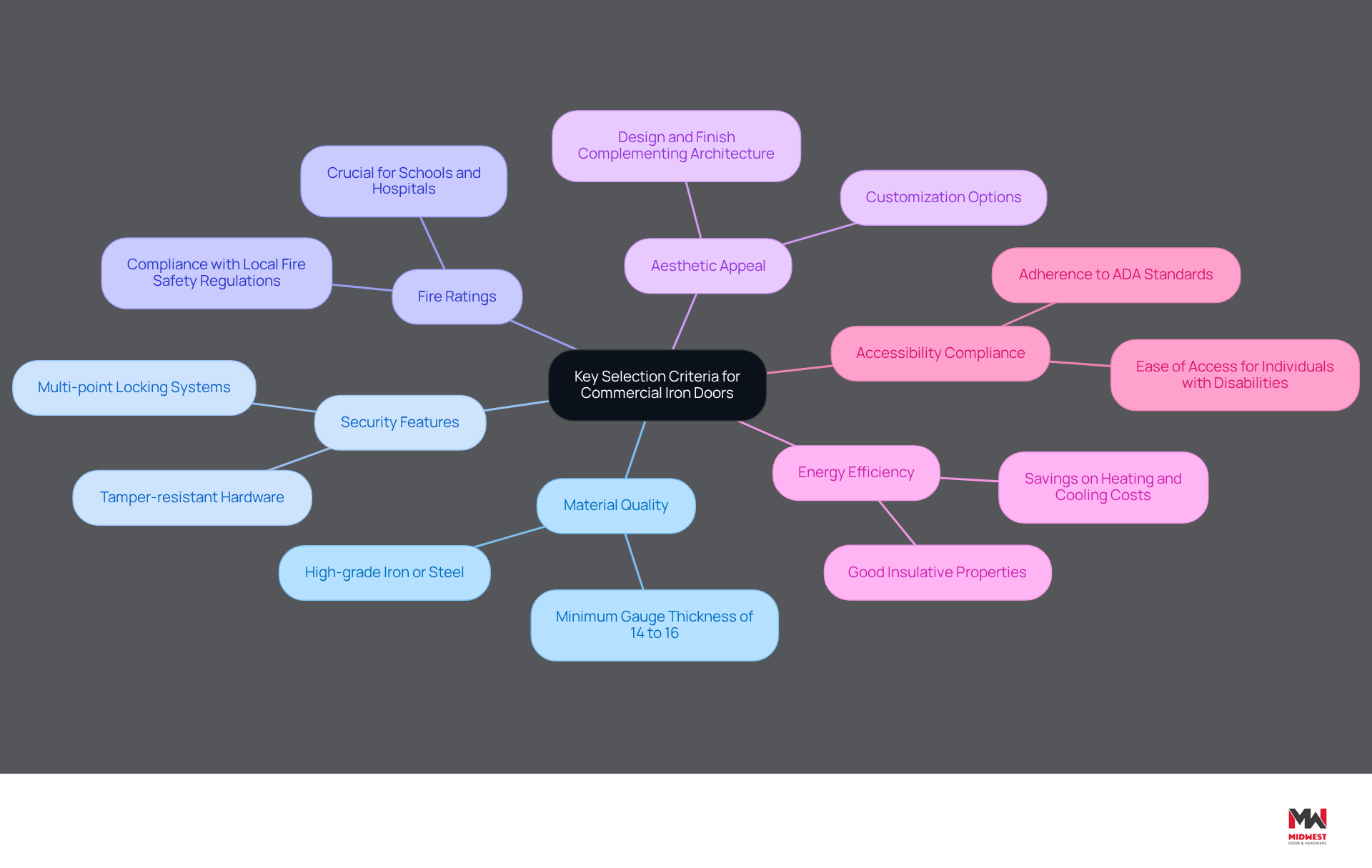
When selecting commercial iron doors, contractors must prioritize specific criteria to ensure safety, functionality, and compliance:
- Material Quality: Select entries made from high-grade iron or steel to ensure durability and resistance to wear. Opt for options with a minimum gauge thickness of 14 to 16 for enhanced strength and longevity.
- Security Features: Evaluate the locking mechanisms and reinforcement options of the entryway. Features such as multi-point locking systems and tamper-resistant hardware significantly enhance security, making them ideal for high-traffic commercial environments.
- Fire Ratings: Make sure to choose fire-rated entries that meet local fire safety regulations. These are crucial in commercial settings, particularly in schools and hospitals, to provide safety and meet legal requirements.
- Aesthetic Appeal: The design and finish of the entrances should complement the building's architecture. Customization options can enhance visual appeal while maintaining functionality, allowing for seamless integration into the overall design.
- Energy Efficiency: Choose entryways with good insulative properties to improve energy efficiency. This choice can lead to significant savings on heating and cooling costs over time, contributing to lower operational expenses and a reduced environmental footprint.
- Accessibility Compliance: Ensure that the chosen entrances adhere to ADA standards, providing ease of access for all individuals, including those with disabilities.
By concentrating on these criteria, contractors can choose commercial iron doors that not only fulfill functional requirements but also enhance the overall quality and safety of their projects. Additionally, it is essential to conduct annual inspections and testing of fire-rated entry assemblies per NFPA 80, with documented maintenance programs in place to ensure ongoing compliance and performance. Furthermore, adherence to ICC 500 standards for tornado-rated entries is critical, particularly for designated storm shelters, ensuring that all hardware is listed and compliant with interior egress requirements.
Understand Installation Requirements and Best Practices
The proper installation of commercial iron doors is essential for ensuring durability and compliance with building codes.
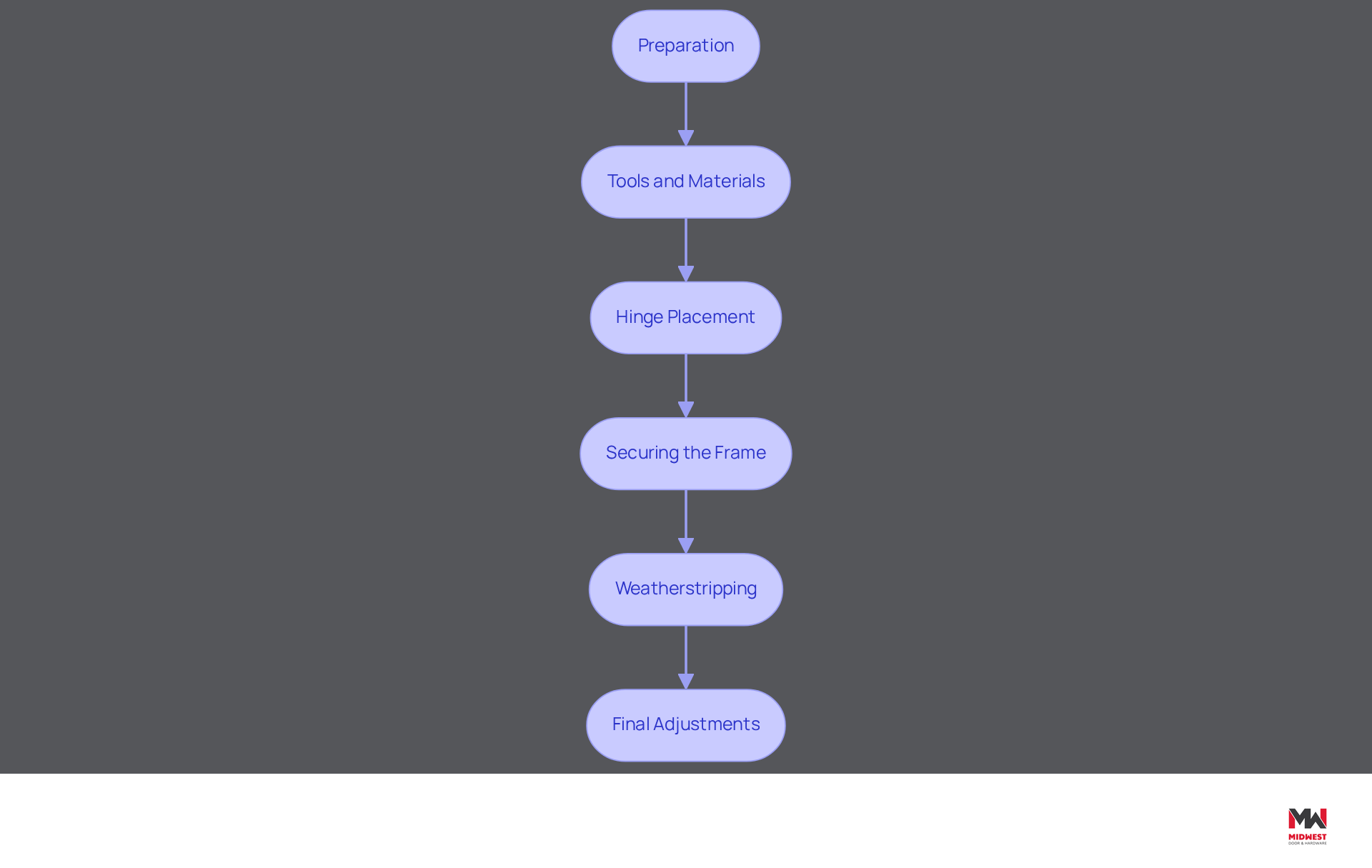
- Preparation: Ensure that the rough opening is correctly sized and level before installation. Measure the frame and adjust the opening as necessary to accommodate the dimensions of the entry. Improper measurements can result in costly delays and additional work, including gaps that allow cold air and moisture to enter.
- Tools and Materials: Make sure you have all the right tools ready, like a level, drill, screws, and shims. Having the right tools on hand streamlines the installation process and minimizes the risk of errors.
- Hinge Placement: Install hinges according to the manufacturer's specifications. Proper alignment is essential to support the weight of the entrance and ensure smooth operation. Misaligned hinges can lead to operational hazards.
- Securing the Frame: Use shims to level the frame within the opening. Secure the frame with screws, ensuring it is plumb and square to prevent misalignment, which can cause sticking or gaps.
- Weatherstripping: Apply weatherstripping around the frame to enhance energy efficiency and prevent drafts. This is particularly important in commercial settings where commercial iron doors play a crucial role in temperature control, especially in climates with significant rainfall or snowfall.
- Final Adjustments: After installation, check the operation of the entrance. Make any necessary adjustments to the hinges and locks to guarantee smooth functionality. Regular checks for functionality and seal integrity are recommended to maintain performance over time.
Ultimately, meticulous installation practices lead to long-lasting performance and compliance with industry standards.
Ensure Compliance with Building Codes and Regulations
Adhering to building codes is not just a regulatory requirement; it’s essential for ensuring project safety and success, particularly for small and midsize builders who depend on trustworthy partners like Midwest Door & Hardware. Here are key considerations for contractors:
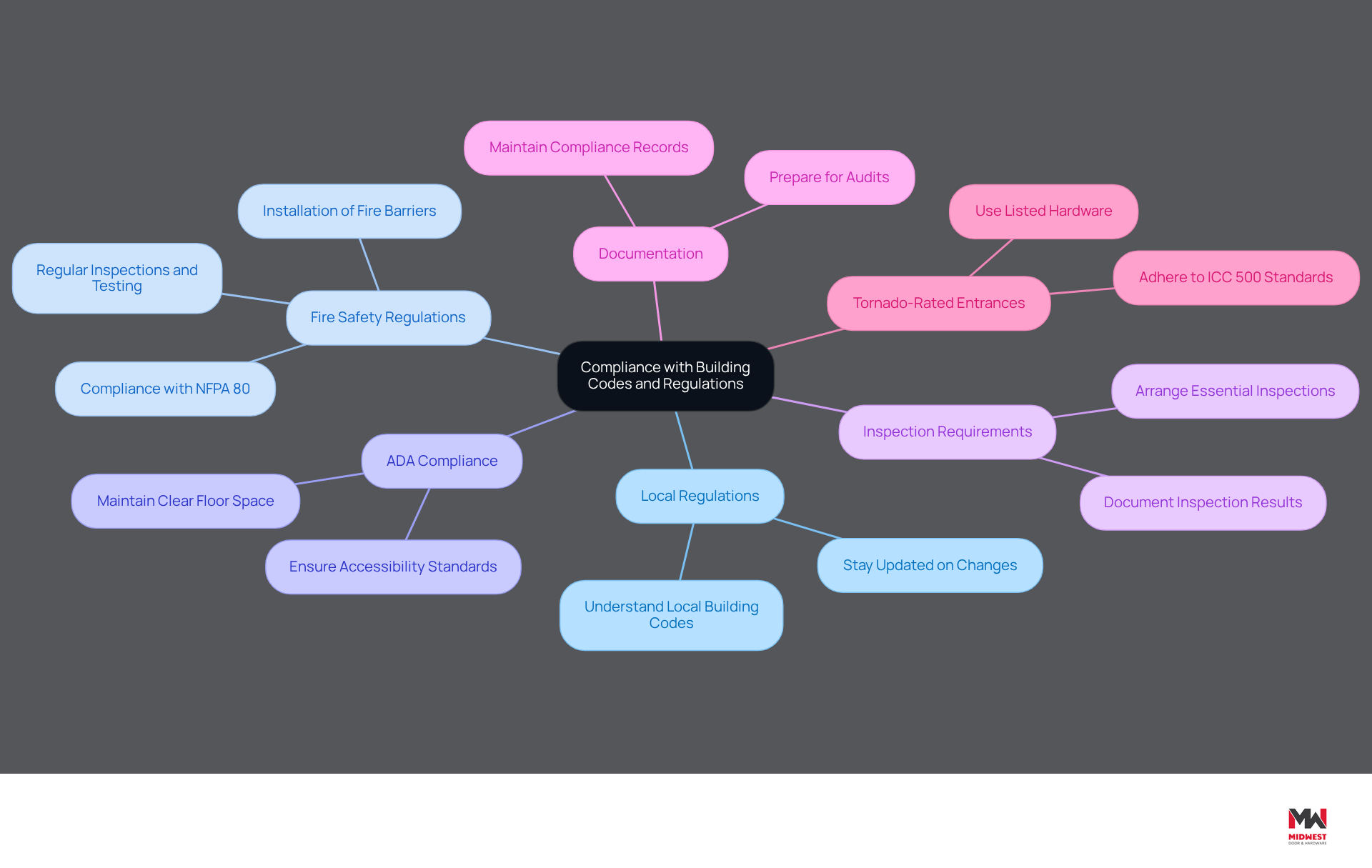
- Understand the local building regulations that dictate the installation of commercial iron doors. These regulations can differ significantly by location, often including specific requirements for fire ratings, accessibility, and security measures. For contractors in Nebraska, it’s crucial to stay updated on local regulations that impact your projects.
- Fire Safety Regulations: Ensure that all commercial iron doors comply with fire safety standards, including suitable fire ratings and installation methods. This is particularly important in schools and hospitals, where safety must come first. Fire barriers must be installed with specific hardware, including ball bearing steel hinges, and require annual inspection and testing of fire-rated assemblies as mandated by NFPA 80. Regular evaluations and upkeep are crucial to guarantee these entrances operate properly in emergencies.
- ADA Compliance: Confirm that the doors meet the Americans with Disabilities Act (ADA) standards, ensuring accessibility for individuals with disabilities. This includes maintaining clear floor space that does not overlap with accessible routes, particularly in public areas.
- Inspection Requirements: Be aware of any inspection mandates from local authorities. Arrange essential inspections to guarantee adherence and prevent possible fines or project delays. Proper documentation of inspections and adherence measures is crucial for audits or disputes. Failure to comply with local regulations can result in costly fines and significant project delays.
- Documentation: Maintain thorough records of all compliance actions taken, including permits, inspection reports, and certifications. This documentation is invaluable for demonstrating adherence to regulations and can protect your business in case of audits.
- Tornado-Rated Entrances: For projects in high-risk areas, strict adherence to ICC 500 standards for tornado-rated entrances in designated storm shelters is mandatory, with no substitutions or equivalents allowed. Tornado-rated shelter entrance hardware must be listed and compliant with interior egress requirements. Using non-listed hardware is not an option.
By emphasizing adherence to building codes and regulations, construction professionals can guarantee the safety and legality of their projects, ultimately protecting their business and clients. Additionally, adherence to FEMA, ICC 500, NFPA 80, and local building codes is essential for fire-rated and tornado-rated entries, including proper labeling, hardware compatibility, and installation standards. MDH's expertise, including their in-house fabrication shop and keying services, along with their commitment to responsive communication, make them a trusted ally for builders navigating these complex requirements.
Implement Maintenance and Support Strategies for Longevity
To ensure the longevity of commercial iron doors, contractors must adopt effective maintenance strategies:
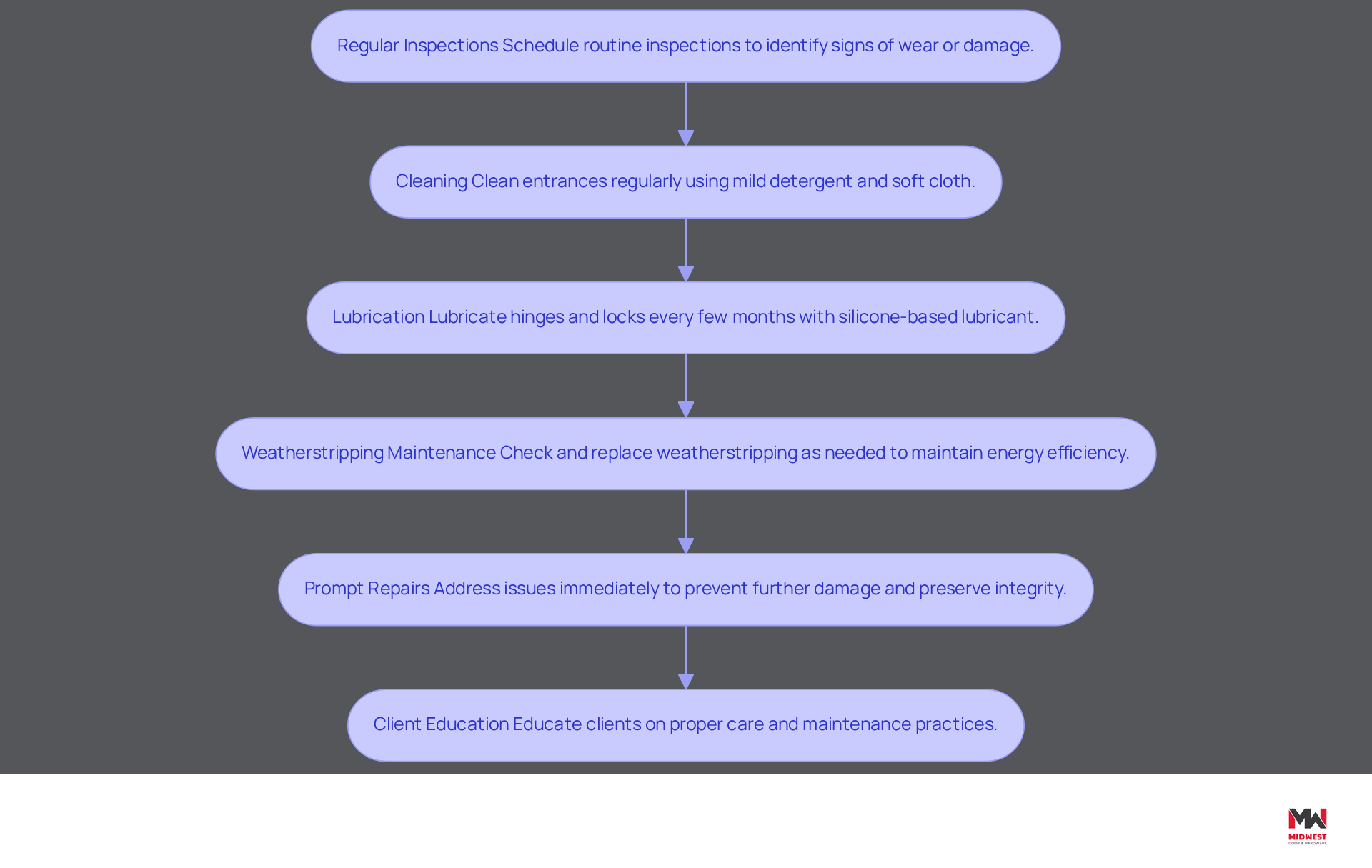
- Regular Inspections: Schedule routine inspections to identify signs of wear or damage. Focus on issues such as rust, misalignment, and malfunctioning hardware. Regular inspections are crucial; they help prevent costly repairs and ensure safety compliance.
- Cleaning: Clean the entrances regularly using a mild detergent and soft cloth to remove dirt and grime. Avoid abrasive cleaners that can damage the finish. Cleaning regularly not only keeps the doors looking good but also reveals any hidden structural issues.
- Lubrication: Lubricate hinges and locks every few months to ensure smooth operation. A silicone-based lubricant is advised to prevent rust and corrosion, which can greatly prolong the lifespan of the hardware.
- Weatherstripping Maintenance: Check weatherstripping for wear and replace it as needed to maintain energy efficiency and prevent drafts. Failing to replace worn weatherstripping can result in increased energy costs and moisture damage.
- Prompt Repairs: Address any issues immediately to prevent further damage. This involves fixing scratches, dents, or rust spots to preserve the integrity and appearance of the entryway. Proactive maintenance can help avoid higher repair costs in the future.
- Client Education: Educate clients on proper care and maintenance practices to ensure they understand how to keep their entries in optimal condition. Offering clients information about upkeep can improve their satisfaction and extend the lifespan of their entrances.
By applying these maintenance strategies, contractors can assist clients in prolonging the lifespan of their commercial iron doors, ensuring they stay functional and visually appealing for years ahead. Ultimately, a commitment to these practices not only enhances the durability of the doors but also safeguards the investment made in them. Additionally, adherence to documented maintenance programs and compliance with NFPA 80 standards for fire-rated doors is essential for safety and regulatory compliance.
Conclusion
For midsize contractors, the selection and installation of commercial iron doors present significant challenges that directly impact project safety and compliance. Contractors should prioritize key selection criteria, including:
- Material quality
- Security features
- Fire ratings
- Accessibility compliance
These factors are essential for making informed decisions that enhance project quality. Proper installation practices, such as accurate measurements and adherence to building codes, are crucial for achieving long-lasting performance and meeting regulatory requirements.
Throughout the article, the importance of compliance with local building regulations, fire safety standards, and ADA requirements has been emphasized. Implementing regular maintenance strategies, such as:
- Thorough inspections
- Prompt repairs
allows contractors to safeguard their projects and build trust with clients. This ensures that their investments remain secure and functional.
For contractors in Nebraska, committing to quality and compliance in installing and maintaining commercial iron doors is essential for success. By partnering with reliable suppliers, contractors can access the guidance and resources necessary to navigate the complexities of commercial door installations. Embracing these best practices will not only enhance project outcomes but also contribute to a safer and more efficient built environment for all.
Frequently Asked Questions
What are the key selection criteria for commercial iron doors?
The key selection criteria include material quality, security features, fire ratings, aesthetic appeal, energy efficiency, and accessibility compliance.
What material should be used for commercial iron doors?
Commercial iron doors should be made from high-grade iron or steel, with a minimum gauge thickness of 14 to 16 for enhanced strength and durability.
Why are security features important in commercial iron doors?
Security features, such as multi-point locking systems and tamper-resistant hardware, are crucial for enhancing security, especially in high-traffic commercial environments.
What is the significance of fire ratings for commercial iron doors?
Fire ratings are important as they ensure the doors meet local fire safety regulations, which is essential in commercial settings like schools and hospitals for safety and legal compliance.
How does aesthetic appeal factor into the selection of commercial iron doors?
The design and finish of the doors should complement the building's architecture, and customization options can enhance visual appeal while maintaining functionality.
What role does energy efficiency play in selecting commercial iron doors?
Choosing entryways with good insulative properties can improve energy efficiency, leading to savings on heating and cooling costs and reducing operational expenses.
What is meant by accessibility compliance in the context of commercial iron doors?
Accessibility compliance refers to ensuring that the chosen entrances adhere to ADA standards, providing ease of access for all individuals, including those with disabilities.
What maintenance practices are recommended for commercial iron doors?
It is essential to conduct annual inspections and testing of fire-rated entry assemblies per NFPA 80, along with maintaining documented maintenance programs to ensure ongoing compliance and performance.
What standards should be followed for tornado-rated entries?
Adherence to ICC 500 standards is critical for tornado-rated entries, particularly for designated storm shelters, ensuring that all hardware is listed and compliant with interior egress requirements.
List of Sources
- Identify Key Selection Criteria for Commercial Iron Doors
- Commercial Doors & Architectural Hardware | Mills & Nebraska (https://millsnebraska.com/blog/commercial-metal-doors-built-for-floridas-codes-and-climate)
- Iron Doors for Commercial Spaces: Enhancing Business Image with Sophisticated Design (https://palmcityironworks.com/blog/iron-doors-for-commercial-spaces-enhancing-business-image-with-sophisticated-design)
- Hollow Metal Manufacturers Association National Association of Architectural Metal Manufacturers (https://naamm.org/division/news/5)
- What Materials Are Best for Durable Commercial Doors? A Guide for Construction Professionals (https://construction-today.com/news/what-materials-are-best-for-durable-commercial-doors-a-guide-for-construction-professionals)
- 2026 Guide to Buying Hollow Metal Doors - Clark & Sons (https://clarkandsonsdoors.com/blog/hollow-metal-doors-buyer-guide-2026)
- Understand Installation Requirements and Best Practices
- 5 common mistakes in door installation (and how to avoid them) (https://vikingarm.com/2025/10/17/5-common-mistakes-in-door-installation)
- The Gateway to Elegance: A Handy Guide to Iron Door Installation (https://irondoorsforever.com/2023/07/20/the-gateway-to-elegance-a-handy-guide-to-iron-door-installation-from-prep-to-wow?srsltid=AfmBOoowQCUkCrOwsQBWEd65LD0VP2b2-7F2_tpA5y6crTF6I9W0uqbZ)
- Commercial Door Installation Mistakes NYC Businesses Make (https://securadoor.com/commercial-door-installation-mistakes-nyc-businesses-make)
- Common Mistakes to Avoid During Commercial Door Installation (https://bostoncommercialdoorsystems.com/blog/common-mistakes-to-avoid-during-commercial-door-installation)
- How To Install An Iron Door - Wholesale Iron Doors (https://wholesaleirondoors.com/how-to-install-an-iron-door?srsltid=AfmBOopu-WKv1t-OXlX_G-84nBdj15Ori6znplb7Lc1BihvlS5ZHJZSJ)
- Ensure Compliance with Building Codes and Regulations
- PM Design - 2026 California Building Code Changes for Commercial Projects (https://pmdesign.com/news/2026-california-building-code-changes-for-commercial-projects)
- Safety First: Commercial Fire Door Requirements | North Central Supply,Inc. (https://northcentralsupply.com/news/safety-first-commercial-fire-door-requirements)
- Important Building Code Laws for Commercial Entry Doors (https://cdfdistributors.com/blog/post/important-building-code-laws-for-commercial-entry-doors)
- 2026 Building Code Updates for Contractors (https://projul.com/blog/construction-building-codes-2026-guide)
- Best Practices for Commercial Metal Frame Doors: Key Insights for Contractors (https://midwestdoor.net/news/best-practices-for-commercial-metal-frame-doors-key-insights-for-contractors)
- Implement Maintenance and Support Strategies for Longevity
- How Long Do Iron Doors Last? Lifespan & Durability | Abby Iron Doors (https://abbyirondoors.com/learn/how-long-do-iron-doors-last)
- Best Practices for Maintaining Your Commercial Steel Doors (https://cdfdistributors.com/blog/post/best-practices-for-maintaining-your-commercial-steel-doors)
- Commercial Door Routine Maintenance Issues & Fixes | RCI Doors™ (https://rcidoors.com/commercial-door-routine-maintenance)
- How to Create a Proactive Maintenance Plan for Commercial Doors to Reduce Costs and Downtime (https://vortexdoors.com/blog/how-to-create-a-proactive-maintenance-plan-for-your-doors)
Related News
Check out more of what we’ve worked on.