
Wood Doors
Cosmetic Wood Door Repair: How MDH Extends the Life of Your Commercial Doors
A scuffed veneer. A dented face. A corner that took one too many hits from a housekeeping cart. Surface damage on commercial wood doors is one of those things that facility managers learn to live with — because replacing a door feels like a big, expensive undertaking for what looks like a cosmetic problem.
Here's what most people don't know: you don't always have to replace it.
MDH offers cosmetic wood door repair — and we're the only commercial door company in the region that does. It's a service that saves buildings real money, extends the life of their existing doors, and keeps interiors looking the way they were designed to look.
Why Commercial Wood Doors Take a Beating
Commercial wood doors work hard. In a school, a hospital, a hotel, or an office building, a single door might open and close hundreds of times a day. Carts, gurneys, luggage, hand trucks, and the general wear of high-traffic use take a toll over time.
The damage is usually cosmetic — surface level, not structural. A door that looks rough might still be operating perfectly fine. The hinges are good. The lockset functions. The closer works. But the face of the door tells a different story, and in environments where appearance matters — healthcare lobbies, hotel corridors, executive office suites — a beat-up door sends the wrong message.
The instinct is often to replace the door. And sometimes that's the right call. But a lot of the time, it isn't.
What Cosmetic Wood Door Repair Actually Covers
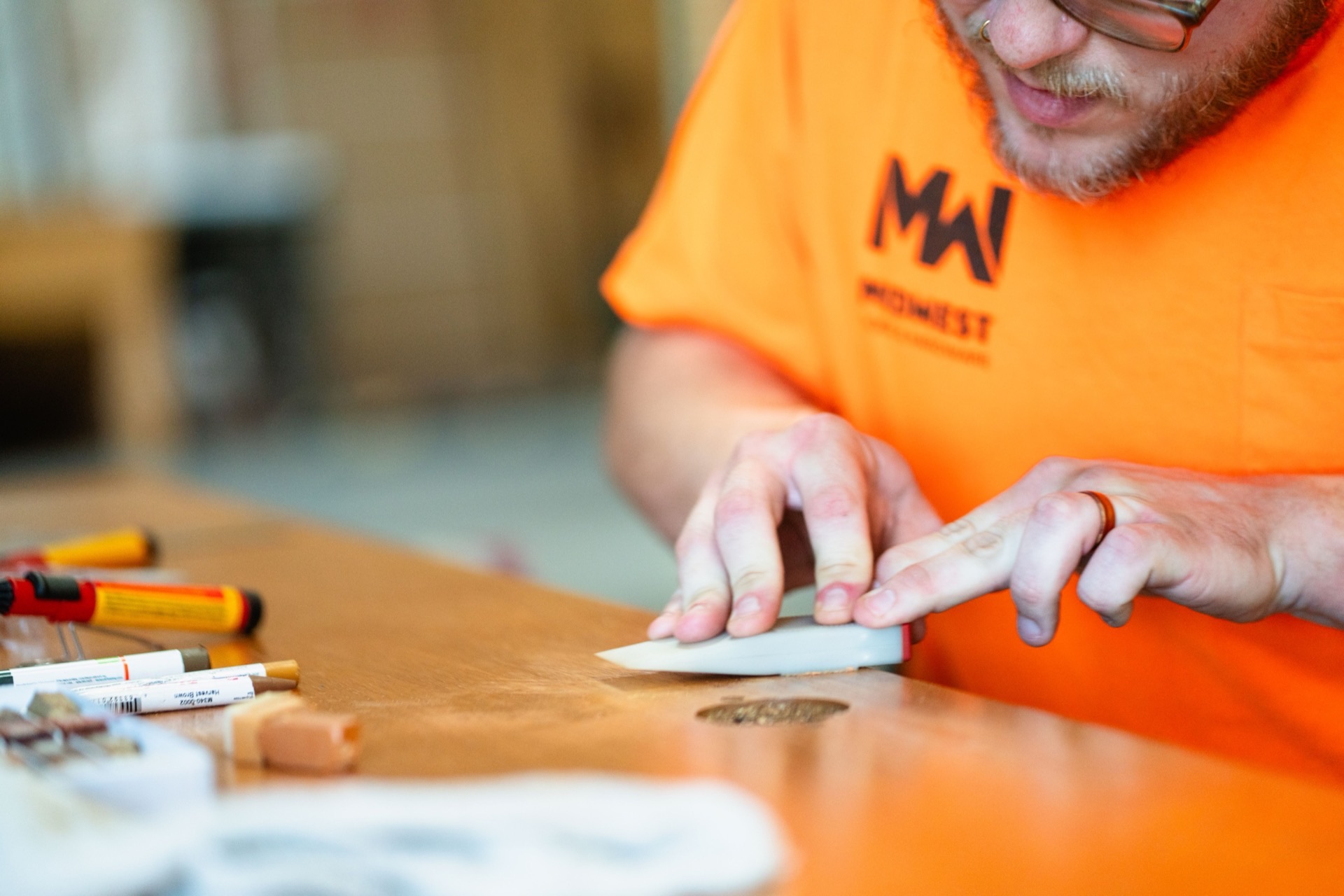
MDH's cosmetic wood door repair service addresses surface-level damage that affects the appearance of the door without compromising its structural integrity or performance.
That includes veneer repairs — patching, filling, and refinishing damaged face veneer to restore a clean, uniform surface. It includes edge and corner repairs on doors that have taken impact damage from carts or equipment. It includes finish matching — blending repaired areas to the existing door finish so the work disappears into the surrounding surface.
The goal is a door that looks like it was never damaged. In most cases, that's exactly what we can deliver.
What cosmetic repair doesn't cover is structural damage — a door that's been compromised at its core, that's warped beyond correction, or that's failed at the stile and rail level. Those doors genuinely do need replacement, and we'll tell you that honestly when we see it. But in our experience, a significant number of doors that get replaced didn't need to be.
The Case for Repair Over Replacement
The cost difference between repairing a commercial wood door and replacing it is substantial.
A replacement door means the cost of the new door itself, the cost of removal and disposal of the existing door, the cost of installation, and in many cases the cost of refinishing or finishing to match the surrounding doors in the corridor. Lead time for a replacement door — especially if it's fire-rated, or a custom size, or a specific species and finish — can stretch to several weeks.
A cosmetic repair is faster, less disruptive, and significantly less expensive. For a building with multiple damaged doors, the savings compound quickly.
For facility managers working within a maintenance budget, that math matters. Extending the life of an existing door by several years — at a fraction of replacement cost — is often the smarter financial decision.
Who This Service Is For
Cosmetic wood door repair is especially valuable for a few specific building types.
Healthcare facilities — hospitals, clinics, long-term care buildings — deal with constant cart and equipment traffic that damages corridor doors over time. Appearance standards in healthcare environments are high. Repair keeps doors looking appropriate for the setting without the disruption of replacement.
Hotels and hospitality properties have the same challenge. Guest-facing corridors, meeting room entries, and common area doors all need to look their best. A repair program keeps the property looking maintained without the expense of wholesale door replacement during renovations.
Schools and universities see high-abuse use across classroom and corridor doors. Cosmetic repair extends the life of those doors through budget cycles where replacement isn't always feasible.
Office buildings and corporate interiors — especially in executive areas, lobbies, and conference rooms — benefit from repair when individual doors have taken damage but the surrounding environment is otherwise in good condition.
How the Process Works
If you've got doors that might be candidates for repair, the process starts with an assessment. Our team looks at the damage, evaluates whether repair is the right solution, and gives you an honest recommendation. If repair makes sense, we scope the work and get it scheduled.
The repair work itself is typically performed on site — which means no removing doors from their openings, no disruption to building operations, and no lead time waiting for a replacement to arrive.
When the work is done, you've got doors that look the way they're supposed to — and a building that reflects the care that's gone into it.
That's a service worth knowing about. And as far as we know, it's one that only MDH offers in this region.
If you have wood doors in your building that could use some attention, reach out to our team and let's get started. our contact page
Start Your Build
Got a project? We'll bring frames, doors, hardware, and the expertise to keep every opening on schedule.