

Introduction
Many contractors and DIY enthusiasts find themselves confused by the nuances of door handing, which can lead to costly mistakes during installation. Proper door handing is crucial for ensuring that entrances operate smoothly, comply with regulations, and facilitate accessibility for all users. Identifying whether a door is left or right-handed is essential for ensuring proper installation and compliance with safety standards. This guide delves into the essential techniques and tools needed to master door handing. By mastering door handing, contractors can avoid costly mistakes and ensure that every installation meets the highest standards of efficiency and safety.
Understand Door Handing: Importance and Basics
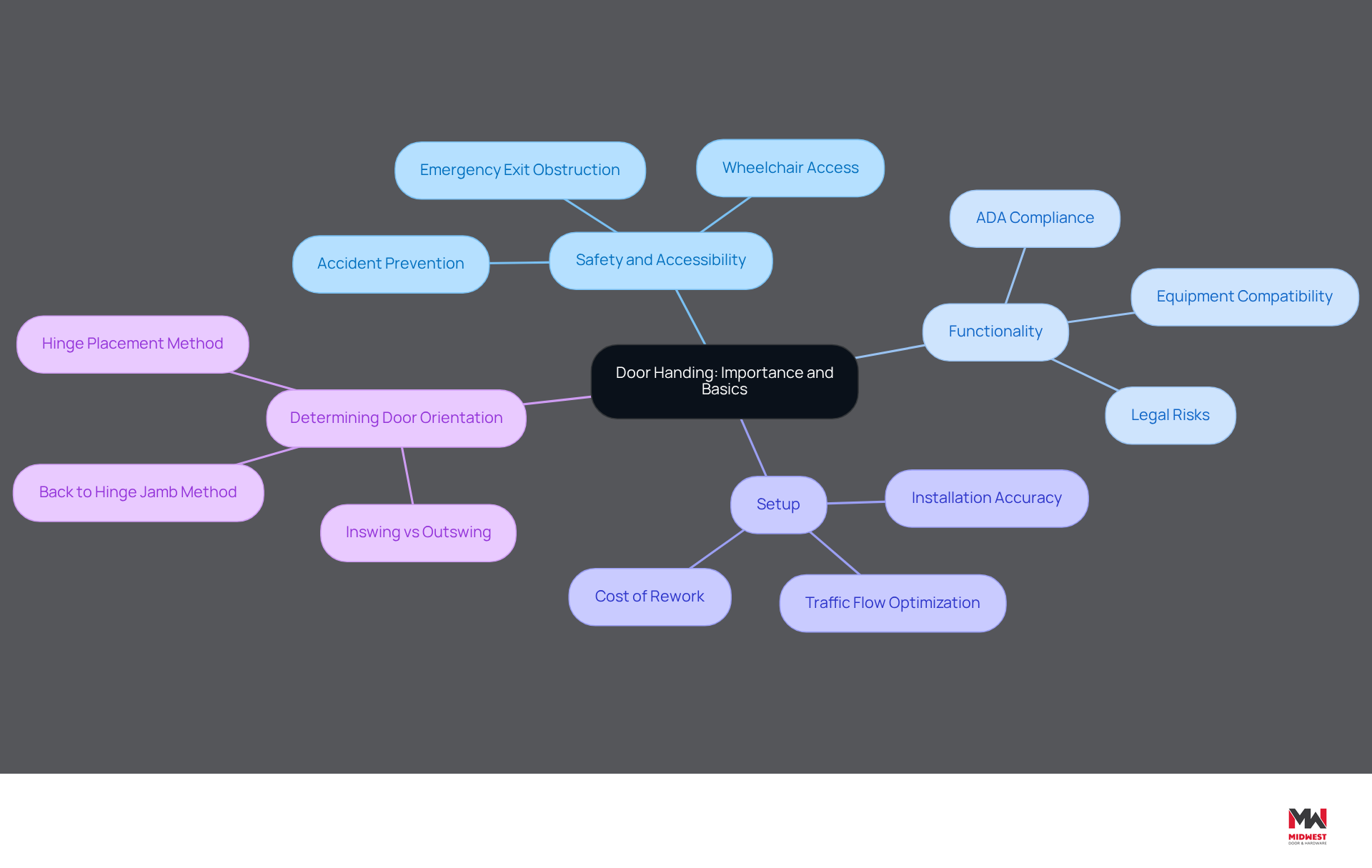
Understanding door handing is essential for ensuring safety, functionality, and compliance in commercial spaces. Door handing refers to the direction in which a door swings open relative to its hinges, a concept that is crucial for several reasons:
- Safety and Accessibility: Proper installation is crucial to ensure that entrances open in a way that does not block pathways or create dangers. Incorrectly positioned entrances can obstruct emergency exits and limit wheelchair access, leading to serious injuries during emergencies or limiting access for individuals with disabilities.
- Functionality: Comprehending door orientation is essential for choosing the suitable equipment, such as locks and handles, which must correspond with the swing direction. This alignment is necessary to maintain compliance with ADA regulations, ensuring that hardware is accessible and easy to operate. Failure to comply with these regulations can expose businesses to legal risks and potential liabilities.
- Setup: Precise recognition of entry orientation prevents installation mistakes that can result in expensive rework. For example, understanding whether an entryway is inswing or outswing is essential for correct installation and functionality.
To figure out how do I know if my door is left or right, focus on two key aspects: where the pivots are located and how the door swings. For inswing entrances, if the pivots are on the left, it signifies a left-handed entry; if on the right, it signifies a right-handed entry, leading to the question of how do I know if my door is left or right. Conversely, for outswing entries, left hinges signify a Right Hand Outswing entry, while right hinges signify a Left Hand Outswing entry.
For instance, businesses that implement best practices in [door handing](https://midwestdoor.net/news/best-practices-for-selecting-and-installing-double-egress-door hardware) often see improved layouts and better customer flow. Moreover, following appropriate entryway positioning practices can promote safer evacuations during emergencies, further highlighting its importance.
Ultimately, neglecting proper door handing can lead to costly mistakes and jeopardize safety in critical situations. Well-managed entrances contribute to smoother operations, reduce the risk of collisions in narrow hallways, and enhance overall accessibility.
Follow These Steps to Identify Door Orientation
It is crucial to understand how do I know if my door is left or right-handed for ensuring proper installation and compliance with building regulations. To accurately determine the orientation of your door, follow these steps:
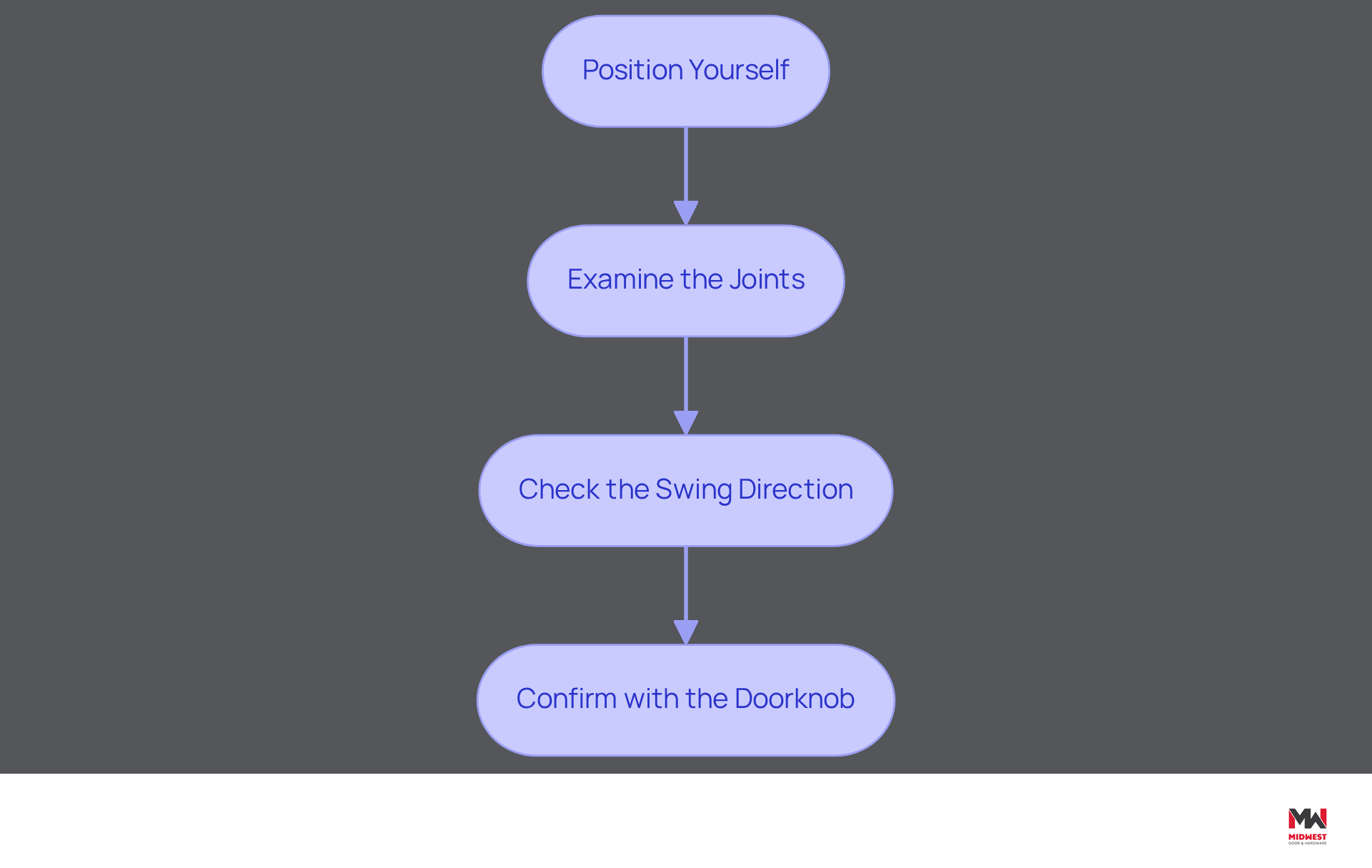
- Position Yourself: Stand on the secure side of the entrance, which typically faces away from the room. This is where you would stand if you were entering the space.
- Examine the Joints: Look at the side of the entrance where the joints are situated. If the hinges are on your left side, you are dealing with a left-handed entry. If they are on your right side, it is a right-handed entrance.
- Check the Swing Direction: Open the entrance. If it swings away from you, it is a left-hand door (if the pivot is on the left) or a right-hand door (if the pivot is on the right). If it swings towards you, it is a left-hand reverse (if the pivots are on the left) or a right-hand reverse (if the pivots are on the right).
- Confirm with the Doorknob: If you're uncertain, try standing with your back against the hinge side. If your left hand is nearer to the doorknob, it is a left-handed entry; if your right hand is nearer, it is a right-handed entry.
Following these steps will guide you on how do I know if my door is left or right. This ensures you select the right hardware and installation methods. About 70% of contractors believe that a strong grasp of entry orientation greatly decreases installation mistakes, which is essential for adhering to building regulations. Misidentifying entry orientation can add 3-10 days to project timelines and disrupt workflow, posing safety hazards. Additionally, it is crucial to adhere to ICC 500 standards for tornado-rated entries, ensuring compliance and safety in construction projects.
Midwest Door & Hardware offers comprehensive installation support, including pre-installation services, field assistance, and ongoing maintenance, to help contractors navigate these challenges effectively. Case studies have demonstrated that clear communication regarding entryway orientation between carpenters and hardware distributors can avert expensive errors and improve project efficiency. Understanding door orientation not only streamlines installation but also safeguards against costly project delays and compliance issues.
Troubleshoot Common Issues in Door Handing
Identifying door handing can be straightforward, yet common pitfalls often complicate the process:
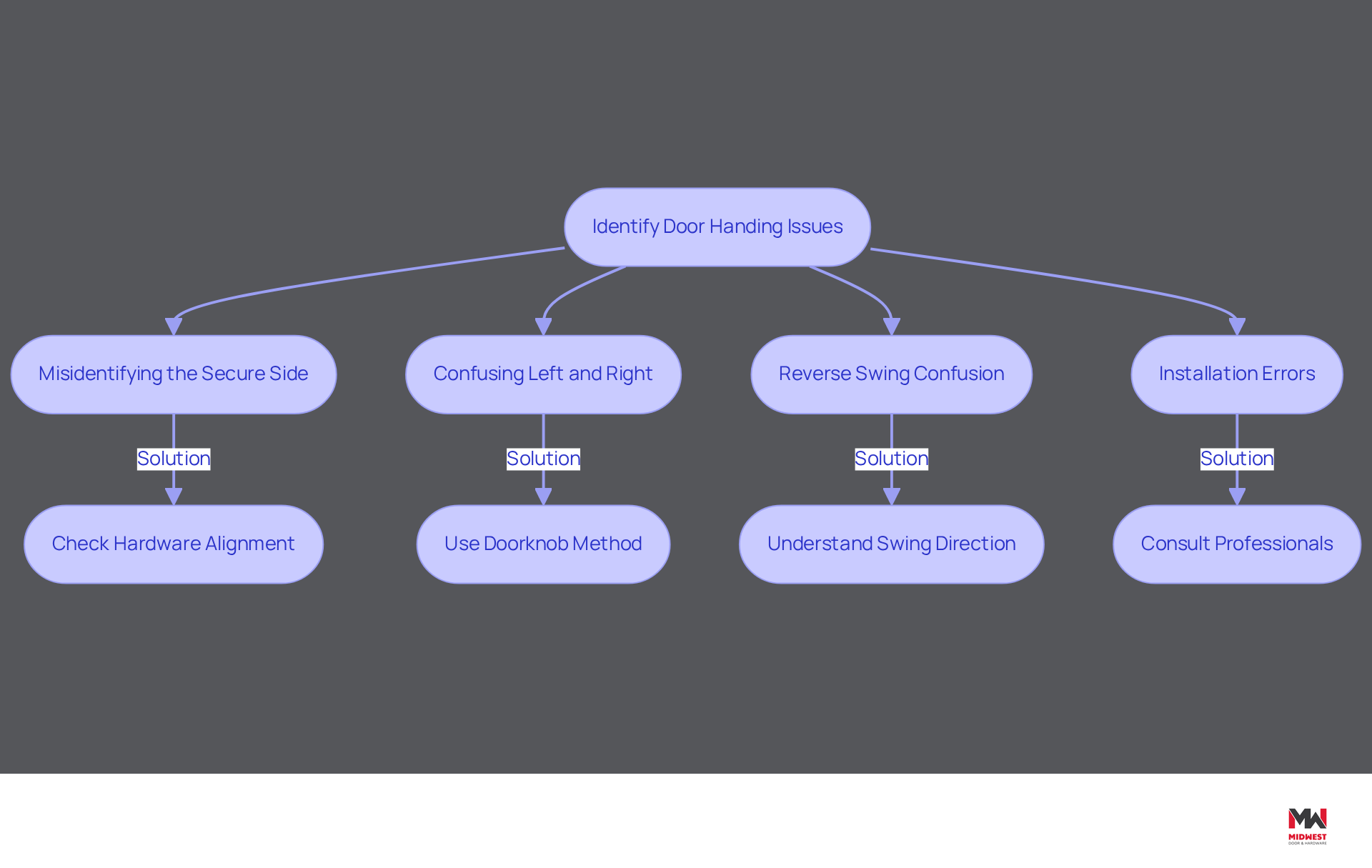
- Misidentifying the Secure Side: Always ensure you are standing on the secure side of the door, which typically faces away from the room. Mispositioning can lead to incorrect interpretations of the delivery.
- Confusing Left and Right: If uncertain, utilize the doorknob method. Position yourself with your back against the side of the door and notice which hand is nearer to the doorknob to identify the orientation precisely.
- Reverse Swing Confusion: For entrances that swing towards you, remember that a left-hand reverse entry has hinges on the left and swings towards you, while a right-hand reverse entry has hinges on the right and swings towards you.
- Installation Errors: If an entry has already been set up and is not operating properly, misaligned hardware can lead to operational failures, complicating the installation process.
Recognizing these common issues and knowing how to address them will enhance your confidence in determining entry orientation. Misunderstanding entry orientation can lead to costly errors, affecting project timelines and budgets. Implementing strategies such as using handing charts and getting advice from experts can really help you avoid these pitfalls. Regular inspections and adherence to compliance standards, including those set by FEMA, ICC 500, and NFPA 80, are essential for ensuring safety and functionality in installations. Furthermore, tornado-rated shelter entrance hardware must be listed and compliant with interior egress requirements; non-listed hardware is unacceptable.
Utilize Tools and Resources for Accurate Door Handing
Accurate determination of how do I know if my door is left or right is crucial for successful installations and compliance with building regulations. To assist in this process, consider utilizing the following tools and resources:
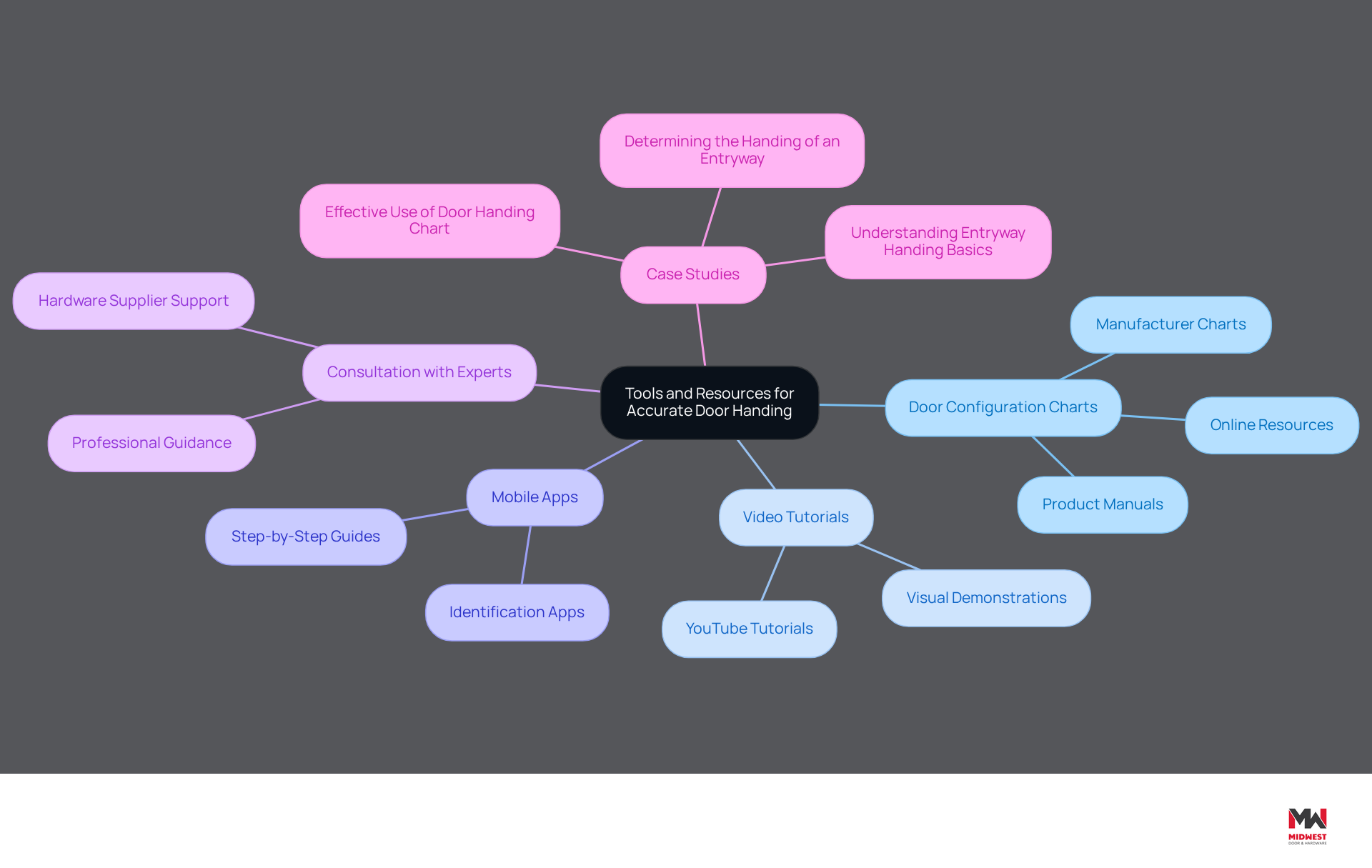
- Door Configuration Charts: Numerous manufacturers offer charts that visually depict entry arrangement setups, including definitions of left-hand, right-hand, left-hand reverse, and right-hand reverse entries. These can be found online or in product manuals, providing a quick reference essential for contractors in selecting appropriate entrances.
- Video Tutorials: Platforms like YouTube host numerous tutorials that visually demonstrate how to identify entry orientation. Watching these can clarify the process and reinforce your understanding through practical examples.
- Mobile Apps: Some mobile applications are designed to assist contractors and DIY enthusiasts in identifying entry orientation. These apps often include diagrams and step-by-step guides, making the identification process more accessible.
- Consultation with Experts: If you are still unsure, consult a professional or contact a hardware supplier like Midwest Door & Hardware for expert guidance. Their expertise can provide valuable insights and ensure you make the right choice.
- Case Studies: Referencing case studies such as 'Determining the Handing of an Entryway' and 'Understanding Entryway Handing Basics' emphasizes the significance of proper orientation for compliance and project efficiency. These studies highlight that roughly 70% of contractors are knowledgeable about entryway orientation, which is essential for avoiding workflow interruptions and safety risks.
Utilizing these tools and resources will enhance your ability to accurately determine entryway orientation. This leads to more successful installations and replacements. Grasping entrance handing is essential for adherence to building regulations, including FEMA, ICC 500, and NFPA 80 standards, which stress appropriate labeling, equipment compatibility, and installation methods. Additionally, ensure that tornado-rated shelter door hardware complies with interior egress requirements, as non-listed hardware is unacceptable. Understanding how do I know if my door is left or right is essential as it not only enhances project efficiency but also safeguards compliance with critical safety standards.
Conclusion
Identifying the correct orientation of doors is crucial for ensuring safety and compliance in various environments. Contractors and facility managers need this knowledge because it directly affects operational efficiency and occupant safety.
Throughout this guide, key steps have been outlined to help accurately determine door handing, including:
- Positioning oneself correctly
- Examining hinge placement
- Checking the swing direction
Common pitfalls have also been addressed, emphasizing the importance of using tools and resources such as door configuration charts and expert consultations. Incorrectly identifying door handing can result in installation errors that compromise safety and functionality. By following these guidelines, contractors can avoid costly mistakes and ensure that installations meet safety standards, particularly in tornado-prone areas like Nebraska.
By mastering door handing, contractors can ensure compliance with safety regulations and enhance operational efficiency. It is imperative for contractors and facility managers to prioritize this knowledge, as it not only enhances operational efficiency but also safeguards against potential hazards. Prioritizing door handing knowledge not only streamlines installations but also significantly reduces the risk of safety violations.
Frequently Asked Questions
What is door handing and why is it important?
Door handing refers to the direction in which a door swings open relative to its hinges. It is important for ensuring safety, functionality, and compliance in commercial spaces.
How does door handing affect safety and accessibility?
Proper door handing ensures that entrances do not block pathways or create dangers, which is crucial for emergency exits and wheelchair access. Incorrectly positioned doors can lead to serious injuries during emergencies or limit access for individuals with disabilities.
Why is understanding door handing essential for functionality?
Understanding door handing is essential for selecting suitable equipment, such as locks and handles, that correspond with the door's swing direction. This alignment is necessary to comply with ADA regulations, ensuring hardware is accessible and easy to operate.
What are the consequences of failing to comply with door handing regulations?
Failure to comply with door handing regulations can expose businesses to legal risks and potential liabilities.
How can recognizing door orientation prevent installation mistakes?
Precise recognition of door orientation helps prevent installation mistakes that can lead to expensive rework, ensuring correct installation and functionality.
How can I determine if my door is left or right-handed?
To determine if a door is left or right-handed, focus on the location of the pivots and how the door swings. For inswing doors, if the pivots are on the left, it is a left-handed door; if on the right, it is a right-handed door. For outswing doors, left hinges indicate a Right Hand Outswing door, while right hinges indicate a Left Hand Outswing door.
What are the benefits of implementing best practices in door handing?
Implementing best practices in door handing can lead to improved layouts, better customer flow, and safer evacuations during emergencies.
What are the risks of neglecting proper door handing?
Neglecting proper door handing can result in costly mistakes and jeopardize safety in critical situations, leading to collisions in narrow hallways and reduced overall accessibility.
List of Sources
- Understand Door Handing: Importance and Basics
- Door Handing Chart & Diagram | Palm City Ironworks (https://palmcityironworks.com/resources/door-handing-chart)
- Client Challenge (https://special-lite.com/how-to-determine-door-handing-a-comprehensive-guide)
- STANLEY Access Technologies Provides Thought Leadership on Accessibility in Healthcare (https://stanleyaccess.com/news/stanley-access-technologies-provides-thought-leadership-accessibility-healthcare)
- The Importance of Choosing the Right Door Handing (https://cdfdistributors.com/blog/post/the-importance-of-choosing-the-right-door-handing)
- Follow These Steps to Identify Door Orientation
- Identify If Your Door is Right Hand: A Step-by-Step Guide (https://midwestdoor.net/news/identify-if-your-door-is-right-hand-a-step-by-step-guide)
- rockymountainhardware.com (https://rockymountainhardware.com/right-hand-vs-left-hand-door-guide)
- Master the Door Handing Chart: Steps for Midsize Contractors (https://midwestdoor.net/news/master-the-door-handing-chart-steps-for-midsize-contractors)
- Determining Door Handing (https://directdoorhardware.com/door-handing.htm?srsltid=AfmBOoq6ccH4PGpGC11zaDaOCH67D6y10yqpT5cr1lSaOQvIUVmSfIuZ)
- Troubleshoot Common Issues in Door Handing
- Premis User Guide (https://kwikset.com/support/guides/premis-user/trouble-door-jam-hand.html)
- Identify If Your Door is Right Hand: A Step-by-Step Guide (https://midwestdoor.net/news/identify-if-your-door-is-right-hand-a-step-by-step-guide)
- 5 Common Commercial Door Problems and How to Fix Them (https://commercialdoorhardwaresupply.com/blogs/news/5-common-commercial-door-problems-and-how-to-fix-them?srsltid=AfmBOoo4i-3P50lhYnp0n3bi7ESt6B8HNjuSOW_DWZaXM0lpm3DX-BYC)
- Door Swing Chart (Door Handing Guide) - CDI Doors (https://cdidoors.com/door-swing-chart-door-handing-guide)
- Master Left Hand Reverse Door Swing: Step-by-Step Guide for Contractors (https://midwestdoor.net/news/master-left-hand-reverse-door-swing-step-by-step-guide-for-contractors)
- Utilize Tools and Resources for Accurate Door Handing
- Master the Door Handing Chart: Steps for Midsize Contractors (https://midwestdoor.net/news/master-the-door-handing-chart-steps-for-midsize-contractors)
- Client Challenge (https://special-lite.com/how-to-determine-door-handing-a-comprehensive-guide)
- How To Determine The Handing Of A Door (https://beaconcdl.com/blogs/news/how-to-determine-the-handing-of-a-door?srsltid=AfmBOorWtDwmo0291Xe4b-sBmcFo9tT7WzjJZ8g2asbRBaVMKprt3VfR)
- » Dash Demystifies Door Handing – It Doesn’t Have to Be Complicated (https://dashdoor.com/resource-center/technical-articles/dash-demystifies-door-handing-it-doesnt-have-to-be-complicated)
Related News
Check out more of what we’ve worked on.