
Introduction
Installing a parallel arm door closer requires precision and strict adherence to safety standards, particularly in Nebraska's challenging weather conditions. Contractors can enhance their skills and ensure compliance by following a structured approach to installation, which includes:
- Gathering the right tools
- Confirming mounting orientation
- Making necessary adjustments for optimal performance
A misalignment can lead to costly errors and project delays, impacting overall project timelines. This guide provides a step-by-step process for navigating the complexities of door closer installation, ensuring reliable and efficient results while maintaining work integrity.
Gather Required Tools and Materials
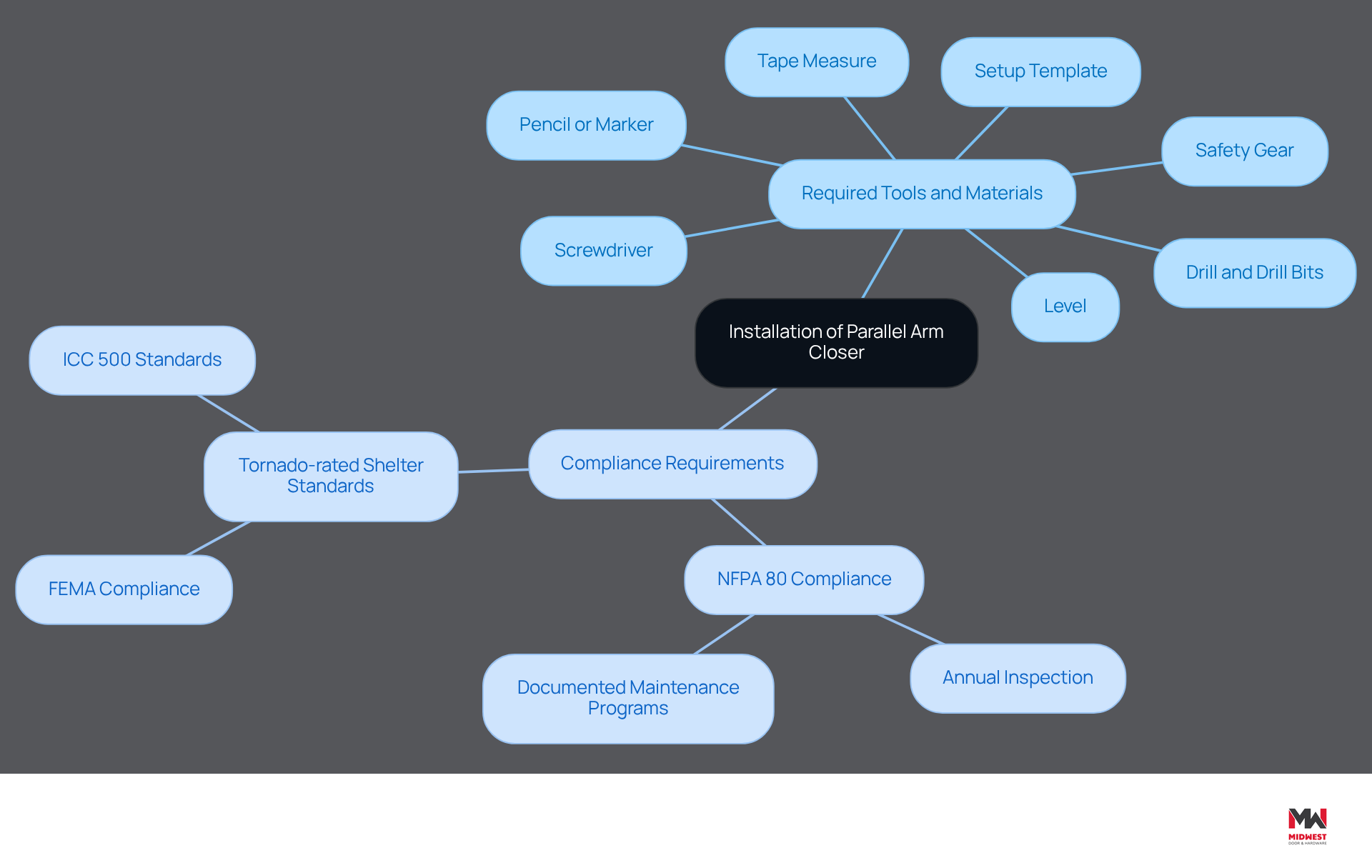
Careful preparation and the right tools are necessary for a successful setup when installing a parallel arm closer. You will need the following tools and materials:
- Drill and drill bits: Ensure you have bits that match the size of the screws provided with the closer. Proper drilling is crucial to avoid misalignment and ensure secure mounting.
- Screwdriver: A Phillips head screwdriver is typically required for fastening screws securely.
- Tape measure: For precise measurements of the entrance and frame, ensuring a proper fit for the mechanism.
- Pencil or marker: To indicate drilling points on the door and frame, facilitating accurate setup.
- Level: To ensure the device is mounted straight, which is essential for optimal functionality and aesthetics.
- Setup template: Typically provided with the device, this offers exact positions for drilling holes, simplifying the setup process.
- Safety gear: Such as gloves and goggles to protect yourself during installation, ensuring a safe working environment.
Alongside these tools, keep in mind the following compliance requirements: Regular maintenance and inspections of door closers are crucial. They ensure longevity and compliance with safety standards, including NFPA 80 for fire-rated assemblies. Annual inspection and testing of fire-rated entry assemblies are required per NFPA 80, with documented maintenance programs. For setups in tornado-rated shelters, ensure that all hardware is compliant with FEMA and ICC 500 standards, as non-listed hardware is unacceptable. Tornado-rated shelter hardware must also comply with interior egress requirements.
Midwest Door & Hardware offers tailored support and services for commercial door projects, equipping contractors with the resources they need for efficient setups. Having these tools prepared will simplify the setup process and assist in preventing delays, while also ensuring that all setups meet necessary safety and compliance standards. Ensuring compliance with safety standards not only protects the integrity of the installation but also safeguards the users of the space.
Confirm Mounting Orientation
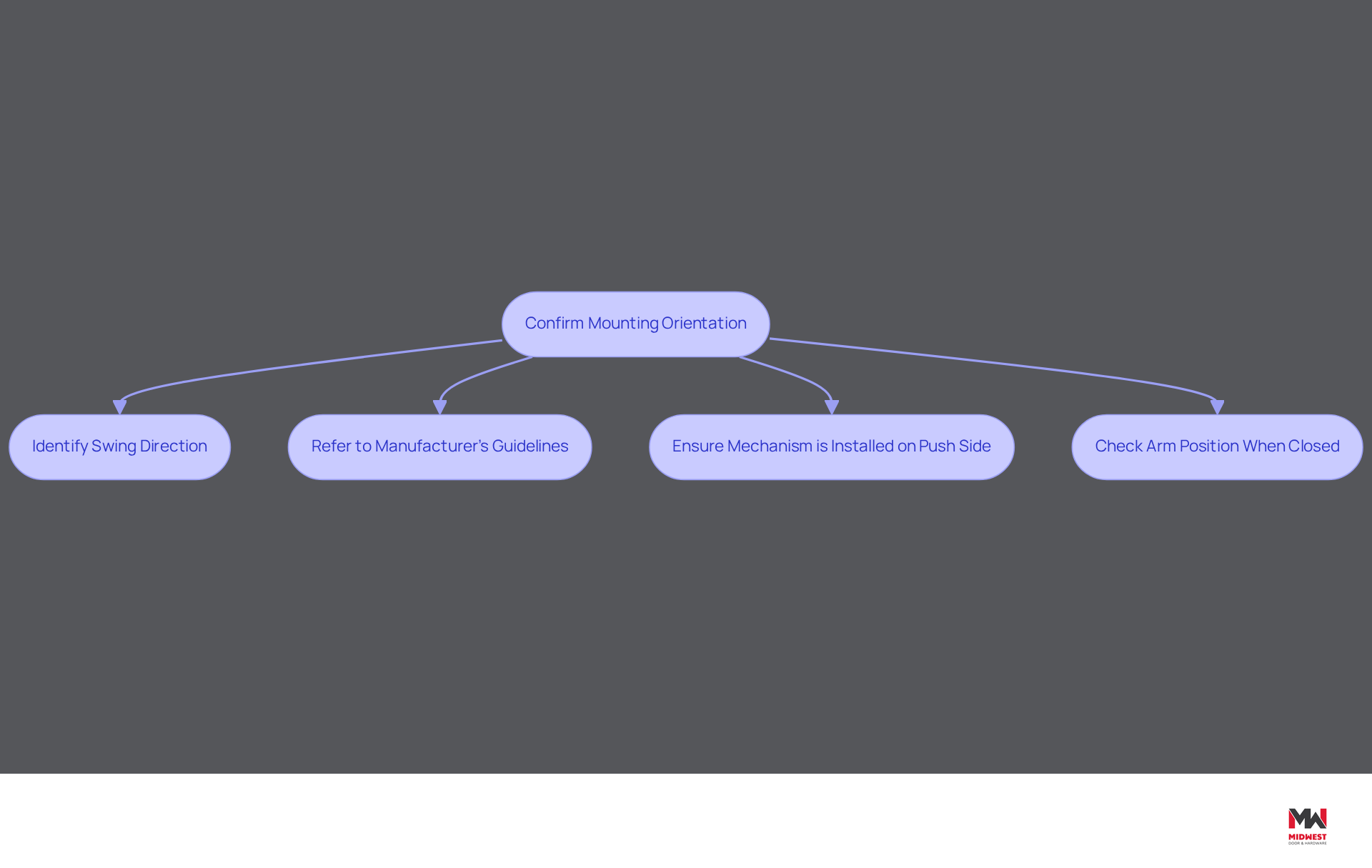
Confirming the mounting orientation of the parallel arm closer is essential to ensure a successful installation and compliance with building codes:
- Identifying the swing direction is crucial; determine whether the door swings inward (inswing) or outward (outswing) to ensure proper installation. This distinction directly affects how the fastening device is mounted. Outward swinging doors often require additional hinge protection and specific hardware configurations to ensure safety and compliance with building codes.
- Refer to the manufacturer's guidelines for the specific closer model to confirm the correct orientation; failing to do so can lead to operational failures. At Midwest Door & Hardware, we emphasize the importance of following these guidelines to ensure a successful installation.
- Ensure the mechanism is installed on the push side of the entry, opposite the hinge side, to maintain structural integrity and proper operation. This placement is essential for the mechanism to function correctly.
- When the entrance is closed, the arm should be parallel to the entrance, ensuring optimal performance and aesthetic alignment. This characteristic is typical of a parallel arm closer.
Verifying these specifics can prevent costly setup errors that jeopardize the entryway's functionality and compliance. For instance, improper handing of the entryway can lead to mismatched hardware and setup failures, causing project delays and higher expenses. Using a commercial swing chart can help in precisely identifying the handing of the entryway before ordering hardware, ensuring a smoother setup process. Furthermore, adherence to building codes is crucial for guaranteeing safety and functionality in door setups. At Midwest Door & Hardware, we offer extensive setup support and services, including pre-setup assistance and ongoing maintenance, to help contractors navigate these challenges effectively.
Lay Out the Closer Body on the Door
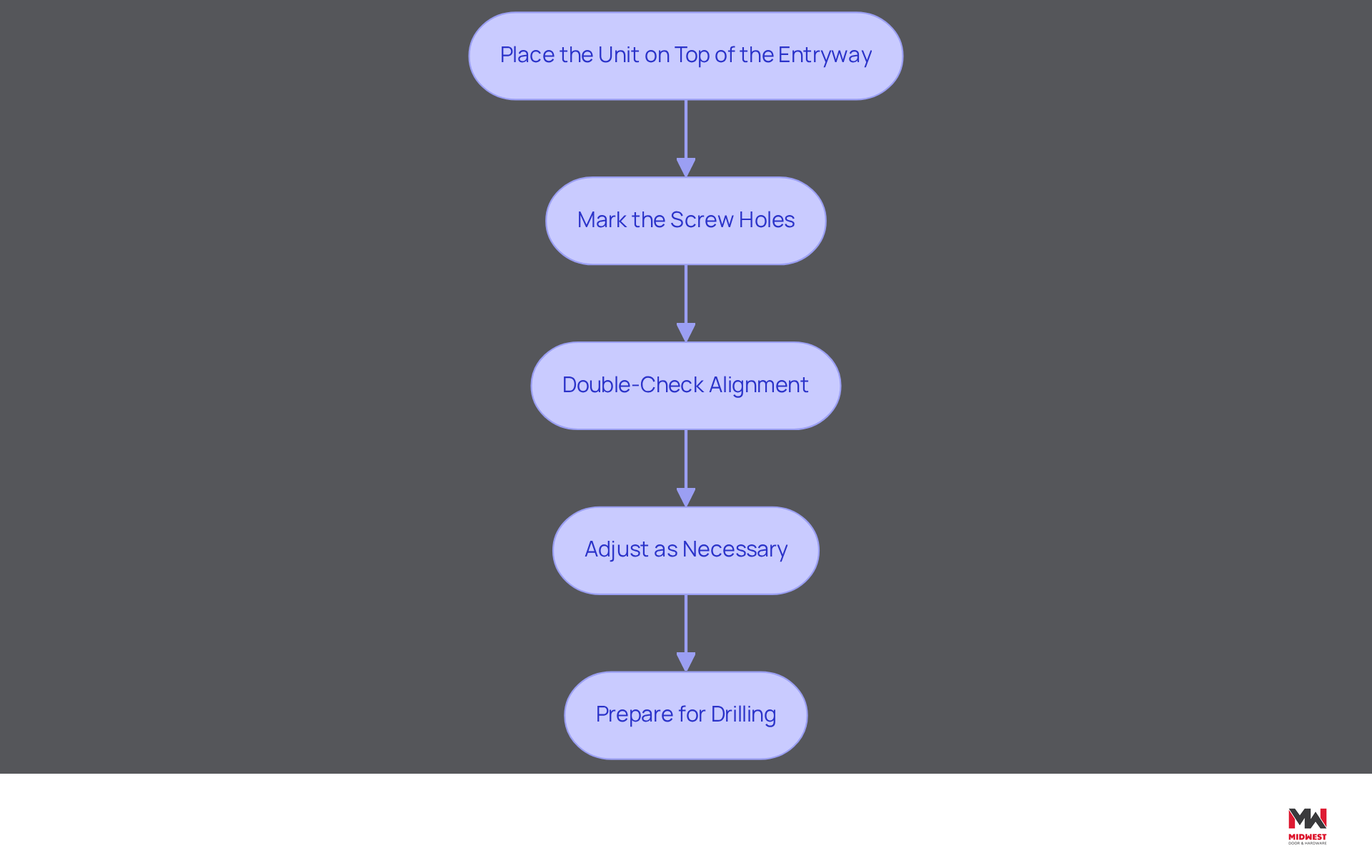
To ensure the effective operation of the closer, a meticulous layout process is crucial. Start by placing the nearby unit on top of the entryway, making sure it aligns with the provided setup template. Next, mark the screw holes: Use a pencil to indicate the locations of the screw holes on the panel. Misalignment during installation can lead to significant operational issues, affecting the closing mechanism's reliability. Therefore, precise marking is crucial for ensuring the closing mechanism functions correctly and meets safety standards. After that, double-check alignment: Use a level to ensure that the adjacent body is straight. Adjust as necessary before proceeding, as improper alignment can significantly affect the functionality of the entrance. Finally, prepare for drilling: Once satisfied with the layout, you can move on to the next step of drilling the holes.
This careful layout process is essential for ensuring that the parallel arm closer operates effectively and complies with safety standards. Furthermore, it is essential to perform yearly evaluations and testing of fire-rated assembly units according to NFPA 80, as recorded maintenance programs are necessary to uphold compliance and safety. Moreover, strict compliance with ICC 500 standards for tornado-rated entries is essential to guarantee that setups meet safety regulations. By utilizing the comprehensive setup support and services offered by Midwest Door & Hardware, contractors can ensure that their projects are completed with precision and confidence, ultimately enhancing the longevity and functionality of the hardware.
Mount the Closer Body
Accurate installation of the parallel arm closer is essential for ensuring both security and functionality.
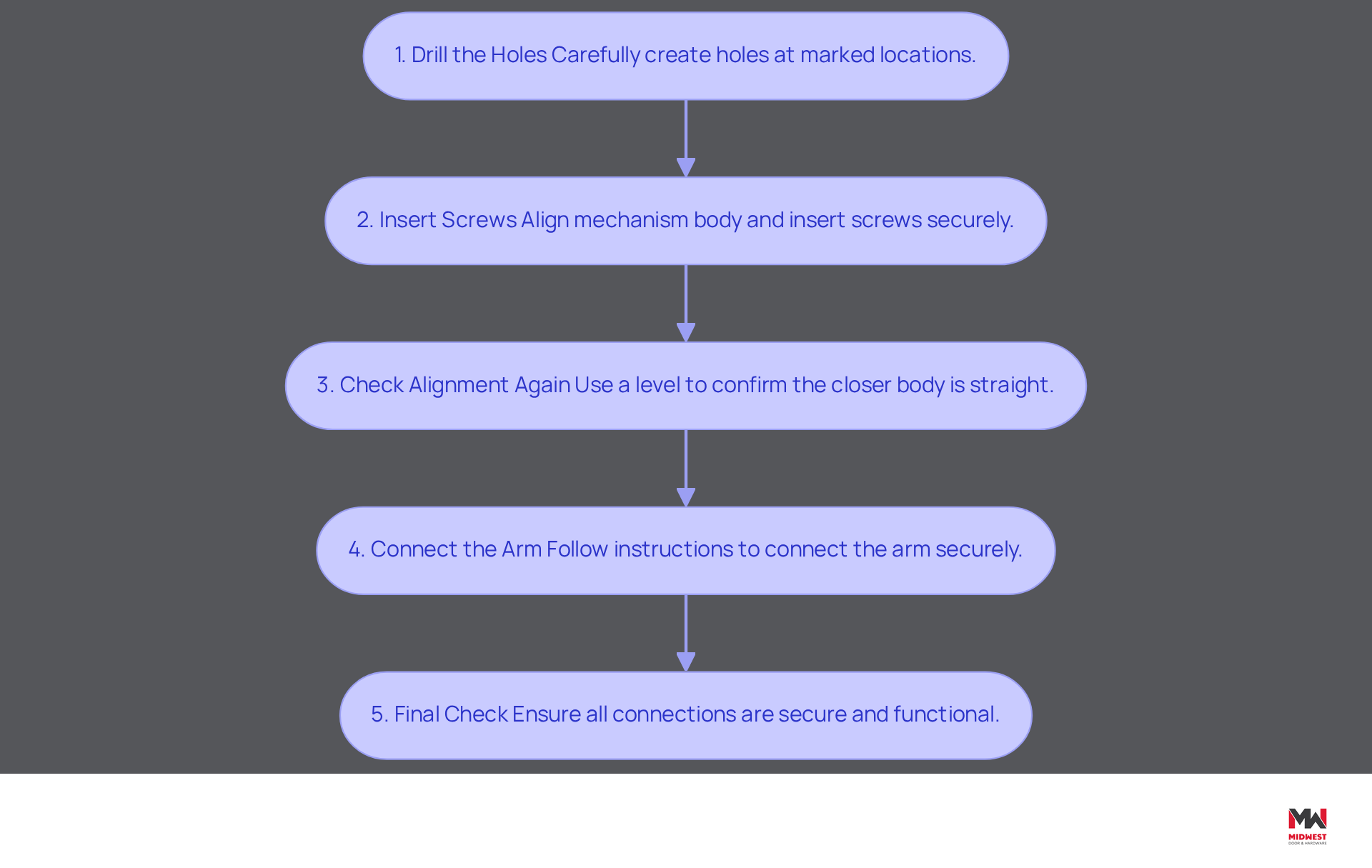
- Drill the holes: Using the drill, carefully create holes at the marked locations. Ensure that you choose the appropriate drill bit size as indicated in the installation instructions to prevent harming the entryway. Always measure the width, height, and depth of the frame carefully to prevent any fitting issues.
- Insert screws: Align the mechanism body with the drilled holes and insert the screws provided with the unit. Utilize a screwdriver to fasten them firmly, but be careful not to over-tighten, as this could result in harm to the entryway or frame. Remember, using longer screws that reach the wall studs can significantly enhance security.
- Check alignment again: After mounting, use a level to confirm that the closer body is straight. This step is crucial for ensuring that the door frame is plumb and level, which is essential for proper functionality. Make any necessary adjustments to ensure proper alignment.
- Connect the arm: Follow the manufacturer's instructions to connect the arm to both the mechanism body and the frame. Ensure that all connections are secure to facilitate effective operation. Utilizing a tool like the Viking Arm can help achieve precise positioning and alignment during this step.
If not installed correctly, the door closer may fail, jeopardizing both security and functionality. Proper installation ensures that the door closes securely and that the parallel arm closer operates effectively. This attention to detail enhances both the operational efficiency and security of the door system. Contractors can rely on expert guidance to ensure successful project completion. Always adhere to safety regulations and building codes to ensure compliance.
Adjust Closer Settings for Optimal Performance
Adjusting the door closer is essential for ensuring optimal performance and compliance with safety standards:
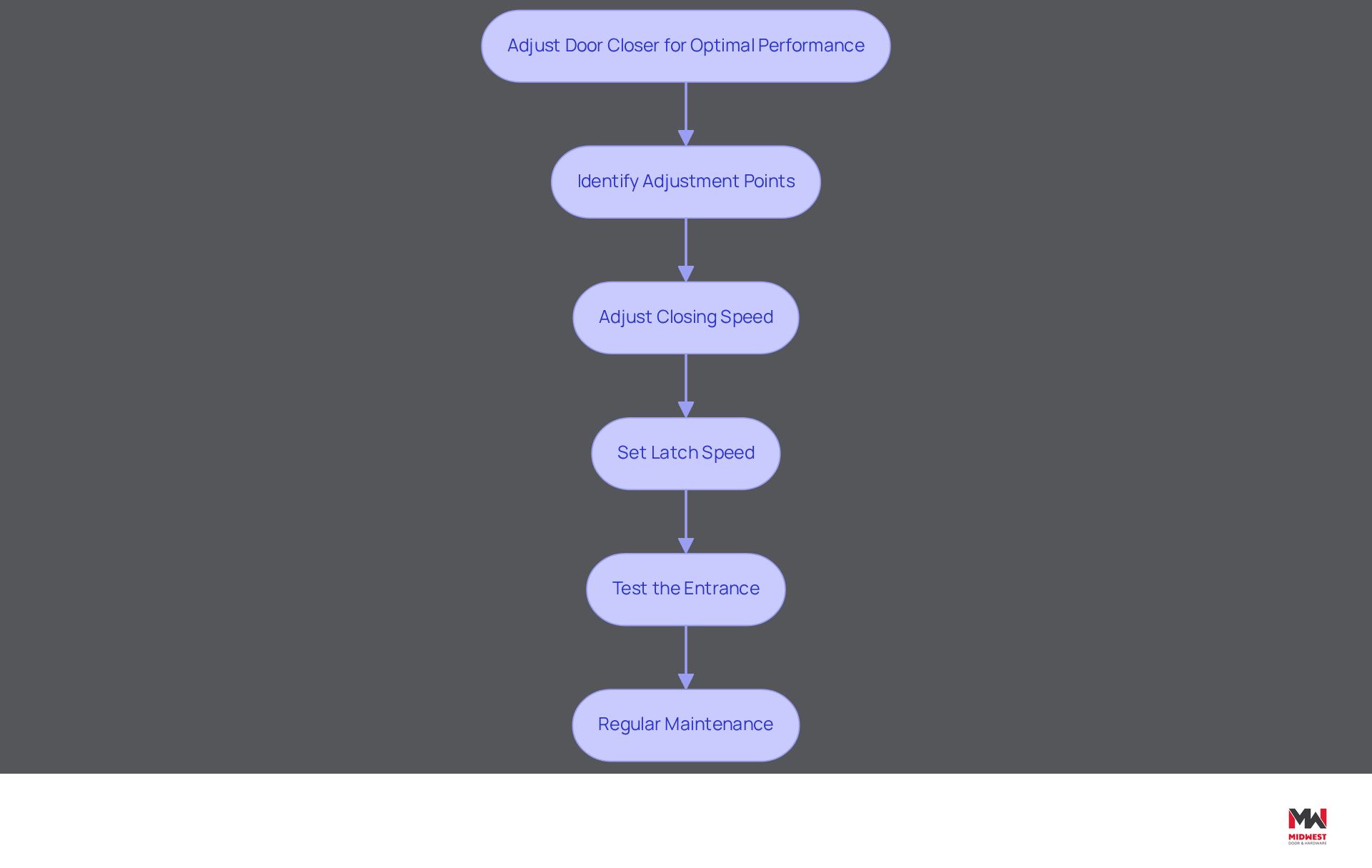
- Identify adjustment points: Locate the adjustment screws on the closer body, typically labeled for easy identification. Common markings include S for Sweep, L for Latch, BC for Back-check, and DA for Delayed action.
- Adjust closing speed: Modify the speed at which the entrance closes by turning the adjustment screw. A slower speed, ideally taking five seconds or more from 90° to nearly closed, can prevent slamming, while a faster speed may be necessary for high-traffic areas.
- Set latch speed: Make sure the latch secures properly without slamming by adjusting the latch speed. This is especially crucial for fire-rated entries, as 73% of building code violations stem from faulty closures, emphasizing the necessity of appropriate adjustments.
- Test the entrance: Open and close it several times to evaluate the adjustments. If the door fails to latch consistently, gradually increase the L valve until the latch engages fully. Make further adjustments as necessary until the desired performance is achieved.
- Regular maintenance: Regular maintenance is vital to ensure consistent performance of the door closer. Conduct inspections at least twice a year, ideally in early summer and mid-winter. This involves checking for hydraulic fluid leaks, which suggest that the mechanism must be replaced, and recording valve positions for future reference. Remember to wear safety goggles during adjustments to protect your eyes from debris.
Ultimately, these adjustments not only enhance door functionality but also safeguard compliance and client trust in your work.
Conclusion
Proper installation of a parallel arm closer is essential for ensuring safety and compliance in commercial settings. By following the outlined steps, contractors can ensure that their installations are functional and compliant with necessary building codes. Proper mounting orientation and precise layout are crucial, as they directly impact the door closer's performance and longevity.
Key insights from this guide include:
- The necessity of gathering the right tools
- Confirming the mounting orientation
- Executing a careful layout process
Each step, from drilling to adjusting the closer settings, plays a vital role in achieving a secure and efficient installation. Additionally, regular maintenance and inspections are essential to uphold safety standards and ensure the door closer operates effectively over time.
By prioritizing these installation practices, contractors not only enhance safety but also build lasting relationships with their clients through demonstrated reliability and expertise.
Frequently Asked Questions
What tools and materials are required for installing a parallel arm closer?
The required tools and materials include a drill and drill bits, a Phillips head screwdriver, a tape measure, a pencil or marker, a level, a setup template, and safety gear such as gloves and goggles.
Why is proper drilling important when installing a parallel arm closer?
Proper drilling is crucial to avoid misalignment and ensure secure mounting of the closer, which is essential for its functionality and longevity.
What compliance requirements should be considered during installation?
Compliance requirements include regular maintenance and inspections of door closers to ensure longevity and adherence to safety standards, such as NFPA 80 for fire-rated assemblies and FEMA and ICC 500 standards for tornado-rated shelters.
How can confirming the mounting orientation affect the installation?
Confirming the mounting orientation is essential to ensure proper installation based on the door's swing direction (inswing or outswing), which affects how the fastening device is mounted and ensures compliance with building codes.
Where should the mechanism of the parallel arm closer be installed?
The mechanism should be installed on the push side of the entry, opposite the hinge side, to maintain structural integrity and proper operation.
What should be verified to prevent costly setup errors?
Verifying the swing direction and ensuring the arm is parallel to the entrance when closed can prevent costly setup errors that jeopardize functionality and compliance.
How can contractors ensure a smoother setup process?
Contractors can use a commercial swing chart to accurately identify the handing of the entryway before ordering hardware, which helps in avoiding mismatched hardware and setup failures.
What support does Midwest Door & Hardware offer for commercial door projects?
Midwest Door & Hardware offers tailored support and services, including pre-setup assistance and ongoing maintenance, to help contractors navigate installation challenges effectively.
List of Sources
- Gather Required Tools and Materials
- A Step By Step Guide to Installing a Surface-Mounted Door Closer (https://carterbay.com/blog/a-step-by-step-guide-to-installing-a-surfacemounted-door-closer)
- How to Install Heavy Duty Door Closers on Very Heavy Doors? (https://ipsamart.com/blogs/news/how-to-install-heavy-duty-door-closers-on-very-heavy-doors?srsltid=AfmBOoqeEAEiBZ1gZriPYAtxL7xZ2-m9GKaA7B_kKrKxuvCeQIM_wRRY)
- How to Install a Door Closer: Complete Professional Installation Guide (https://nationallocksupply.com/blog/how-to-install-a-door-closer-complete-professional-installation-guide?srsltid=AfmBOopjHVM5kOVJffwcGtwG8mOWyfRBL0caSQGM4qdzCbbuC697Dq1E)
- How to Install a Commercial Door Closer | CDF Distributors (https://cdfdistributors.com/blog/post/how-to-install-commercial-door-closer)
- How to Easily Install Your Door Closer: Complete Guide (https://cytlocks.com/how-to-install-door-closer)
- Confirm Mounting Orientation
- Client Challenge (https://special-lite.com/how-to-determine-door-handing-a-comprehensive-guide)
- How to Determine Door Swing Direction (Left vs Right Door Guide) (https://doorsforpros.com/blog/post/door-swing-direction?srsltid=AfmBOorXB6bwXcxGfkhbK9svXzkBYl80OSxH9Ppy83Rj-4zvhoqhfkC1)
- Door Handing Explained: A Beginner's Guide to Door Swing Direction (https://cdfdistributors.com/blog/post/door-handing-explained-a-beginners-guide-to-door-swing-direction)
- Should Commercial Doors Swing In or Out? Everything You Need to Know (https://pdqlocks.com/blog/should-commercial-doors-swing-in-or-out)
- Lay Out the Closer Body on the Door
- Understanding Commercial Grade Door Closers: A Comprehensive Guide (https://store.bestdoorhardware.com/blog/understanding-commercial-grade-door-closers-a-comprehensive-guide)
- Door Closer Adjustments: Why Are They Important? (https://beaconcdl.com/blogs/news/door-closer-adjustments-why-are-they-important?srsltid=AfmBOopJV60Tzqr7ybQUkOc3_BtijIfQ6FbKWNuINflx9Zm9BsWJC8ZE)
- The Essential Guide to Door Closers: Features, Functions, and Applications - Unified Door & Hardware Group (https://udhgroup.com/the-essential-guide-to-door-closers-features-functions-and-applications)
- What Installers need to know about Astra door closers - Astra Door Controls (https://astradoorcontrols.com/news/what-installers-need-to-know-about-astra-door-closers)
- Master Door Closer Settings: Key Practices for Midsize Contractors (https://midwestdoor.net/news/master-door-closer-settings-key-practices-for-midsize-contractors)
- Mount the Closer Body
- 6 Mistakes Homeowners Make When Installing Door Hardware (https://bergerhardwareinc.com/6-mistakes-homeowners-make-when-installing-door-hardware)
- Avoid Common Door Installation Mistakes with These Expert Tips | Windows & Doors by The Men With Tools (https://themenwithtools.com/posts/avoid-common-door-installation-mistakes-with-these-expert-tips)
- 5 common mistakes in door installation (and how to avoid them) (https://vikingarm.com/2025/10/17/5-common-mistakes-in-door-installation)
- 7 Common Door Installation Mistakes That Will Cost You Later (https://gvlock.com/blog/common-door-installation-mistakes)
- What Installers need to know about Astra door closers - Astra Door Controls (https://astradoorcontrols.com/news/what-installers-need-to-know-about-astra-door-closers)
- Adjust Closer Settings for Optimal Performance
- How to Adjust a Standard Door Closer in 6 Steps - LaForce, LLC (https://laforceinc.com/blog/how-to-adjust-a-standard-door-closer-in-6-steps)
- Commercial Door Closer Adjustment Guide for Installers and Facility Managers (https://doorsforpros.com/blog/post/commercial-door-closer-adjustment?srsltid=AfmBOorT8S-SUbglbaRvJcH34_TxNwV39FPeDN9FFIc0hK22A6-f7OvY)
- How to Adjust Door Closers: A Step-by-Step Guide for Contractors (https://midwestdoor.net/news/how-to-adjust-door-closers-a-step-by-step-guide-for-contractors)
- How to Adjust a Door Closer for Optimal Performance (Complete Commercial Guide) | AKADA (https://akada-hardware.com/how-to-adjust-a-door-closer-for-optimal-performance-complete-commercial-guide)
Related News
Check out more of what we’ve worked on.