

Introduction
Understanding commercial door hardware is crucial for contractors who want to ensure secure and functional installations. This article highlights essential practices that improve the selection, installation, and maintenance of commercial door hardware. By doing so, contractors can meet client expectations and adhere to industry standards.
With numerous options and changing regulations, how can contractors make informed choices that not only address immediate project needs but also ensure long-term reliability and safety?
Understand Types of Commercial Door Hardware
Understanding types of commercial door hardware is crucial for ensuring functionality and security in various applications. Key components include:
- Locks: Essential for security, these include deadbolts, electronic locks, and keyless entry systems. Recognizing the differences among these options is vital for selecting the appropriate security level for specific applications.
- Closers: These devices ensure that entrances close automatically after being opened, which is important for safety. Familiarity with different types, such as hydraulic and pneumatic closers, aids in choosing the best fit for the intended application.
- Exit devices: Necessary for emergency exits, these devices must adhere to specific building codes. Understanding their operation and installation is critical for ensuring compliance in emergencies.
- Hinges: These components support the weight and facilitate the movement of the entryway. Selecting the appropriate type based on size and usage is essential for ensuring durability and functionality.
- Accessories: This category encompasses items like kick plates, stops, and weather stripping, which enhance the overall performance and longevity of entrances. Knowledge of their applications can significantly improve entryway functionality and client satisfaction.
By familiarizing themselves with components, contractors can effectively meet client needs and contribute to project success, ensuring that each installation adheres to the highest standards of quality and compliance.

Evaluate Selection Criteria for Hardware
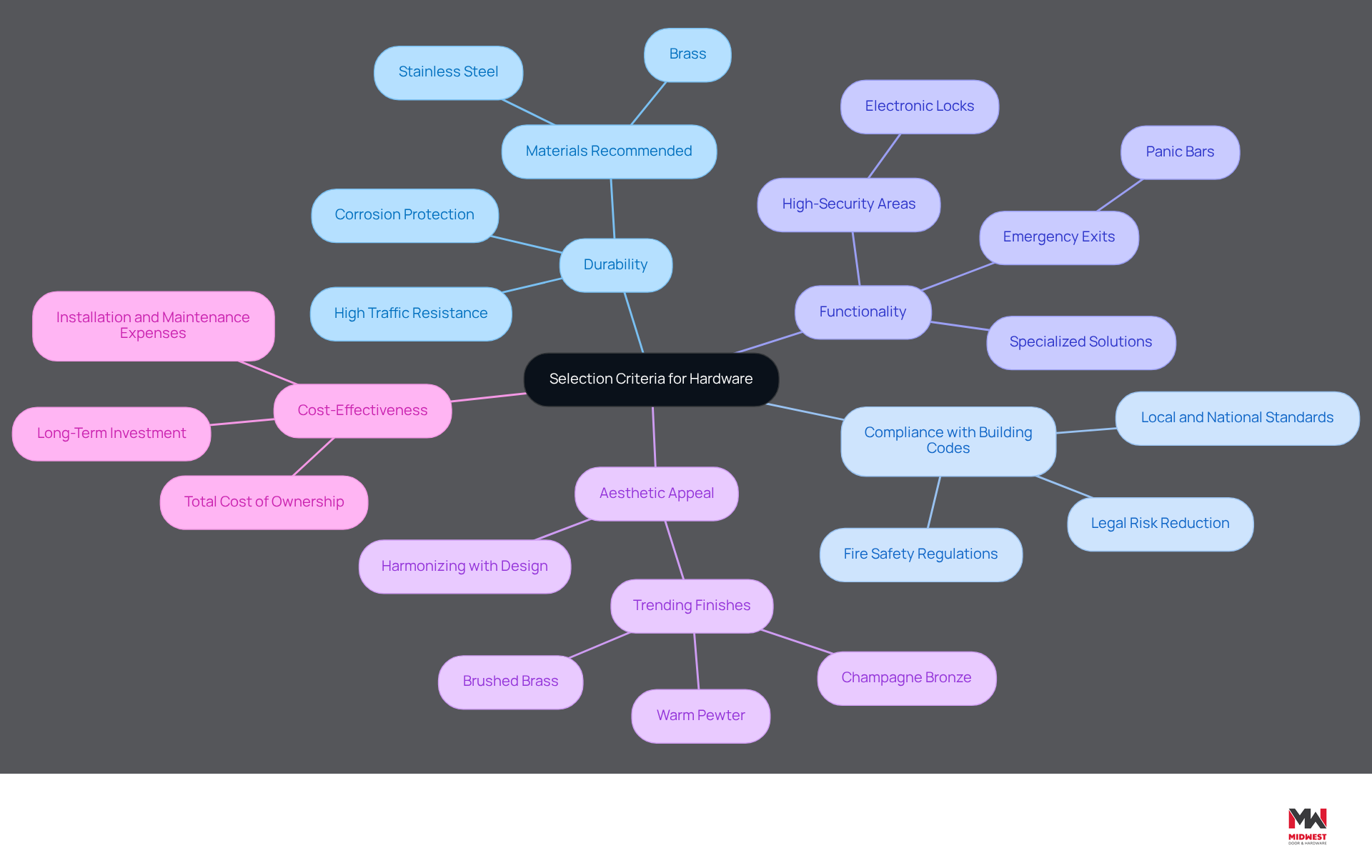
Contractors should prioritize several essential criteria when selecting hardware to ensure optimal performance and compliance.
- Durability is paramount. Hardware must endure wear and varying environmental conditions. Materials such as stainless steel and brass are recommended for their longevity and resistance to wear, ensuring they withstand the demands of commercial use. Midwest Door & Hardware exemplifies this commitment by supplying durable, code-compliant solutions designed for long-term performance, as demonstrated in their recent projects like Canopy Park, where they delivered over 600 openings.
- Compliance is vital. Ensuring that all equipment adheres to local and national building codes, including fire safety regulations, reduces legal risks and ensures occupant safety. This makes compliance a priority. Midwest Door & Equipment's focus on quality ensures their products meet these critical standards.
- Functionality must be assessed based on the specific requirements of the space. For instance, high-security areas may necessitate electronic locks, while exit routes must be equipped with panic bars to facilitate safe egress. Midwest Door & Equipment provides specialized solutions designed for different environments, ensuring reliability and safety in high-traffic zones.
- Aesthetic Appeal is also important. The equipment should harmonize with the overall design of the building. Selecting finishes and styles that align with the architectural vision enhances the visual coherence of the project. Midwest Door & Hardware's designs and elegant finishes enhance the aesthetic quality of commercial spaces.
- Cost-Effectiveness should be considered by evaluating the total cost, which includes installation and maintenance expenses. Investing in higher-quality equipment may result in lower long-term expenses due to decreased maintenance requirements and enhanced durability. Midwest Door & Hardware's updated payment policies reflect their commitment to transparency and client satisfaction, ensuring contractors can plan their budgets effectively.
By applying these criteria, contractors can make informed decisions that enhance project outcomes and improve client satisfaction. Furthermore, incorporating sustainable practices in equipment selection is increasingly important, aligning with environmental regulations and client expectations.
Implement Best Practices for Installation
To ensure the successful installation of commercial door hardware, contractors must follow best practices:
- Pre-Installation Planning: Begin by thoroughly reviewing project specifications and confirming that all necessary tools and materials are on hand. It's essential to verify that the door frame is plumb, square, and level for a proper fit. Additionally, consider weather conditions that may impact the installation schedule, as severe weather can complicate the process. The supplier offers services, including fixture setup in their shop and bundled delivery of materials, to streamline this phase.
- Delivery Coordination: Confirm all deliveries and schedule contractor availability to prevent setbacks. Missing shipments or contractor no-shows can lead to delays that disrupt project timelines. The company's commitment to communication and coordination, as demonstrated in projects like Lincoln Northwest High School, underscores the importance of this step.
- Manufacturer Guidelines: Adhere strictly to the manufacturer's guidelines during installation. This practice ensures that the hardware functions as intended and helps maintain warranty coverage, thereby safeguarding your investment.
- Check Clearances and Alignments: Proper clearances are crucial for the smooth operation of entrances. Ensure there is adequate space for the equipment and that the door swings freely without barriers, which can lead to future operational issues.
- Utilize Excellent Tools: Invest in quality tools to minimize the risk of damage during setup. Using the right tools can expedite the process and enhance accuracy, resulting in a more efficient workflow.
- Post-Installation Testing: After installation, rigorously test all hardware components to ensure they operate correctly. This includes checking locks, closers, and exit devices to confirm compliance with safety standards. Notably, 73% of emergency exit failures stem from door closer issues, highlighting the necessity of thorough testing.
Implementing these practices enhances the reliability and safety of installations while mitigating common errors that can lead to costly repairs and compliance issues. Contractors should remain aware of the potential legal risks associated with compliance failures, as these can incur significant costs and liabilities. With the support provided by suppliers, including ongoing support and repair services, contractors can confidently navigate these challenges.

Prioritize Maintenance and Support for Longevity
Regular upkeep is crucial for extending the lifespan of commercial entry fixtures. Contractors should advise clients on the following:
- Schedule regular inspections to identify wear and tear before they escalate into significant issues. Look for signs of misalignment, rust, or damage, as neglecting these can lead to costly repairs. Research shows that 89% of issues could have been prevented with proper maintenance.
- Maintain equipment cleanliness and lubrication to ensure smooth operation. Use appropriate cleaning agents that won't harm components, and apply high-quality lubricants to minimize friction and prevent rust. Regular cleaning can significantly enhance the lifespan of entry fixtures, with well-maintained entrances lasting 40-60% longer than those that are neglected.
- Address any issues promptly to prevent further damage. This includes replacing worn-out components and adjusting misaligned entries, which can help avoid operational disruptions. Emergency repairs can range from $500 to $1,200, making timely action essential.
- Documentation: Keep records, including inspections and repairs. This documentation is invaluable for warranty claims and future maintenance planning, ensuring that all work is tracked and accounted for.
- Provide clients with guidance on how to care for their equipment. Empowering them with knowledge encourages proactive maintenance, which can prevent many common issues.
By prioritizing these maintenance practices, contractors can assist clients in improving the reliability and performance of their fixtures, which ultimately enhances safety and efficiency.

Conclusion
Mastering commercial door hardware is crucial for contractors who want to ensure secure, functional, and visually appealing installations. By understanding the different types of hardware, adhering to selection criteria, implementing effective installation practices, and prioritizing maintenance, contractors can significantly enhance project success and client satisfaction.
Selecting durable materials is essential, as is ensuring compliance with building codes. When choosing hardware, contractors should consider both functionality and aesthetic appeal. Systematic installation practices and regular maintenance not only improve the longevity and performance of commercial door hardware but also protect investments and enhance safety.
In an industry that evolves rapidly, staying updated on the latest trends and innovations in commercial door hardware is vital. Contractors should embrace these best practices and continuously educate themselves and their clients on the importance of proper hardware selection and maintenance. This approach not only enhances service offerings but also contributes to creating safer and more efficient commercial environments.
Frequently Asked Questions
What is the importance of understanding commercial door hardware?
Understanding commercial door hardware is crucial for ensuring functionality and security in various applications.
What are the main types of locks used in commercial door hardware?
The main types of locks include deadbolts, electronic locks, and keyless entry systems, each offering different levels of security.
What are door closers and why are they important?
Door closers are devices that ensure entrances close automatically after being opened, which is important for fire safety and energy efficiency.
What types of door closers are available?
The types of door closers include hydraulic and pneumatic closers, which can be selected based on the intended application.
What are exit devices and panic bars?
Exit devices and panic bars are necessary for emergency exits and must adhere to specific building codes to ensure compliance and safety in commercial environments.
Why are hinges and pivots important in commercial door hardware?
Hinges and pivots support the weight of the entryway and facilitate movement, making it essential to select the appropriate type based on size and usage for durability and functionality.
What is specialty hardware in the context of commercial door hardware?
Specialty hardware includes items like kick plates, stops, and weather stripping, which enhance the performance and longevity of entrances.
How can knowledge of commercial door hardware components benefit contractors?
Familiarity with commercial door hardware components allows contractors to effectively meet client needs and contribute to project success, ensuring installations adhere to high standards of quality and compliance.
List of Sources
- Understand Types of Commercial Door Hardware
- swingingcafedoors.com (https://swingingcafedoors.com/swinging-door-blog/2026-door-hardware-trends-whats-shaping-the-future-of-residential-commercial-spaces)
- New Year, Smarter Openings: Retrofitting Commercial Doors & Hardware for 2026 - Seven Oaks Door and Hardware Inc. (https://sevenoakshardware.com/new-year-smarter-openings-retrofitting-commercial-doors-hardware-for-2026)
- well-liftdoor.com (https://well-liftdoor.com/news/2026-global-trends-in-industrial-door-hardware-sets)
- 5 Door Hardware Trends Designers Are Loving in 2026 (https://coppercreekhardware.com/blogs/news/5-door-hardware-trends-designers-are-loving-in-2026)
- accio.com (https://accio.com/business/door-hardware-trends-2026)
- Evaluate Selection Criteria for Hardware
- swingingcafedoors.com (https://swingingcafedoors.com/swinging-door-blog/2026-door-hardware-trends-whats-shaping-the-future-of-residential-commercial-spaces)
- yalisdesign.com (https://yalisdesign.com/news/durability-requirements-for-commercial-building-door-handles)
- aorbis.com (https://aorbis.com/infographic/2026s-most-reliable-door-hardware-checklist-for-construction-pros)
- Commercial Door News & Information | USA Fire Door (https://usafiredoor.com/commercial-door-news-information)
- well-liftdoor.com (https://well-liftdoor.com/news/sectional-industrial-door-hardware-complete-guide-2026)
- Implement Best Practices for Installation
- architectmagazine.com (https://architectmagazine.com/Design/improving-door-installation-accuracy)
- 5 Surprising Stats About Commercial Door Accessories Failures That Every Property Owner Should Know (https://ohdctexoma.com/5-surprising-stats-about-commercial-door-accessories-failures-that-every-property-owner-should-know)
- beaconcdl.com (https://beaconcdl.com/door-hardware-pre-installation-why-is-it-better)
- Commercial Door Installations: How to Prepare (https://cdfdistributors.com/blog/post/commercial-door-installations-how-to-prepare)
- Commercial Door Services: National Cost Trends and What Homeowners Should Expect in 2025 (https://ohdctexoma.com/commercial-door-services-national-cost-trends-and-what-homeowners-should-expect-in-2025)
- Prioritize Maintenance and Support for Longevity
- How Commercial Door Repair Services Will Improve Your Facility In 2026 - Facilities Management - Facility Executive Magazine (https://facilityexecutive.com/how-commercial-door-repair-services-will-improve-your-facility-in-2026)
- norfolkdailynews.com (https://norfolkdailynews.com/online_features/press_releases/new-march-2026-report-links-smart-infrastructure-to-garage-door-repair-growth/article_de1ed155-5227-562a-a835-75ef8ce108e6.html)
- andersonlock.com (https://andersonlock.com/blog/best-practices-for-maintaining-commercial-door-hardware)
- 5 Surprising Stats About Commercial Door Services Failures That Every Property Owner Should Know (https://ohdctexoma.com/5-surprising-stats-about-commercial-door-services-failures-that-every-property-owner-should-know)
- New Year, Smarter Openings: Retrofitting Commercial Doors & Hardware for 2026 - Seven Oaks Door and Hardware Inc. (https://sevenoakshardware.com/new-year-smarter-openings-retrofitting-commercial-doors-hardware-for-2026)
Related News
Check out more of what we’ve worked on.