

Introduction
Selecting and installing commercial steel doors is essential for contractors focused on enhancing safety and aesthetics in various environments. This article outlines key practices that streamline the selection process and ensure flawless installation and maintenance. Given the numerous factors to consider - from material specifications to compliance with building codes - contractors must navigate these complexities effectively. By examining critical criteria and best practices, this guide empowers professionals to make informed decisions that enhance the quality and longevity of their projects.
Identify Key Selection Criteria for Steel Doors
When selecting steel doors, contractors should prioritize several key criteria:
- Material and Gauge: Steel doors come in various gauges, with lower numbers indicating thicker, more durable steel. For high-traffic areas, an 18-gauge door is often recommended, effectively balancing strength and weight.
- Fire Ratings: Adhering to local fire safety codes is essential. Fire-rated doors are particularly important in commercial settings, such as schools and hospitals, where they help contain fires and protect occupants. Common fire ratings include 20-minute and 60-minute ratings, depending on the application. For example, a 60-minute fire rating is typically required for corridors and stairwells in larger commercial buildings.
- Insulation Characteristics: Insulated steel doors can significantly enhance energy efficiency, especially in regions with extreme temperatures. Options featuring polyurethane cores provide the highest insulating R-value, making them ideal for lowering energy costs.
- Security Features: Evaluate the security attributes of the door, including reinforced frames and advanced locking mechanisms. In high-security environments, such as data centers or warehouses, it is advisable to select doors with heavy-duty construction and multi-point locking systems.
- Compliance with Building Codes: Understanding local building codes and regulations is crucial to ensure that the selected door meets all necessary standards, including ADA compliance for accessibility. The standard dimensions for commercial steel doors exterior in the USA are 3'0" wide by 7'0" high, commonly referred to as '3070'.
- Aesthetic Considerations: While functionality is critical, the appearance of the door should complement the building's design and branding. Custom finishes and styles can enhance visual appeal without sacrificing performance, making it an integral part of the overall architectural aesthetic.

Prepare the Installation Site Effectively
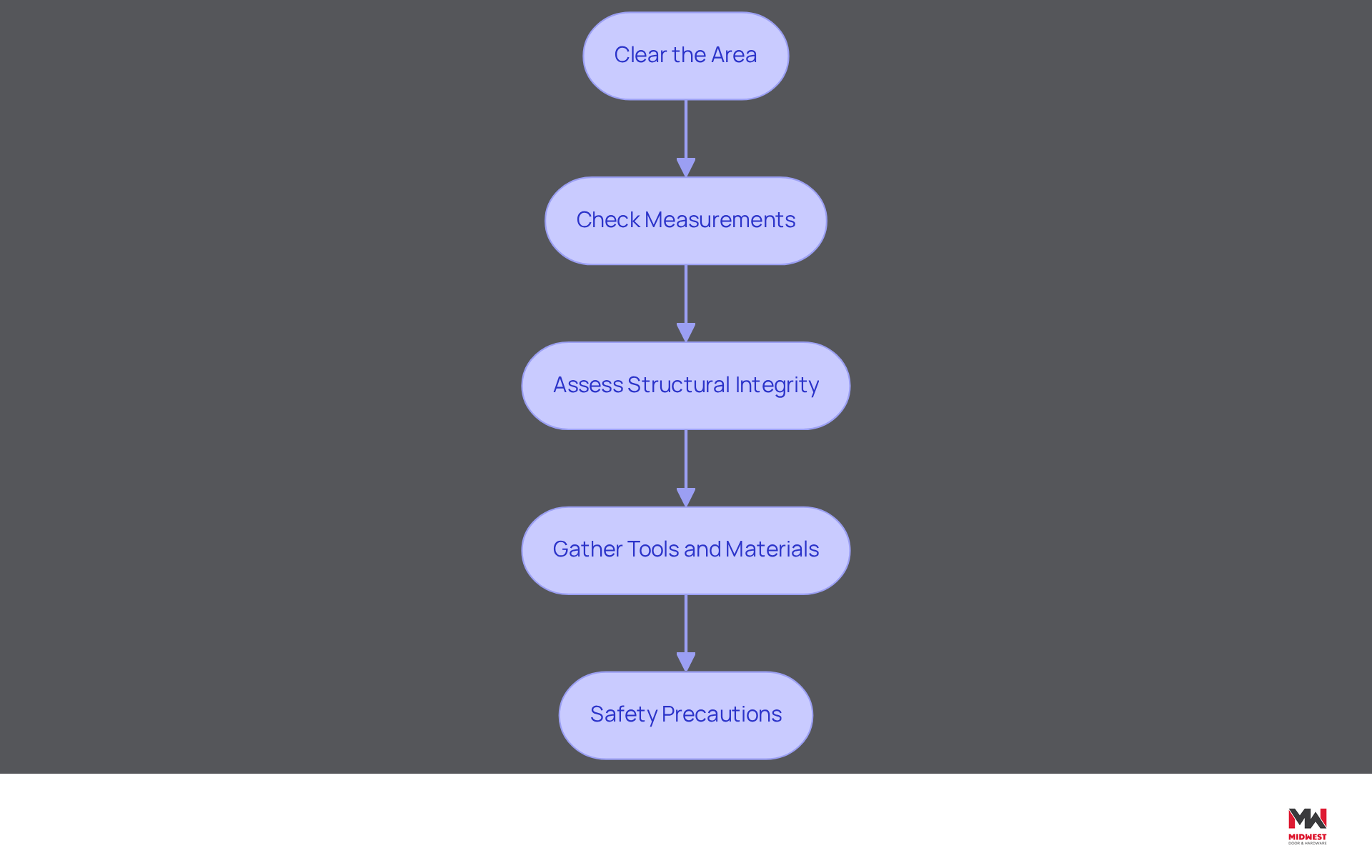
To ensure a successful installation of steel doors, thorough site preparation is essential. Here are the key steps to follow:
- Clear the Area: Begin by removing any furniture, equipment, or obstructions from the installation site. This creates a spacious working environment, allowing installers to move freely and access all necessary areas without hindrance.
- Check Measurements: It’s crucial to verify that the rough opening dimensions are accurate. Ensure the frame is plumb, level, and square. Accurate measurements are vital for achieving a proper fit and preventing future complications.
- Assess Structural Integrity: Inspect the surrounding structure for any damage or weaknesses that could impact the door installation. Strengthening any compromised sections is necessary to guarantee a stable and safe setup.
- Gather Tools and Materials: Before starting the installation, ensure that all necessary tools (such as a level, drill, and shims) and materials (including fasteners and sealants) are readily available on-site. Having everything prepared minimizes delays and streamlines the process.
- Safety Precautions: Establish safety barriers and ensure that all personnel are equipped with appropriate personal protective equipment (PPE). This is essential for preventing accidents and maintaining a secure working environment during the installation.
Midwest Door & Hardware emphasizes that thorough site preparation can significantly reduce installation time and enhance the overall quality of the project. Their setup support services, which include pre-installation checks and field assistance, ensure that contractors can complete projects confidently. For example, one contractor remarked, "A dry fit is needed to find any obstructions," underscoring the importance of pre-installation checks. By adhering to these steps and utilizing the support from Midwest Door & Hardware, contractors can ensure a seamless installation process while upholding high standards of quality and safety.
Execute Proper Installation Techniques
To ensure the successful installation of steel doors, follow these essential guidelines:
- Install the Frame First: Begin by securing the frame within the opening. Use shims to ensure it is level and plumb before fastening it in place. Improper installation can lead to significantly higher failure rates.
- Hang the Entrance: Attach the entrance to the frame using appropriate hinges. Confirm that the entry swings freely and aligns correctly with the frame to avoid operational issues.
- Check Clearances: Ensure there are adequate clearances around the entrance for smooth operation. Adjust shims as necessary to achieve proper alignment, as misalignment can lead to increased wear and potential failures.
- Secure Fasteners: Use high-quality fasteners suitable for the entryway and frame materials. Ensure that screws penetrate deeply enough to provide a secure hold; insufficient fastening can compromise the structure's integrity.
- Seal the Perimeter: Apply sealant around the frame to prevent air and water infiltration. This step enhances energy efficiency and protects against moisture damage, which is crucial for preserving the longevity and performance of the entryway.
By adhering to these practices, contractors can significantly reduce the likelihood of installation-related failures and ensure that metal entrances operate efficiently over time.

Implement Finishing Touches and Maintenance Strategies
To ensure the longevity and performance of steel doors, implement the following maintenance strategies:
- Final Inspection: Begin with a comprehensive inspection of the installed entryway. This step verifies that all components function correctly and that there are no visible defects.
- Regular Cleaning: Consistently clean the entrance surface using a mild detergent and a soft cloth. This practice eliminates dirt and grime while preventing corrosion and maintaining appearance. Avoid abrasive cleaners that can damage the finish. For outside entries, aim to clean at least quarterly, or monthly in coastal or high-pollution regions.
- Lubricate Moving Parts: Regularly apply lubricant to hinges and locks. This ensures smooth operation and prevents rusting, which is essential for maintaining the structure's functionality over time.
- Inspect for Damage: Periodically check for signs of wear, rust, or damage. Addressing any issues promptly can prevent further deterioration and extend the lifespan of the entrance. Under normal conditions, steel entrances may require maintenance 2-3 times a year.
- Repaint as Required: If the finish of the entrance begins to wear, repaint it with a high-quality exterior paint designed for metal surfaces. This protects against corrosion and enhances durability.
While DIY maintenance is important, certain issues may require professional intervention to ensure optimal performance. Applying these strategies can significantly prolong the service life of metal entrances, potentially doubling their durability while ensuring adherence to safety regulations and preserving operational efficiency. As noted by industry experts, "Regular maintenance is vital for steel doors because these structures are constantly exposed to environmental elements that can trigger rust and corrosion.

Conclusion
Selecting and installing commercial steel doors is a critical process that demands careful attention to ensure safety, durability, and aesthetic appeal. Understanding key selection criteria, effective site preparation, proper installation techniques, and ongoing maintenance is essential for achieving optimal performance.
Contractors must prioritize several factors when choosing steel doors, including:
- Material gauge
- Fire ratings
- Insulation properties
- Security features
- Compliance with building codes
Thorough site preparation is equally vital; this includes:
- Clearing the area
- Checking measurements
- Assessing structural integrity
Adhering to proper installation techniques and implementing effective maintenance strategies will significantly enhance the longevity and functionality of these doors.
The importance of following best practices in commercial steel door installation cannot be overstated. By focusing on these guidelines, contractors can prevent common mistakes and ensure that the doors fulfill their intended purpose effectively. Embracing these practices leads to safer, more efficient, and visually appealing entrances, ultimately contributing to the overall success of any commercial project.
Frequently Asked Questions
What are the key selection criteria for steel doors?
Key selection criteria for steel doors include material and gauge, fire ratings, insulation characteristics, security features, compliance with building codes, and aesthetic considerations.
How does the gauge of steel affect the door's durability?
The gauge of steel indicates its thickness, with lower numbers representing thicker, more durable steel. For high-traffic areas, an 18-gauge door is often recommended for optimal strength and weight balance.
Why are fire ratings important for steel doors?
Fire ratings are crucial for adhering to local fire safety codes, especially in commercial settings like schools and hospitals. They help contain fires and protect occupants, with common ratings including 20-minute and 60-minute ratings.
What insulation characteristics should be considered when selecting steel doors?
Insulated steel doors significantly enhance energy efficiency, particularly in extreme temperatures. Options with polyurethane cores provide the highest insulating R-value, which helps lower energy costs.
What security features should be evaluated in steel doors?
Security features to consider include reinforced frames and advanced locking mechanisms. In high-security environments, such as data centers or warehouses, it's advisable to choose doors with heavy-duty construction and multi-point locking systems.
Why is compliance with building codes important when selecting steel doors?
Compliance with building codes ensures that the selected door meets necessary standards, including ADA compliance for accessibility. Standard dimensions for commercial steel doors in the USA are typically 3'0" wide by 7'0" high, known as '3070'.
How can aesthetic considerations influence the selection of steel doors?
While functionality is essential, the appearance of the door should also complement the building's design and branding. Custom finishes and styles can enhance visual appeal without compromising performance, making aesthetics an integral part of architectural design.
List of Sources
- Identify Key Selection Criteria for Steel Doors
- Ultimate Guide to Commercial Steel Doors in USA (2025) (https://eurolitedoors.com/commercial-steel-doors-in-usa)
- premierindcorp.com (https://premierindcorp.com/how-to-choose-the-right-steel-door-for-your-commercial-and-industrial-spaces)
- usabuildersdepot.com (https://usabuildersdepot.com/blogs/news/steel-door-guide?srsltid=AfmBOorCdtp_8paXIOExjgy0gRltzsUAilHYWoRSSvEcc7pBOAppDNrv)
- aprodoor.com (https://aprodoor.com/guide-to-commercial-exterior-doors)
- millsnebraska.com (https://millsnebraska.com/blog/top-features-to-look-for-in-commercial-entry-doors)
- Prepare the Installation Site Effectively
- Installing a Commercial Steel Door | THISisCarpentry (https://thisiscarpentry.com/2013/04/19/installing-a-commercial-steel-door)
- portamet.com (https://portamet.com/blog/best-practices-installing-fire-resistant-steel-doors-retrofit-projects)
- The Essentials of Steel Door Installation: Frames & Fit Guide | SIMPAS (https://simpasus.com/steel-door-installation-essentials-frames-fit-performance)
- North America Steel Door Market Share, 2032 Statistics Report (https://gminsights.com/industry-analysis/north-america-steel-door-market)
- Execute Proper Installation Techniques
- (PDF) Case study for work structuring: Installation of metal Door Frames (https://researchgate.net/publication/228946168_Case_study_for_work_structuring_Installation_of_metal_Door_Frames)
- 5 Surprising Stats About Commercial Door Services Failures That Every Property Owner Should Know (https://ohdctexoma.com/5-surprising-stats-about-commercial-door-services-failures-that-every-property-owner-should-know)
- steeldoor.org (https://steeldoor.org/installation)
- Implement Finishing Touches and Maintenance Strategies
- mitechnews.com (https://mitechnews.com/guest-columns/what-businesses-need-to-know-about-steel-door-maintenance)
- How to maintain steel doors to prevent rust and corrosion? - Pivatic (https://pivatic.com/en/how-to-maintain-steel-doors-to-prevent-rust-and-corrosion)
- 5 Essential Tips for Maintaining Steel Doors | Medallion Security (https://medallionsecurity.com/5-essential-tips-for-maintaining-steel-doors)
- Best Practices for Maintaining Your Commercial Steel Doors (https://cdfdistributors.com/blog/post/best-practices-for-maintaining-your-commercial-steel-doors)
Related News
Check out more of what we’ve worked on.