

Introduction
Determining the swing of a door is a fundamental aspect of construction and renovation that significantly impacts safety and functionality. This guide provides a clear, step-by-step approach to mastering door swing determination, ensuring compliance with local building codes and improving project efficiency. Misidentifying door swing can lead to costly installation errors and potential safety hazards, particularly in tornado-prone areas like Nebraska. By exploring the nuances of door swing direction, contractors can avoid common pitfalls and deliver superior results for their clients.
Understand Door Swing Direction
Determining the swing of a door is crucial for ensuring proper installation and compliance with safety standards. To determine the swing direction of a door, it is essential to grasp the following terminology:
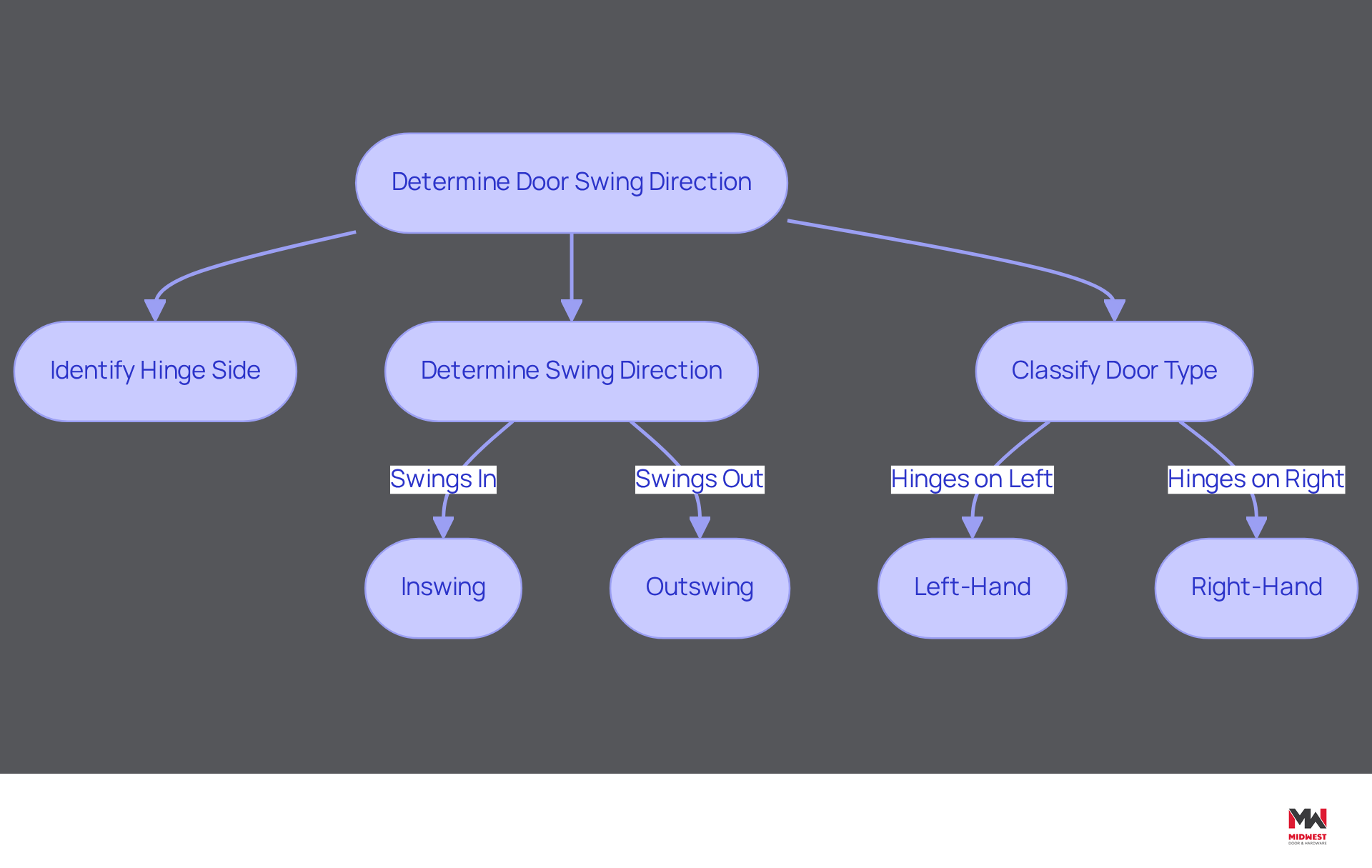
- Hinge Side: This refers to the side of the entryway where the pivots are attached. Recognizing this side is the initial phase in determining the swing of a door.
- Swing Direction: The swing direction is determined by positioning oneself on the side of the entryway where the pivots are situated. Determining the swing of a door helps categorize it as an 'inswing' type if it swings towards you, and as an 'outswing' type if it swings away from you.
- Left-Hand vs. Right-Hand:
- Left-Hand Door: When facing the door, if the hinges are on the left, it is a left-hand door.
- Right-Hand Entrance: Conversely, if the hinges are on the right, it is a right-hand entrance.
Getting a handle on these concepts is key to accurately determining the swing of a door, which is essential for proper installation and performance. For example, during the rough-in stage of building, identifying the opening orientation can improve space usage within a room, boosting accessibility and functionality.
In commercial environments, determining the swing of a door according to local building regulations is essential, especially for exterior entries, which must open outward for swift evacuation during emergencies. Additionally, determining the swing of a door between inswing and outswing entries can significantly impact security; inswing options are generally more secure, while outswing alternatives may be preferred in areas prone to severe weather due to their ability to resist wind forces.
By mastering these concepts, contractors can significantly enhance safety and functionality in their projects.
Follow Step-by-Step Instructions to Determine Door Swing
Determining the swing of a door is essential for ensuring compliance with building codes and successful project execution. To accurately determine the swing of a door, follow these steps:
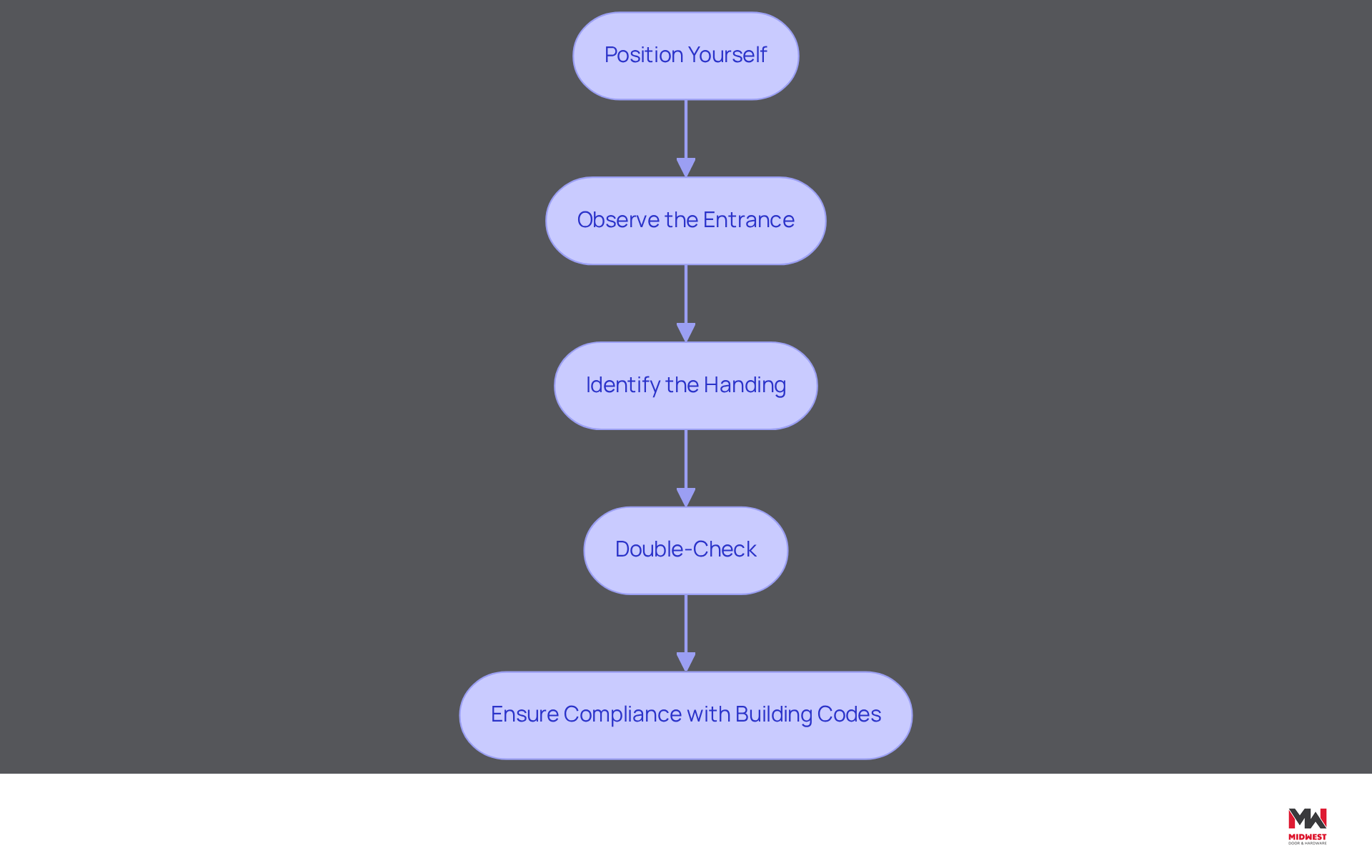
- Position Yourself: Stand in the entrance with your back against the hinge side of the entranceway. This positioning is crucial for accurately evaluating the direction of the movement.
- Observe the Entrance: Look at the entrance from this position. If the entrance opens inward, it is an inswing type. If it moves away from you, it is an outswing entry.
- Identify the Handing:
- If the door swings in and the hinges are on your left, it is a left-hand inswing door.
- If the entry moves inward and the pivots are on your right, it is a right-hand inswing entry.
- If the entrance opens outward and the pivots are on your left, it is a left-hand outswing entrance.
- If the entrance opens outward and the hinges are on your right, it is a right-hand outswing entry.
- Double-Check: To ensure accuracy, repeat the process if necessary. This will help confirm your findings and prevent any mistakes during installation.
Determining the swing of a door is vital for complying with building codes like the International Building Code (IBC) and local regulations. Proper labeling and hardware compatibility are essential for fire-rated and tornado-rated entries, which must meet strict standards for safety and functionality. Additionally, documented maintenance programs for fire-rated assemblies are required per NFPA 80 to ensure ongoing compliance and safety. By following these steps, contractors can enhance project quality and reliability, ultimately leading to successful installations.
We understand that small and midsize contractors often face challenges when managing commercial entry projects. Our comprehensive installation support services, including pre-installation hardware setup, field assistance, and ongoing maintenance, are designed to help you navigate these complexities with confidence. With our expertise and commitment to quality, we ensure that every detail is addressed, allowing you to focus on delivering exceptional results for your clients.
Address Common Challenges in Door Swing Determination
Determining the swing of a door is crucial for ensuring compliance with safety regulations and building codes, yet various challenges can complicate this process:
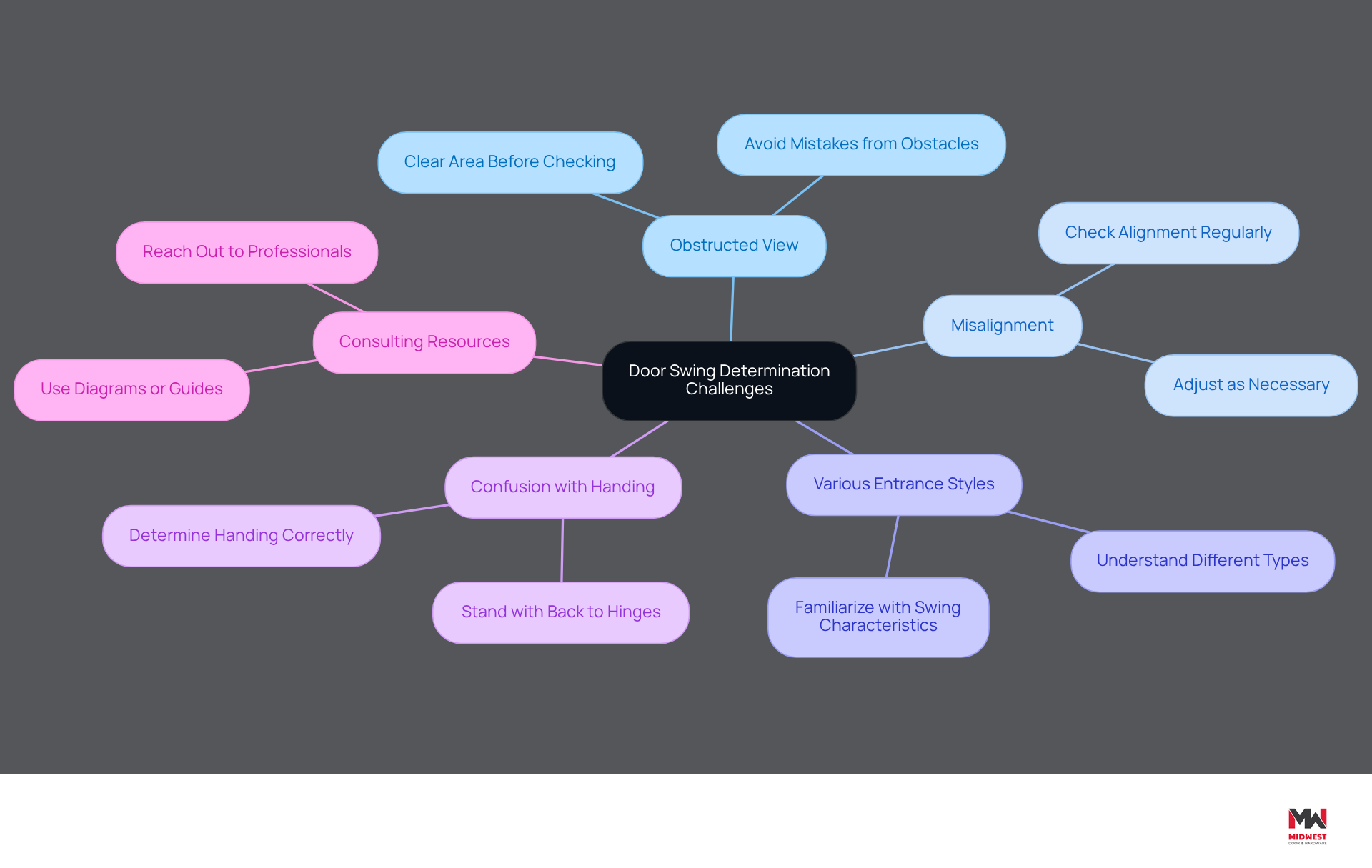
- Obstructed View: Ensure the area is clear before checking the movement to avoid any mistakes. Furniture or other obstacles can block your view of the entrance, leading to potential errors.
- Misalignment: A misaligned entry may not operate properly, causing confusion about its direction. Always check the alignment and make necessary adjustments.
- Various Entrance Styles: Different types of entrances, such as double or sliding varieties, have distinct swing characteristics. Familiarizing yourself with these variations is essential to prevent errors.
- Confusion with Handing: Many individuals confuse left-hand and right-hand entrances. To determine the correct handing, stand with your back to the hinges; this will clarify the orientation of the entry.
- Consulting Resources: If uncertainty persists, consider consulting diagrams or guides available online, or reach out to a professional for assistance.
Understanding these challenges is vital for determining the swing of a door to ensure compliance with safety regulations and building codes. For example, the International Building Code requires that entrances in rooms with 50 or more occupants swing outward to facilitate safe egress during emergencies. Additionally, strict adherence to ICC 500 standards is crucial for tornado-rated entries in designated storm shelters, where non-listed hardware is unacceptable. Furthermore, annual inspection and testing of fire-rated entry assemblies are required per NFPA 80, with documented maintenance programs essential for compliance. By addressing these challenges, you can ensure that your installations not only meet compliance standards but also enhance safety and functionality in your projects.
Utilize Tools and Resources for Accurate Door Swing Assessment
Many individuals struggle with determining the swing of a door accurately, leading to potential installation errors. To address this, consider utilizing the following tools and resources:
- Opening Movement Chart: An opening movement chart visually illustrates the different opening orientations, clarifying any confusion regarding handing. These charts can be found online or at local hardware stores, serving as a practical reference for your projects. As Jonathan Muro states, 'Mastering entry movements begins with determining the swing of a door and understanding how to use a movement chart.'
- Measuring Tools: A tape measure is crucial for assessing entryway dimensions, ensuring that the entrance fits correctly within the frame after establishing the movement orientation. Precise measurements are essential for successful installations, particularly given that there are 13 standard handings used to describe how an entry is hung and which direction it moves.
- YouTube offers a variety of tutorials that can help clarify the process of determining the swing of a door effectively. These resources can provide additional clarity and confidence, especially for those new to the process.
- Professional Consultation: If you're still unsure, reaching out to a contractor or a Midwest Door & Hardware representative can provide you with the expert guidance you need. Their experience can help navigate specific challenges related to your project.
- Mobile Apps: Numerous mobile applications are created to aid with home enhancement activities, including entryway movement evaluations. These apps often provide step-by-step instructions and visual aids, simplifying the process and enhancing user understanding.
- Case Studies: Reviewing case studies that utilize these tools can offer insights into practical applications. For example, comprehending how Left Hand Reverse (LHR) and Right Hand Reverse (RHR) entries are evaluated can demonstrate the significance of precise movement direction in emergency egress situations. The installation of Double Egress entrances in high-traffic zones highlights the importance of determining the swing of a door for safety and accessibility.
Ultimately, leveraging these resources will not only improve your installation accuracy but also enhance safety and compliance with critical building codes, particularly in compliance with FEMA, ICC 500, NFPA 80, and local building codes. Additionally, remember that tornado-rated shelter door hardware must comply with interior egress requirements, and annual inspection and testing of fire-rated door assemblies is mandated per NFPA 80.

Conclusion
Determining the swing of a door is not just a technical detail; it’s a critical factor in ensuring safety and compliance in Nebraska's unique climate. By understanding the hinge side, swing direction, and the distinction between left-hand and right-hand doors, contractors can enhance both functionality and safety in their projects. Understanding this is especially important in Nebraska, where local building codes and the tornado-prone climate require careful consideration of door swing direction for security and emergency egress.
Throughout this guide, key steps have been outlined to accurately assess door swing, including:
- Positioning oneself correctly
- Observing the entrance
- Identifying the handing
Common challenges such as obstructed views and misalignment can create significant challenges in accurately determining door swing, potentially leading to compliance issues. Practical tools and resources that can aid in the determination process have also been discussed. Utilizing these insights not only ensures compliance with regulations like the International Building Code and NFPA 80 but also enhances the overall quality of installations.
In conclusion, by prioritizing accurate door swing assessments, contractors can significantly enhance safety and functionality in their projects, ultimately benefiting the communities they serve. Engaging with experts at Midwest Door & Hardware can further support these efforts, ensuring that every project is executed with precision and adherence to local standards.
Frequently Asked Questions
Why is it important to determine the swing direction of a door?
Determining the swing direction of a door is crucial for ensuring proper installation and compliance with safety standards.
What is the hinge side of a door?
The hinge side refers to the side of the entryway where the pivots are attached, and recognizing this side is the first step in determining the swing of a door.
How do you determine the swing direction of a door?
The swing direction is determined by positioning oneself on the side of the entryway where the pivots are located. If the door swings towards you, it is categorized as an 'inswing' type; if it swings away from you, it is an 'outswing' type.
What is a left-hand door?
A left-hand door is one where, when facing the door, the hinges are on the left side.
What is a right-hand entrance?
A right-hand entrance is one where, when facing the door, the hinges are on the right side.
How does understanding door swing direction improve space usage?
Identifying the opening orientation during the rough-in stage of building can improve space usage within a room, enhancing accessibility and functionality.
Why is it important to determine door swing direction in commercial environments?
In commercial environments, determining the swing of a door according to local building regulations is essential, especially for exterior entries, which must open outward for swift evacuation during emergencies.
How does the swing direction of a door impact security and weather resistance?
Inswing doors are generally more secure, while outswing doors may be preferred in areas prone to severe weather due to their ability to resist wind forces.
List of Sources
- Understand Door Swing Direction
- How to Determine Door Swing Direction | EZ-Hang Door (https://ezhangdoor.com/how-to-determine-door-swing-direction)
- 3 Ways To Determine Door Swing Direction & Choose the One That’s Right for You (https://panda-windows.com/blog/3-ways-to-determine-door-swing-direction-and-choose-the-one-that-s-right-for-you)
- How to Determine Door Handing (https://realcraft.com/blogs/articles/how-to-determine-door-handing?srsltid=AfmBOooYrV4jAkjkLxf3PfgxMLnKpH09IEVcfhTPQdp28HmohyAUxcdp)
- Door Handing Explained: A Beginner's Guide to Door Swing Direction (https://cdfdistributors.com/blog/post/door-handing-explained-a-beginners-guide-to-door-swing-direction)
- Client Challenge (https://special-lite.com/how-to-determine-door-handing-a-comprehensive-guide)
- Follow Step-by-Step Instructions to Determine Door Swing
- Door Handing Explained: A Beginner's Guide to Door Swing Direction (https://cdfdistributors.com/blog/post/door-handing-explained-a-beginners-guide-to-door-swing-direction)
- Master Front Door Swing Choices: A Step-by-Step Guide for Contractors (https://midwestdoor.net/news/master-front-door-swing-choices-a-step-by-step-guide-for-contractors)
- Address Common Challenges in Door Swing Determination
- How to Determine Door Swing Direction for Commercial Doors | CDF Distributors (https://cdfdistributors.com/blog/post/how-to-determine-door-swing-direction-and-why-it-matters-when-ordering)
- Should Commercial Doors Swing In or Out? Everything You Need to Know (https://pdqlocks.com/blog/should-commercial-doors-swing-in-or-out?hs_amp=true)
- How Do You Determine an Exterior Door Swing? (https://vortexdoors.com/blog/how-do-you-determine-an-exterior-door-swing)
- TOP 20 DOOR INSTALLER MARKETING STATISTICS 2025 | Amra And Elma LLC (https://amraandelma.com/door-installer-marketing-statistics)
- Decoded: Door Swing (https://idighardware.com/2026/03/decoded-door-swing)
- Utilize Tools and Resources for Accurate Door Swing Assessment
- Door Swing Chart (Door Handing Guide) - CDI Doors (https://cdidoors.com/door-swing-chart-door-handing-guide)
- How to Determine Door Handing (https://realcraft.com/blogs/articles/how-to-determine-door-handing?srsltid=AfmBOop_syjsMGjMZIh-_kCCFCjEYCsGWjWvBcfEsjq6mqc4CJ5JeigR)
- Door Swing Chart (https://angelbau.com/resources/door-swing)
Related News
Check out more of what we’ve worked on.