
Introduction
Understanding door closer settings is essential for midsize contractors who want to improve the functionality and safety of commercial entrances. This article outlines key best practices, including:
- Selecting appropriate door types
- Implementing effective installation techniques
- Establishing rigorous maintenance protocols
As contractors navigate these complexities, they may face challenges that could impact performance. What strategies can they adopt to ensure optimal operation and compliance with safety regulations?
Understand Door Types and Requirements
must understand the various types of entrances because each type has distinct characteristics that affect the choice of fastening mechanisms. Heavier entrances, for instance, may require adjustments in settings. Additionally, it is crucial to grasp the specific requirements for door closers. According to ADA guidelines, entrances should take at least five seconds to close from a 90-degree angle to a 12-degree angle. This knowledge enables builders to select devices that not only function effectively but also comply with regulations.
Midwest Door & Hardware supports builders in this process by providing resources. This ensures that contractors have the necessary information to navigate these complexities and choose appropriate solutions.

Implement Proper Installation Techniques
To achieve optimal results, contractors must adopt a systematic approach when installing door closers. Start by selecting the appropriate door closer. Clearly mark the mounting points on both the entrance and frame, ensuring alignment with the manufacturer's specifications. Securely attach the door closer to the entrance and connect the arm to the frame, to achieve the desired closing speed.
Regular inspections of the installation are crucial to identify any misalignments or loose components, as these can lead to operational issues. Research indicates that improper alignment is a common problem, significantly affecting the functionality of the entrance. By adhering to these best practices, builders can ensure smooth and reliable operation in various conditions.

Establish Maintenance and Inspection Protocols
To maintain peak performance and durability of door closers, builders should establish a maintenance plan that involves inspecting the door closers at least biannually, as recommended by industry standards. These inspections should include:
- Checking for oil leaks
- Verifying that the settings for closing and latching speeds are within acceptable ranges
- Tightening any loose screws
Additionally, lubricating moving parts is essential to ensure smooth operation.
The company offers comprehensive services, including:
- Pre-install hardware setup
- Field installation for final adjustments
- Ongoing maintenance support
These services assist professionals in effectively managing door closer performance. Keeping a detailed record of maintenance activities not only helps track service history but also aids in identifying recurring issues.
By following these protocols and leveraging the support from service providers, contractors can significantly extend the lifespan of door closers. This ensures they operate safely and efficiently, ultimately enhancing the overall functionality of buildings. Regular maintenance is a strategic investment in safety, efficiency, and long-term cost savings, as it can prevent minor issues from escalating into costly repairs.

Train Staff on Usage and Troubleshooting
Educating personnel on the correct application and modification of closers is essential for optimal performance, especially with the support of training materials. Builders often face challenges, such as:
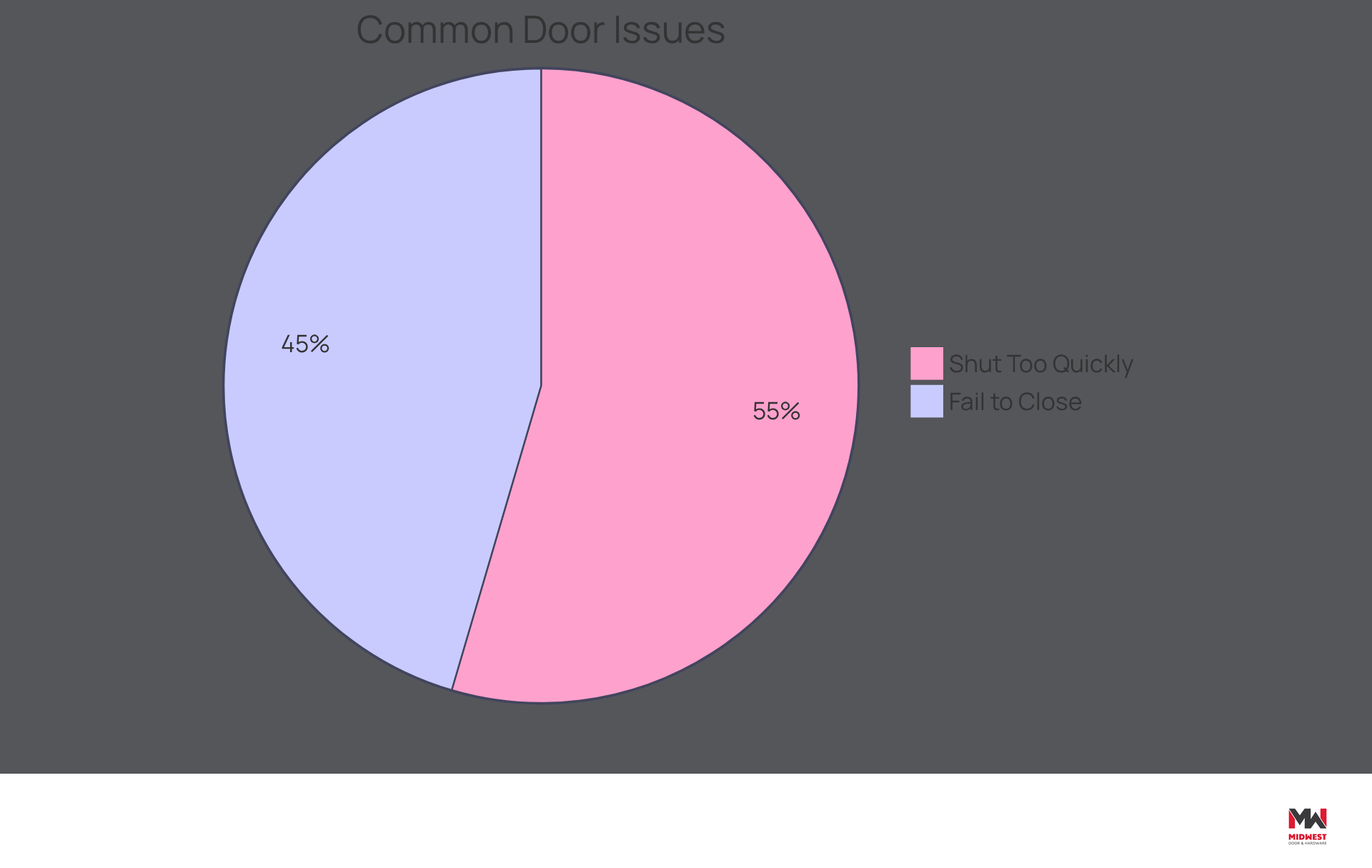
- Doors that shut too quickly - accounting for about 30% of reported problems
- Doors that fail to close entirely - which represents around 25%
Conducting targeted workshops to address these challenges can significantly improve performance. Hands-on demonstrations enable team members to practice adjustments and discover firsthand.
The company's commitment to transparent proposals and prompt communication ensures that builders have the necessary tools for efficient training. Encouraging employees to report any irregularities promptly fosters a culture of proactive care, which is crucial for preventing larger issues down the line. By prioritizing education and maintenance, builders can enhance the reliability of their door systems and ensure compliance with industry standards, ultimately facilitating smoother project execution.
Additionally, referencing successful training programs from leading contractors can offer valuable insights into best practices. Addressing common pitfalls - such as neglecting to update training materials or failing to engage staff in the learning process - can further improve the effectiveness of training initiatives.
Conclusion
Mastering door closer settings is crucial for midsize contractors who want to boost operational efficiency and comply with safety standards. By understanding the distinct characteristics of different door types, implementing proper installation techniques, establishing maintenance protocols, and effectively training staff, contractors can achieve optimal door closer performance.
Key practices include:
- Selecting appropriate fastening mechanisms based on door types
- Conducting regular inspections to prevent misalignments
- Maintaining a proactive approach to staff training
Utilizing resources like Midwest Door & Hardware provides contractors with valuable support that simplifies these processes, ensuring installations meet both functionality and safety requirements.
Prioritizing these best practices not only extends the lifespan of door closers but also enhances the overall safety and efficiency of commercial spaces. Investing time and resources into proper installation, maintenance, and staff education leads to smoother project execution and significant long-term cost savings. By embracing these strategies, contractors can effectively navigate the complexities of door closer settings, ensuring compliance and reliability in all their projects.
Frequently Asked Questions
What types of door entrances should midsize contractors understand?
Midsize contractors should understand hollow metal, wood, and specialty door options, as each type has distinct characteristics affecting fastening mechanisms.
Why is it important to adjust door closer settings for heavier entrances?
Heavier entrances may require adjustments in door closer settings to ensure proper operation.
What are the specific requirements for fire-rated entries?
The article does not specify the detailed requirements for fire-rated entries, but it emphasizes the importance of understanding them for compliance.
What does ADA compliance entail for door entrances?
According to ADA guidelines, entrances should take at least five seconds to close from a 90-degree angle to a 12-degree angle.
How does understanding door types and requirements benefit builders?
It enables builders to select devices that function effectively and comply with safety regulations.
How does Midwest Door & Hardware assist builders?
Midwest Door & Hardware supports builders by providing transparent estimates and prompt communication, helping them navigate complexities in choosing durable entry and hardware solutions that meet compliance standards.
List of Sources
- Understand Door Types and Requirements
- doorclosersusa.com (https://doorclosersusa.com/ADA-Door-Closer-Requirements-s/34426.htm?srsltid=AfmBOopUIwz3FGfrBEgGSVM8FcDBR7xi7A8344iMn4CgnXIEyxlfnTeu)
- vortexdoors.com (https://vortexdoors.com/blog/ada-requirements-for-doors)
- wifitalents.com (https://wifitalents.com/commercial-door-industry-statistics)
- North America Doors Market Size, Share & Growth, 2034 (https://marketdataforecast.com/market-reports/north-america-doors-market)
- Doors Market | Global Market Analysis Report - 2035 (https://futuremarketinsights.com/reports/doors-market)
- Implement Proper Installation Techniques
- cdidoors.com (https://cdidoors.com/how-to-successfully-install-and-adjust-a-door-closer)
- mylocksmiths.ca (https://mylocksmiths.ca/2025/09/01/door-closer-installation-guide)
- hutlontech.com (https://hutlontech.com/news/how-to-install-a-door-closer-correctly-what-are-the-key-points-of-such-installation-297724.html)
- nationallocksupply.com (https://nationallocksupply.com/blog/door-closers-explained-types-grades-and-installation-tips?srsltid=AfmBOooGrAmHW35HDK5UFF6Df-Wm266SQf7D8ULRGRKWeHe7hCztkSZn)
- Establish Maintenance and Inspection Protocols
- cisa.com (https://cisa.com/en/header/case_studies/case-study-cisa-pere-virgili-hospital-barcelona.html)
- asapcommercialdoors.com (https://asapcommercialdoors.com/why-is-regular-facility-door-maintenance-essential-for-commercial-buildings)
- How Commercial Door Repair Services Will Improve Your Facility In 2026 - Facilities Management - Facility Executive Magazine (https://facilityexecutive.com/how-commercial-door-repair-services-will-improve-your-facility-in-2026)
- Case Studies & Completed Projects | Door Control Services (https://doorcontrolservices.com/about-us/case-study-library)
- Train Staff on Usage and Troubleshooting
- yodeck.com (https://yodeck.com/use-cases/workplace-safety-quotes)
- 18 of Our Favorite Quotes About the Power of Training & Development - Abilitie (https://abilitie.com/blog/2018-7-6-18-of-our-favorite-quotes-about-the-power-of-training-development)
- blog.safetyculture.com (https://blog.safetyculture.com/industry-trends/top-20-safety-quotes-improve-safety-culture)
- scribd.com (https://scribd.com/document/818882421/Case-Study-5-Training)
- 22 Workplace Safety Quotes From Leaders and Experts - AlertMedia (https://alertmedia.com/blog/workplace-safety-quotes)
Related News
Check out more of what we’ve worked on.