
Introduction
Mastering door closure adjustments is essential for contractors to ensure safety and compliance in their projects. Properly adjusted door closures prevent costly damage from slamming and ensure compliance with accessibility standards, fostering a secure environment for all users. Many contractors fail to recognize that improper adjustments can lead to safety hazards and compliance failures. What are the critical steps and tools needed to master this essential skill?
Understand the Importance of Door Closure Adjustments
For contractors, understanding the importance of closure adjustments is essential to ensure entrances function effectively and securely. Proper door closure adjustment of mechanisms prevents slamming, which can damage both the entryway and its fittings, while ensuring that entrances close securely to enhance safety. Additionally, door closure adjustment is crucial in adhering to accessibility standards, such as the Americans with Disabilities Act (ADA), facilitating ease of use for all individuals.
Key Benefits of Proper Adjustments:
- Safety: Proper adjustments significantly reduce the risk of injuries caused by slamming doors, which can lead to accidents in high-traffic areas.
- Security: Ensuring that entrances latch correctly minimizes the risk of unauthorized access, thereby protecting the premises.
- Compliance: Adhering to building codes and ADA regulations is critical, as it helps avoid legal liabilities and enhances the overall accessibility of facilities.
- Durability: Regular modifications extend the lifespan of hardware by minimizing wear and tear, ultimately saving costs on replacements and repairs.
Real-world examples show how entryway modifications can improve safety and security. For instance, in busy office settings, the installation of closures has effectively reduced the problem of slamming entrances, safeguarding both the entrances and nearby structures. Furthermore, statistics indicate that 73% of emergency exit malfunctions are linked to the mechanisms that control the doors, emphasizing the importance of suitable modifications to guarantee dependable functioning in urgent situations. By prioritizing door closure adjustment, contractors not only meet client expectations but also significantly enhance safety and compliance across their projects.

Gather Essential Tools for Adjustments
Before starting any modifications, having the right tools ready is essential for ensuring effective door closer adjustments:
- Screwdriver: A flathead or Phillips screwdriver, depending on the specific model of the door closer.
- Allen Wrench: Necessary for adjusting certain screws on the closer.
- Tape Measure: To verify alignment and ensure proper installation.
- Level: To verify that the entrance hangs straight and functions properly.
- Lubricant: For maintaining the smooth operation of the door closer.
Tool Preparation:
- Inspect Tools: Ensure all tools are in good working condition and prepared for use to avoid delays during modifications.
- Organize Workspace: Set up a clean, well-lit area for the modifications, minimizing distractions and potential hazards.
- Safety Gear: Wear safety glasses to protect your eyes from debris and ensure a safe working environment. It's important to prioritize safety and follow guidelines during modifications.
Regular maintenance and proper door closure adjustment are crucial, as neglect can lead to malfunctions, and many emergency exit failures are linked to closure issues. Therefore, having the right tools and preparing adequately is crucial for effective entry management in commercial settings. Furthermore, keep in mind that adequate tool preparation aids in continuous upkeep, guaranteeing that closures operate properly and securely.

Follow Step-by-Step Adjustment Procedures
To ensure optimal performance of a commercial door closer, precise adjustments are crucial.
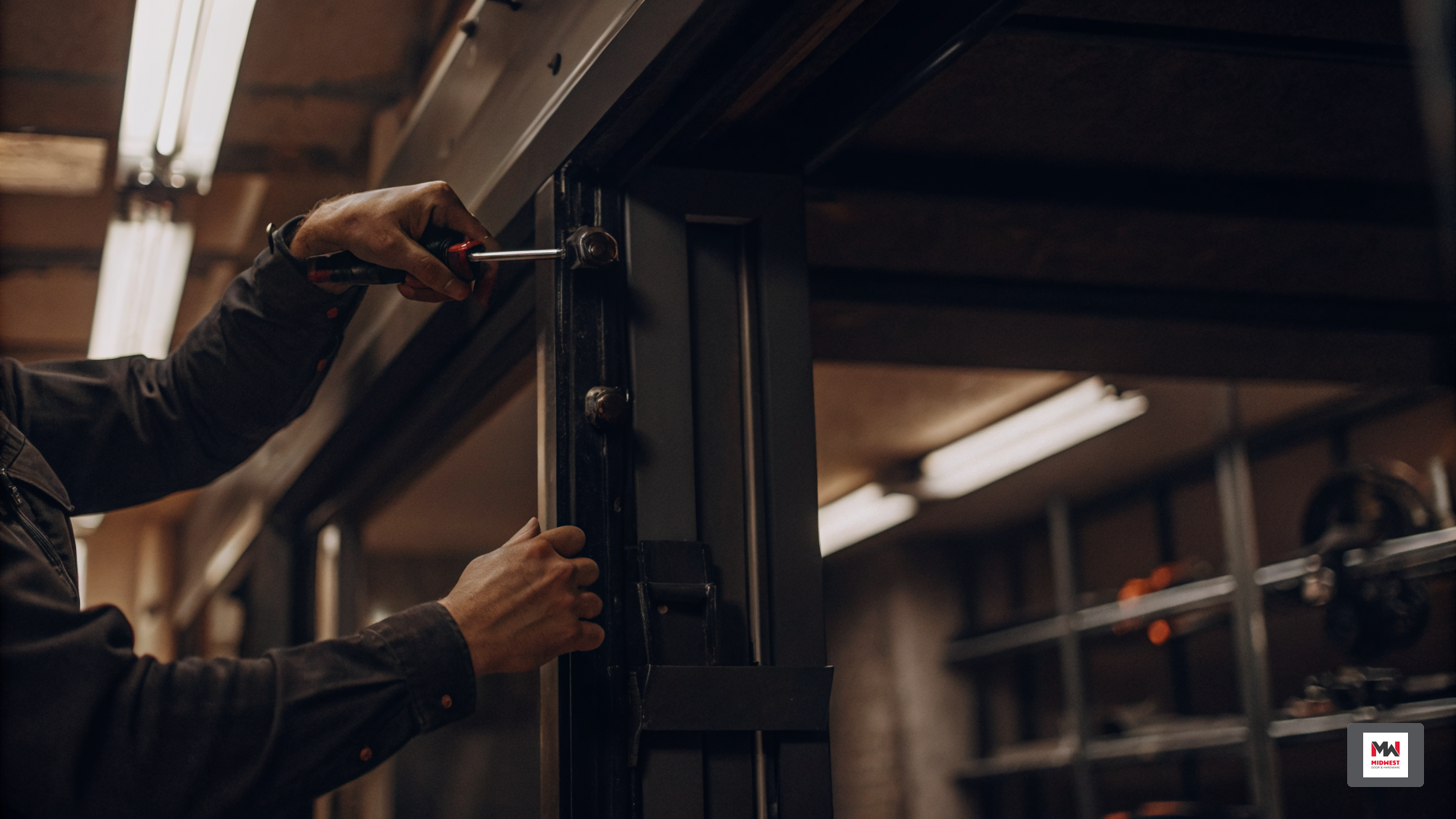
- Take off the Cover: If relevant, use a screwdriver to remove the cover of the entrance mechanism, granting access to the adjustment screws.
- Identify Adjustment Screws: Locate the screws designated for closing rate, latching rate, and backcheck, typically marked on the closer body.
- Adjust Closing Speed:
- Turn the closing speed screw clockwise to slow the door's closing speed, or counterclockwise to speed it up. Make minor modifications, preferably no more than 1/4 turn, and test the entrance after each change.
- Adjust Latching Speed:
- Adjust the latching speed screw similarly to ensure the door latches securely without slamming, which can lead to damage.
- Adjust Backcheck:
- This adjustment controls how far the door opens before it begins to close. Adjust it to stop the entrance from swinging too far, which can cause damage to the frame or hardware.
- Test the Door: Open and close the door multiple times to ensure it operates smoothly and latches properly. Feel free to make further adjustments to achieve the best performance.
- Replace the Cover: Once satisfied with the modifications, securely replace the cover.
Proper calibration of entrance mechanisms requires door closure adjustment to be effective. Improper settings can lead to significant operational issues, with 45% of failures attributed to calibration errors. Routine maintenance and modifications can prevent up to 85% of failures, ensuring safety and compliance with regulations. A properly functioning non-delayed closer should ideally close and lock the entrance in 5-7 seconds from a 90-degree angle. Practical instances demonstrate that prompt modifications not only improve functionality but also prolong the lifespan of hardware by 3-5 years, making it a valuable investment for contractors. Moreover, using doorstops even after modifications is advised to ensure safety and avoid damage.

Troubleshoot Common Door Closure Issues
Even with regular maintenance, door closure adjustment can present challenges that require attention to ensure optimal performance. Here are some common problems and their solutions:
-
A common issue is when the door slams shut unexpectedly:
- Cause: The closing speed is set too fast.
- Solution: Perform a door closure adjustment by turning the closing velocity screw counterclockwise to reduce the closing rate.
-
Another frequent problem is when the door does not latch properly:
- Cause: The latching speed is too slow or the door is misaligned.
- Solution: For a door closure adjustment, adjust the latching speed screw clockwise to increase the speed, and check the alignment of the entry.
-
You may also encounter doors that stick or are hard to open:
- Cause: Misalignment or insufficient lubrication.
- Solution: To resolve this, check the alignment with a level and make the necessary door closure adjustment by lubricating the moving parts.
-
Oil leakage is another concern:
- Cause: Worn seals in the door closer.
- Solution: If oil leakage is significant, replace the entrance closer, as this indicates a failure in the door closure adjustment.
-
Lastly, if the backcheck is not functioning:
- Cause: The backcheck adjustment is incorrect.
- Solution: Make a door closure adjustment by adjusting the backcheck screw to ensure it engages properly when the entrance is opened fully.
Final Tips:
- Regularly inspect door closers for wear and tear.
- Keep a maintenance log to track adjustments and repairs.
- Consult manufacturer guidelines for specific models for additional troubleshooting advice.
Addressing these common issues promptly can enhance the longevity of your door closers and maintain the integrity of your facility.

Conclusion
Prioritizing door closure adjustments is essential for contractors, as it directly impacts safety, security, and compliance across various environments. When door mechanisms function properly, contractors can prevent slamming doors, unauthorized access, and legal issues related to accessibility standards, ultimately protecting their projects and clients.
Throughout this guide, essential steps have been outlined, from understanding the importance of proper adjustments to gathering the right tools and following precise procedures. Key insights highlight the numerous benefits of regular maintenance, including improved durability and extended hardware lifespan. Moreover, troubleshooting common issues ensures that contractors can address potential problems swiftly, maintaining optimal performance of door closures.
It's evident that making door closure adjustments a priority is a smart move for contractors. By implementing these practices, functionality of entrances is enhanced while also elevating client safety and satisfaction. Embracing these techniques can lead to long-term benefits, making it imperative for contractors to integrate door closure adjustments into their routine maintenance and project planning efforts.
Frequently Asked Questions
Why are door closure adjustments important for contractors?
Door closure adjustments are essential for ensuring that entrances function effectively and securely, preventing slamming that can damage the entryway and its fittings, and ensuring safety and compliance with accessibility standards.
What are the key benefits of proper door closure adjustments?
The key benefits include enhanced safety by reducing injury risks from slamming doors, improved security by ensuring entrances latch correctly, compliance with building codes and ADA regulations, and increased durability of hardware by minimizing wear and tear.
How do door closure adjustments enhance safety?
Proper adjustments significantly reduce the risk of injuries caused by slamming doors, which can lead to accidents in high-traffic areas.
In what way do door closure adjustments affect security?
Ensuring that entrances latch correctly minimizes the risk of unauthorized access, thereby protecting the premises.
Why is compliance with building codes and ADA regulations important?
Compliance helps avoid legal liabilities and enhances the overall accessibility of facilities, making them easier to use for all individuals.
How do regular modifications to door closures impact durability?
Regular adjustments extend the lifespan of hardware by minimizing wear and tear, ultimately saving costs on replacements and repairs.
Can you provide examples of the benefits of door closure adjustments in real-world scenarios?
In busy office settings, the installation of closures has effectively reduced slamming entrances, improving safety for both the entrances and nearby structures.
What statistics highlight the importance of door closure adjustments?
Statistics indicate that 73% of emergency exit malfunctions are linked to the mechanisms controlling the doors, emphasizing the need for suitable modifications to ensure reliable functioning in urgent situations.
List of Sources
- Understand the Importance of Door Closure Adjustments
- geze.in (https://geze.in/en/newsroom/geze-ts-7000-door-closer-wins-2026-german-design-award)
- intelmarketresearch.com (https://intelmarketresearch.com/global-door-closer-forecast-market-26275)
- 5 Surprising Stats About Commercial Door Accessories Failures That Every Property Owner Should Know (https://ohdctexoma.com/5-surprising-stats-about-commercial-door-accessories-failures-that-every-property-owner-should-know)
- qualitydoor.com (https://qualitydoor.com/blogs/guide/door-closers?srsltid=AfmBOoq-yNhCOSxbx-HTUg48kLczcGPbmiT7gw2rT8K1eePuWfjD8WSr)
- bignewsnetwork.com (https://bignewsnetwork.com/news/279008934/one-of-the-biggest-commercial-door-hardware-retrofit-cycles-in-years-is-happening-right-now)
- Gather Essential Tools for Adjustments
- Door Closer Adjustments: When They’re Needed and Why Expertise Matters (https://vortexdoors.com/blog/door-closer-adjustments)
- How to Adjust a Commercial Door Closer: Complete Guide for General Contractors (https://cdfdistributors.com/blog/post/how-to-adjust-a-commercial-door-closer-complete-guide-for-general-contractors)
- Door closer adjustment: quick guide on how to adjust it (https://windowo.com/blog/door-closer-adjustment)
- 5 Surprising Stats About Commercial Door Accessories Failures That Every Property Owner Should Know (https://ohdctexoma.com/5-surprising-stats-about-commercial-door-accessories-failures-that-every-property-owner-should-know)
- How To Adjust Commercial Door Closers - News Co., Ltd - Haida Door Control (https://heinda-cn.com/news/how-to-adjust-commercial-door-closers-55749784.html)
- Follow Step-by-Step Adjustment Procedures
- thebigredguide.com (https://thebigredguide.com/insights/door-closer-adjustments-explained.1634221243.html)
- How To Adjust Commercial Door Closers - News Co., Ltd - Haida Door Control (https://heinda-cn.com/news/how-to-adjust-commercial-door-closers-55749784.html)
- 5 Surprising Stats About Commercial Door Accessories Failures That Every Property Owner Should Know (https://ohdctexoma.com/5-surprising-stats-about-commercial-door-accessories-failures-that-every-property-owner-should-know)
- Door Closer Adjustments: When They’re Needed and Why Expertise Matters (https://vortexdoors.com/blog/door-closer-adjustments)
- Your Guide to Door Closer Adjustments - LaForce, LLC (https://laforceinc.com/blog/your-guide-to-door-closer-adjustments)
- Troubleshoot Common Door Closure Issues
- clickorlando.com (https://clickorlando.com/video/news/2026/03/24/screen-door-slamming-shut-change-out-your-door-closer)
- stormdoorguy.com (https://stormdoorguy.com/blogs/news/storm-door-closer-not-working-try-these-fixes?srsltid=AfmBOoq17D22FBNQ5e1kMshOPMffpMtgEfW0bDc_BQ-WaOHNumKikCMo)
- ironmongeryworld.com (https://ironmongeryworld.com/blog/common-door-closer-issues-and-how-to-troubleshoot-them?srsltid=AfmBOor7jWLVncq92JaXCgkvBiSSqQRh6gAsL33URBxX-GC88izmqIHw)
- 5 Surprising Stats About Commercial Door Accessories Failures That Every Property Owner Should Know (https://ohdctexoma.com/5-surprising-stats-about-commercial-door-accessories-failures-that-every-property-owner-should-know)
- Door Closer Adjustment: Fix 6 Common Door Closer Issues (https://cn-oude.com/blog/issues/6-common-door-closer-issues)
Related News
Check out more of what we’ve worked on.