
Introduction
Contractors face significant challenges in selecting metal doors that meet safety standards and project specifications due to the complexities of modern construction. This guide delves into the fundamental processes, materials, and best practices that ensure quality and compliance in metal door production. Navigating these complexities requires a clear understanding of the options and regulations involved in metal door selection.
Explore the Fundamentals of Metal Door Manufacturing
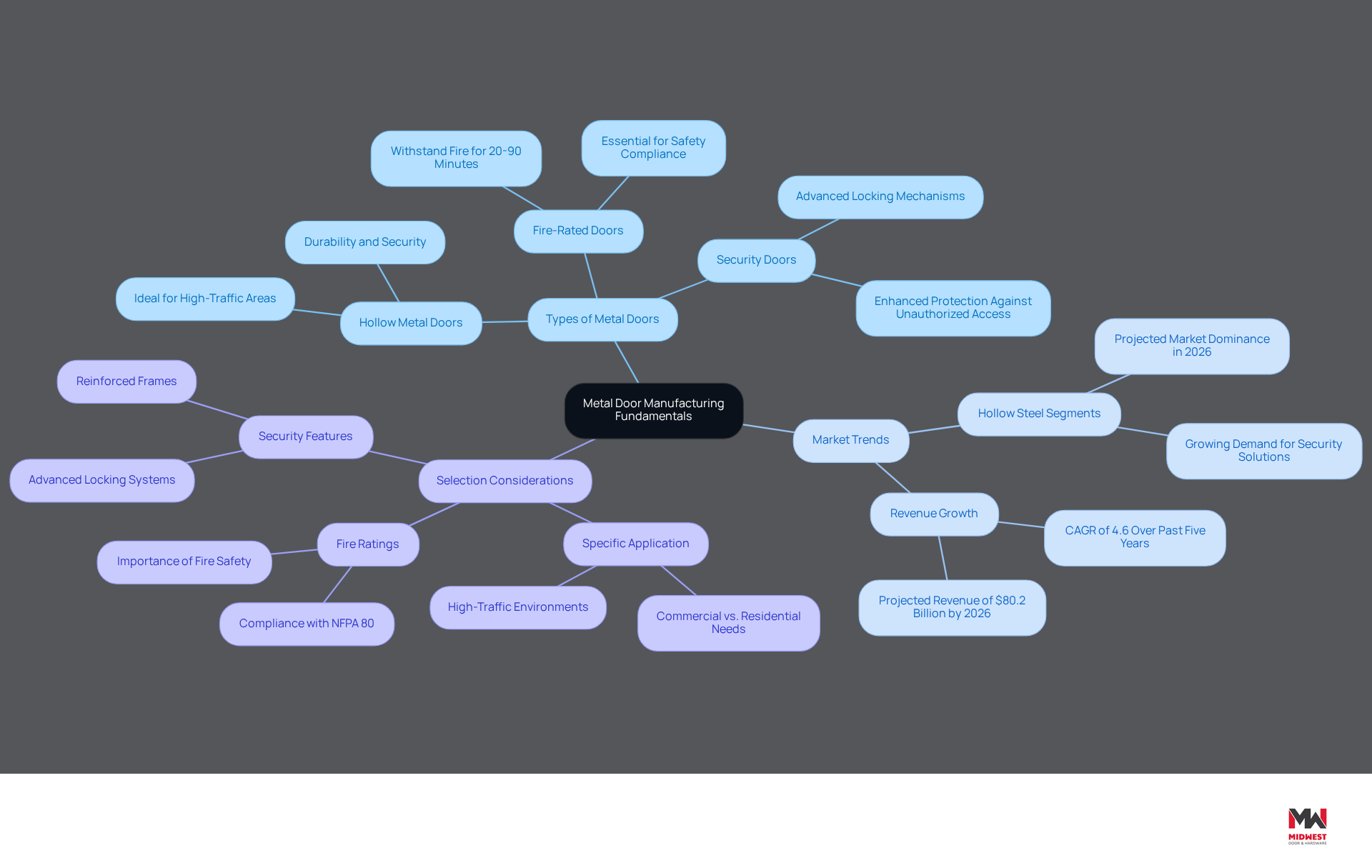
Understanding the fundamentals of metal door manufacturing is vital for contractors aiming to select the right entries for their projects. Here’s a detailed look at the key components:
There are several types of metal doors that contractors should be aware of, including:
- Hollow metal doors
- Fire-rated doors
- Security doors
Hollow metal entries, a key product in metal door manufacturing, are particularly favored for their durability and security, making them ideal for high-traffic environments such as schools and hospitals. Fire-rated barriers are essential for safety, designed to withstand fire for specific durations, typically ranging from 20 to 90 minutes. Security barriers, equipped with advanced locking mechanisms, provide enhanced protection against unauthorized access.
Hollow steel segments are projected to dominate the market revenue share in 2026, particularly in metal door manufacturing, reflecting a strong preference for these entries in various applications, especially in commercial settings. This trend underscores the growing demand for robust security solutions in commercial settings, driven by increasing construction activities and renovation projects, particularly in metal door manufacturing.
The efficiency of hollow steel entries in large-scale commercial applications is exemplified by Midwest Door & Hardware's successful supply of over 600 openings for the Canopy Park project. Such projects emphasize the significance of choosing the appropriate metallic entrances to satisfy both functional and aesthetic needs.
Choosing the right steel entrances is essential for builders involved in metal door manufacturing to ensure safety compliance and enhance project outcomes. In metal door manufacturing, factors to consider include:
- The specific application
- Required fire ratings
- Security features
Adherence to FEMA, ICC 500, NFPA 80, and local building regulations is crucial, especially for fire-rated and tornado-rated entries, which must comply with strict labeling and installation requirements.
By understanding these basics, professionals can manage the intricacies of selecting and installing hardware, ensuring that their projects adhere to the highest standards of safety and functionality. This knowledge empowers professionals to make informed decisions that enhance safety and functionality in their projects.
Understand Materials and Processes in Metal Door Production
Understanding the meticulous process behind metal door manufacturing is crucial for contractors who aim to ensure quality and performance in their projects. Here’s what contractors should understand:
-
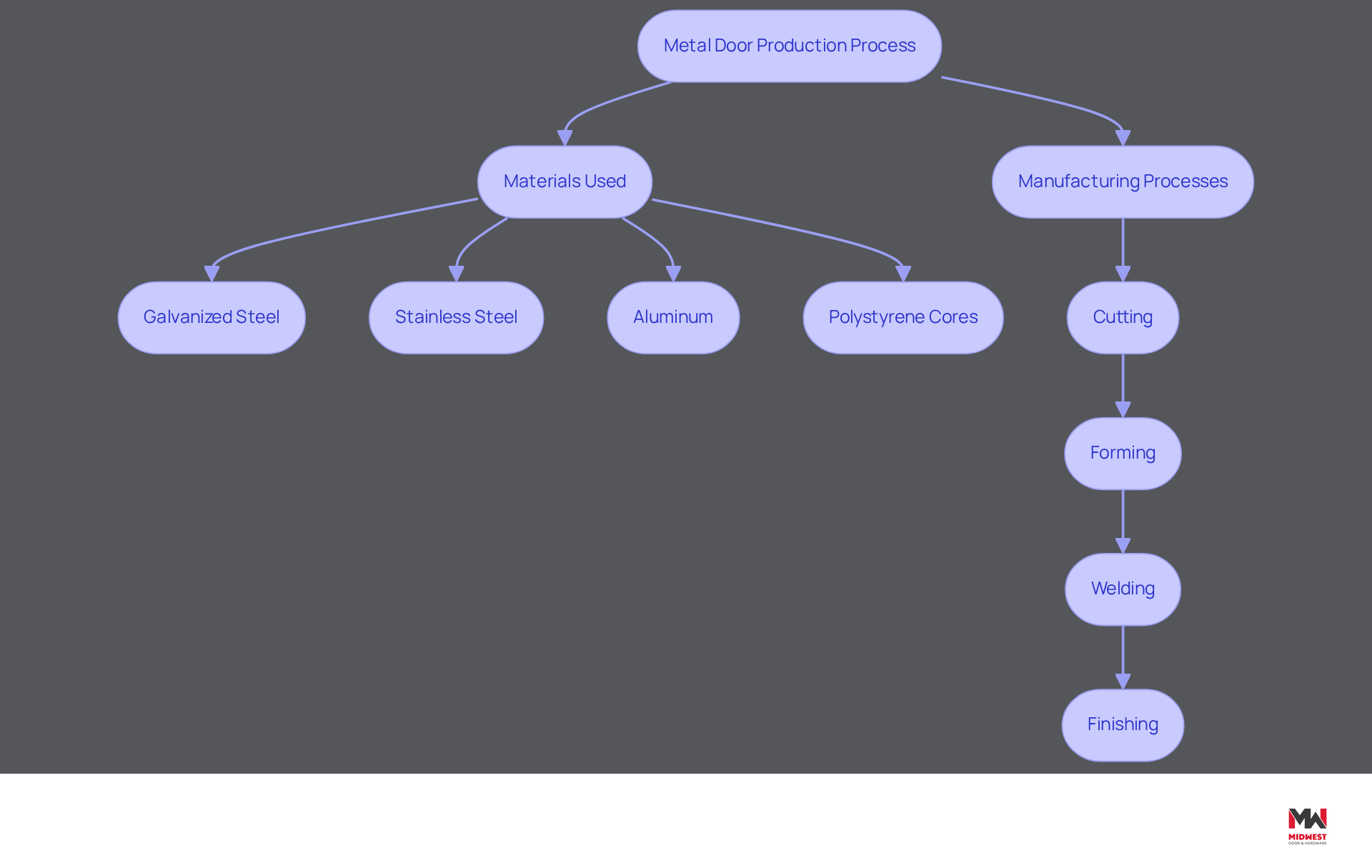
Materials Used: Galvanized steel is the predominant material for metal doors, celebrated for its strength and durability. Alternatives like stainless steel and aluminum are also utilized, each offering distinct advantages tailored to specific applications. Significantly, polystyrene cores are frequently utilized for their insulating characteristics and light weight, rendering them a common selection for numerous Midwest Door & Hardware products.
-
Manufacturing Processes: Key processes in metal door production include:
- Cutting: Precision machinery is employed to cut steel sheets to the required dimensions.
- Forming: The cut sheets are shaped into frame forms through bending and stamping techniques used in metal door manufacturing.
- Welding: Components are welded together to create a robust structure that can withstand various stresses.
- Finishing: A protective coating is applied to enhance durability and aesthetic appeal, ensuring the entryway meets both functional and design requirements.
When contractors grasp these materials and processes, they can make decisions that truly align with project specifications and meet client expectations. It's essential to adhere strictly to FEMA, ICC 500, NFPA 80, and local building regulations for fire-rated and tornado-rated entries. This ensures proper labeling, hardware compatibility, and installation criteria are met. Regular inspections and testing of fire-rated entry assemblies are mandated per NFPA 80, with documented maintenance programs to uphold safety and performance standards.
MDH's in-house fabrication shop allows for the customization of entrances, frames, and hardware, helping builders meet specific project requirements effectively. MDH's commitment to providing comprehensive installation support and services ensures that professionals can confidently manage their projects from start to finish.
Recognize Quality Standards and Certifications in Metal Doors
In the metal door manufacturing sector, adhering to quality benchmarks and certifications is essential for ensuring safety and performance. Here are key points for contractors to consider:
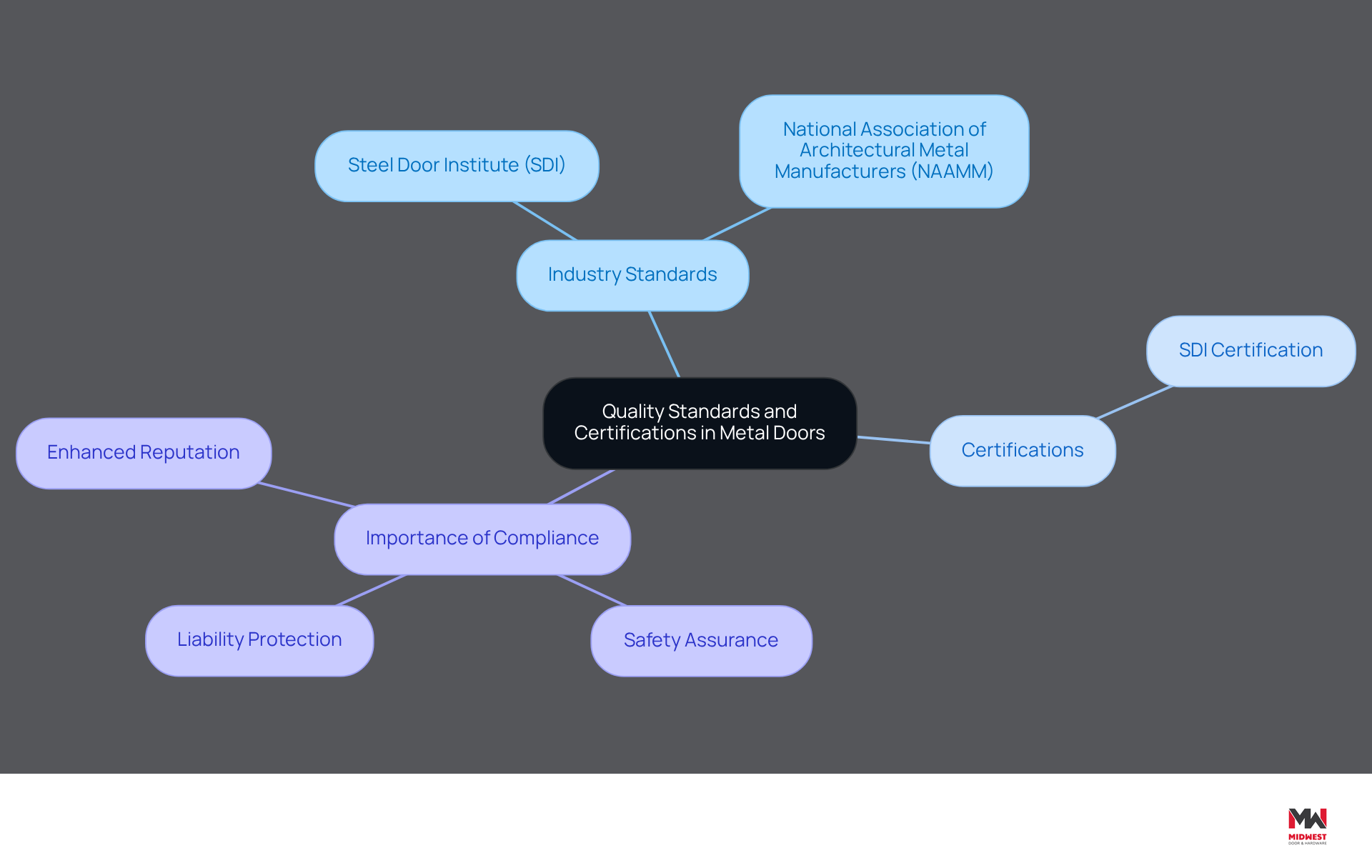
- Industry Standards: Familiarize yourself with standards set by organizations such as the Steel Door Institute (SDI) and the National Association of Architectural Metal Manufacturers (NAAMM). These criteria detail requirements for production, evaluation, and performance.
- Certifications: Look for certifications that indicate compliance with industry standards, such as SDI certification. These certifications guarantee that the entries have been evaluated for durability, fire resistance, and other essential factors.
- Importance of Compliance: Utilizing certified products not only guarantees safety and performance but also safeguards professionals from liability concerns and boosts their reputation in the industry.
Choosing certified products not only enhances safety but also strengthens your standing in the competitive construction market.
Implement Best Practices for Installation and Maintenance of Metal Doors
Proper installation and maintenance in metal door manufacturing are crucial for their performance and longevity, impacting both safety and functionality. Here are best practices that contractors should follow:
-
Installation Tips:
- Preparation: Ensure that the rough opening is square and level before installation to facilitate a smoother process.
- Hardware Sequencing: Install hardware in the correct sequence to avoid complications during installation.
- Clearances: Maintain proper clearances around the entrance to ensure smooth operation and compliance with building codes.
Maintenance Practices:
- Regular Inspections: Conduct quarterly inspections to check for signs of wear, rust, or damage. Neglecting regular inspections can lead to costly repairs and safety violations. This proactive strategy helps identify problems early, which can prevent costly repairs and ensure compliance with NFPA 80, which requires annual inspection and testing of fire-rated entry assemblies.
- Cleaning: Clean metallic entrances regularly using mild soap and water to prevent corrosion and maintain appearance. This straightforward practice can greatly prolong the longevity of the entrances.
- Repairs: Address any issues promptly, such as rust spots or misalignments, to prevent further damage. Implementing a documented maintenance program can help track these repairs and ensure that all actions are recorded.
By following these best practices in metal door manufacturing, contractors can keep metal doors functional and visually appealing, while also meeting critical safety standards that protect occupants.

Conclusion
Navigating the complexities of metal door manufacturing is crucial for contractors who aim to deliver exceptional project results. This guide has examined the different types of metal doors and the materials involved in their production. It also highlights the importance of adhering to industry standards and best practices. By understanding these fundamentals, contractors can ensure their selections meet safety and functionality requirements while also enhancing the overall aesthetic of their projects.
Key insights discussed include the significance of choosing the right type of metal door for specific applications, such as:
- Hollow metal doors for durability
- Fire-rated doors for safety compliance
Additionally, the article emphasized the necessity of understanding the manufacturing processes, from cutting and forming to welding and finishing, which are crucial for achieving the desired quality. Compliance with industry standards and certifications further reinforces the reliability of the products used in construction.
A strong commitment to best practices in installation and maintenance is essential. Regular inspections, proper cleaning, and timely repairs are vital for prolonging the lifespan of metal doors and ensuring they function optimally. In Nebraska, contractors can benefit from resources like Midwest Door & Hardware's in-house fabrication shop and keying services for tailored solutions to meet local building needs. By prioritizing these principles, contractors can not only enhance their project outcomes but also build lasting relationships within the construction community.
Frequently Asked Questions
What are the main types of metal doors in manufacturing?
The main types of metal doors include hollow metal doors, fire-rated doors, and security doors.
Why are hollow metal doors favored in certain environments?
Hollow metal doors are favored for their durability and security, making them ideal for high-traffic environments such as schools and hospitals.
What is the purpose of fire-rated doors?
Fire-rated doors are designed to withstand fire for specific durations, typically ranging from 20 to 90 minutes, ensuring safety in case of a fire.
What features do security doors offer?
Security doors are equipped with advanced locking mechanisms that provide enhanced protection against unauthorized access.
What is the projected market trend for hollow steel doors by 2026?
Hollow steel segments are projected to dominate the market revenue share in 2026, reflecting a strong preference for these entries in various applications, especially in commercial settings.
How do large-scale projects demonstrate the efficiency of hollow steel doors?
The efficiency of hollow steel doors in large-scale commercial applications is exemplified by Midwest Door & Hardware's successful supply of over 600 openings for the Canopy Park project.
What factors should builders consider when choosing steel entrances?
Builders should consider the specific application, required fire ratings, and security features when choosing steel entrances.
Why is adherence to regulations important in metal door manufacturing?
Adherence to FEMA, ICC 500, NFPA 80, and local building regulations is crucial for fire-rated and tornado-rated entries, which must comply with strict labeling and installation requirements.
How does understanding metal door fundamentals benefit professionals?
Understanding the fundamentals of metal door manufacturing empowers professionals to make informed decisions that enhance safety and functionality in their projects.
List of Sources
- Explore the Fundamentals of Metal Door Manufacturing
- 10 Essential Metal Commercial Doors for Your Next Project (https://midwestdoor.net/news/10-essential-metal-commercial-doors-for-your-next-project)
- When Should Your Project Use Steel Doors and Frames? - National Association of Architectural Metal Manufacturers (https://naamm.org/news/21/when-should-your-project-use-steel-doors-and-frames)
- Sheet Metal, Window & Door Manufacturing in the US Industry Analysis, 2026 (https://ibisworld.com/united-states/industry/sheet-metal-window-door-manufacturing/627)
- Steel Door 101: A Complete Buyer's Guide (https://usabuildersdepot.com/blogs/news/steel-door-guide?srsltid=AfmBOoprqMz-jscXt8MD7MmRs8CEBAGvBnwAIpMs99U3LrDiAtAngvoh)
- Metal Doors Market Size, Opportunities & YoY Growth Rate 2033 (https://coherentmarketinsights.com/industry-reports/metal-doors-market)
- Understand Materials and Processes in Metal Door Production
- How Hollow Metal Doors Are Made (https://cdfdistributors.com/blog/post/how-hollow-metal-doors-are-made)
- Metal Doors Market Size, Opportunities & YoY Growth Rate 2033 (https://coherentmarketinsights.com/industry-reports/metal-doors-market)
- Hollow Metal Doors Market - Global Industry Analysis, Size, Share, Growth, Trends, and Forecast 2024-2031- (By Derivatives Coverage, Geographic Coverage and By Company) (https://researchandmarkets.com/reports/6020573/hollow-metal-doors-market-global-industry?srsltid=AfmBOooHUK86KwiYTVOmS5CwQVFVBNY6qp9JLmEblJQxrCVZl-x4LJFH)
- Hollow Metal Manufacturers Association National Association of Architectural Metal Manufacturers (https://naamm.org/division/news/5)
- Recognize Quality Standards and Certifications in Metal Doors
- Hollow Metal Manufacturers Association National Association of Architectural Metal Manufacturers (https://naamm.org/division/news/5)
- One moment, please... (https://csdma.org/blogs)
- Heritage of Excellence: The Steel Door Institute • Southeast Architectural Solutions (https://southeastarchitecturalsolutions.com/2024/07/23/heritage-excellence-steel-door-institute)
- SDI Certification & Certified Manufacturers (https://steeldoor.org/sdi-certified)
- Associations & Licensing – DCI Hollow Metal on Demand (https://dcihollowmetal.com/about-dci-hollow-metal/associations-licensing)
- Implement Best Practices for Installation and Maintenance of Metal Doors
- When Should Your Project Use Steel Doors and Frames? - National Association of Architectural Metal Manufacturers (https://naamm.org/news/21/when-should-your-project-use-steel-doors-and-frames)
- 5 Gate Installation Stats Every Owner Should Know (https://ohdctexoma.com/5-surprising-stats-about-garage-door-installation-failures-that-every-property-owner-should-know)
- Metal Doors Market Size, Share, Growth and Forecast 2032 (https://credenceresearch.com/report/metal-doors-market)
- How to maintain steel doors to prevent rust and corrosion? - Pivatic (https://pivatic.com/en/how-to-maintain-steel-doors-to-prevent-rust-and-corrosion)
- Best Practices for Selecting and Installing HM Doors for Contractors (https://midwestdoor.net/news/best-practices-for-selecting-and-installing-hm-doors-for-contractors)
Related News
Check out more of what we’ve worked on.