

Introduction
Contractors must navigate the complexities of selecting the right locking mechanism to ensure optimal security and functionality in their projects. While mortise locks offer superior durability and advanced features, cylindrical locks are often favored for their ease of installation and lower upfront costs. This decision can significantly affect the overall security and operational efficiency of facilities like schools and hospitals.
Understand the Key Differences Between Mortise and Cylindrical Locks
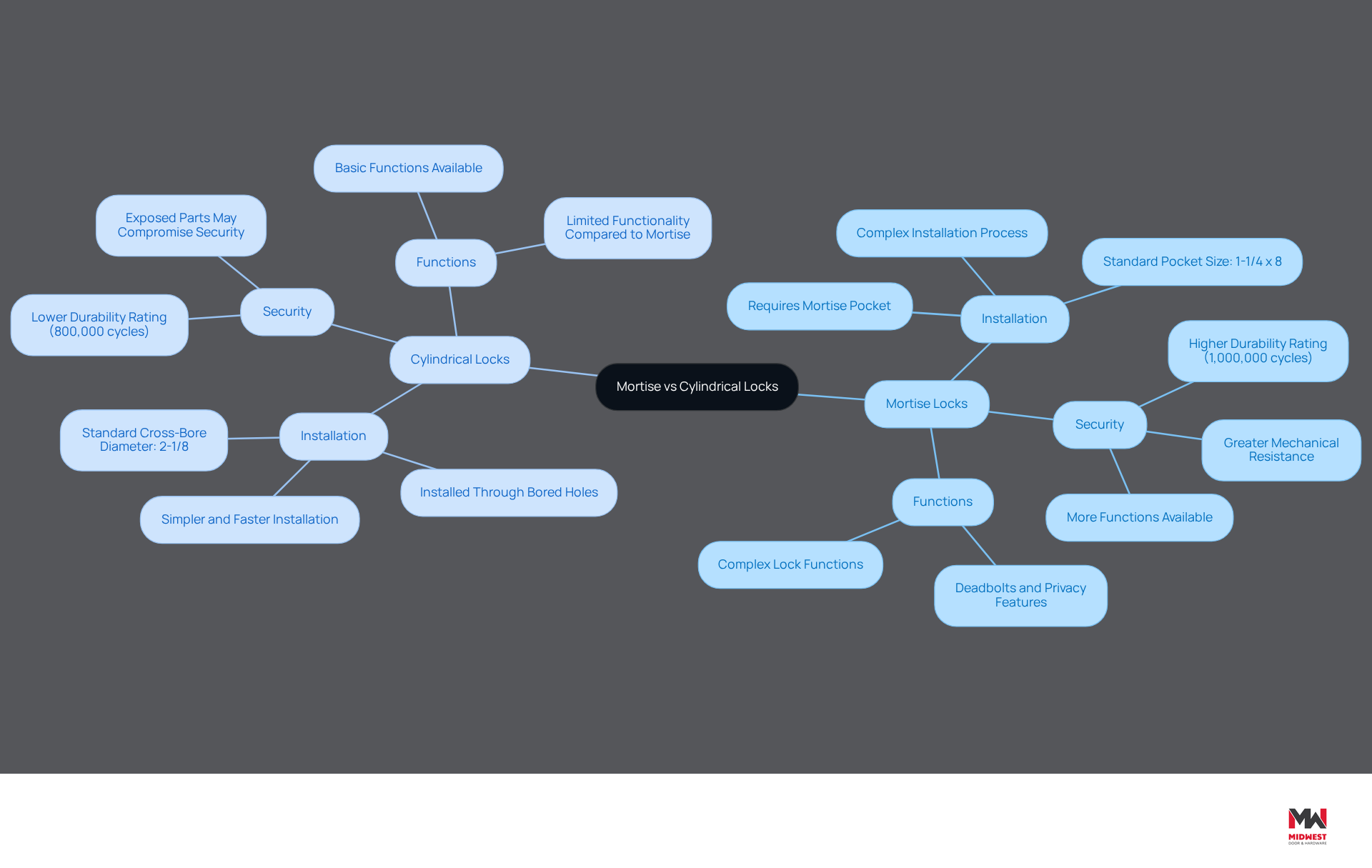
Understanding the fundamental differences between mortise vs cylinder lock mechanisms is crucial for contractors to ensure optimal security and functionality in their projects. A mortise mechanism requires a pocket (the mortise) to be carved into the entry, allowing the mechanism body to be fully positioned within the entry. This design typically results in a more durable securing mechanism because it protects the device from outside interference.
In contrast, when comparing mortise vs cylinder lock mechanisms, the cylindrical ones are installed through a standard circular opening in the door, making them simpler and faster to install, but often less secure due to their exposed parts.
When comparing mortise vs cylinder lock mechanisms, it is evident that mortise options generally offer a wider range of functions, including deadbolts and privacy features, while cylindrical variants are more basic and straightforward in their operation.
Contractors must understand these distinctions when selecting fasteners for specific applications, particularly in high-security settings versus standard residential use. Effective planning that considers access, security, and long-term flexibility is crucial for developing a commercial keying system that meets the project's specific requirements.
Evaluate Security Features: Mortise vs. Cylindrical Locks
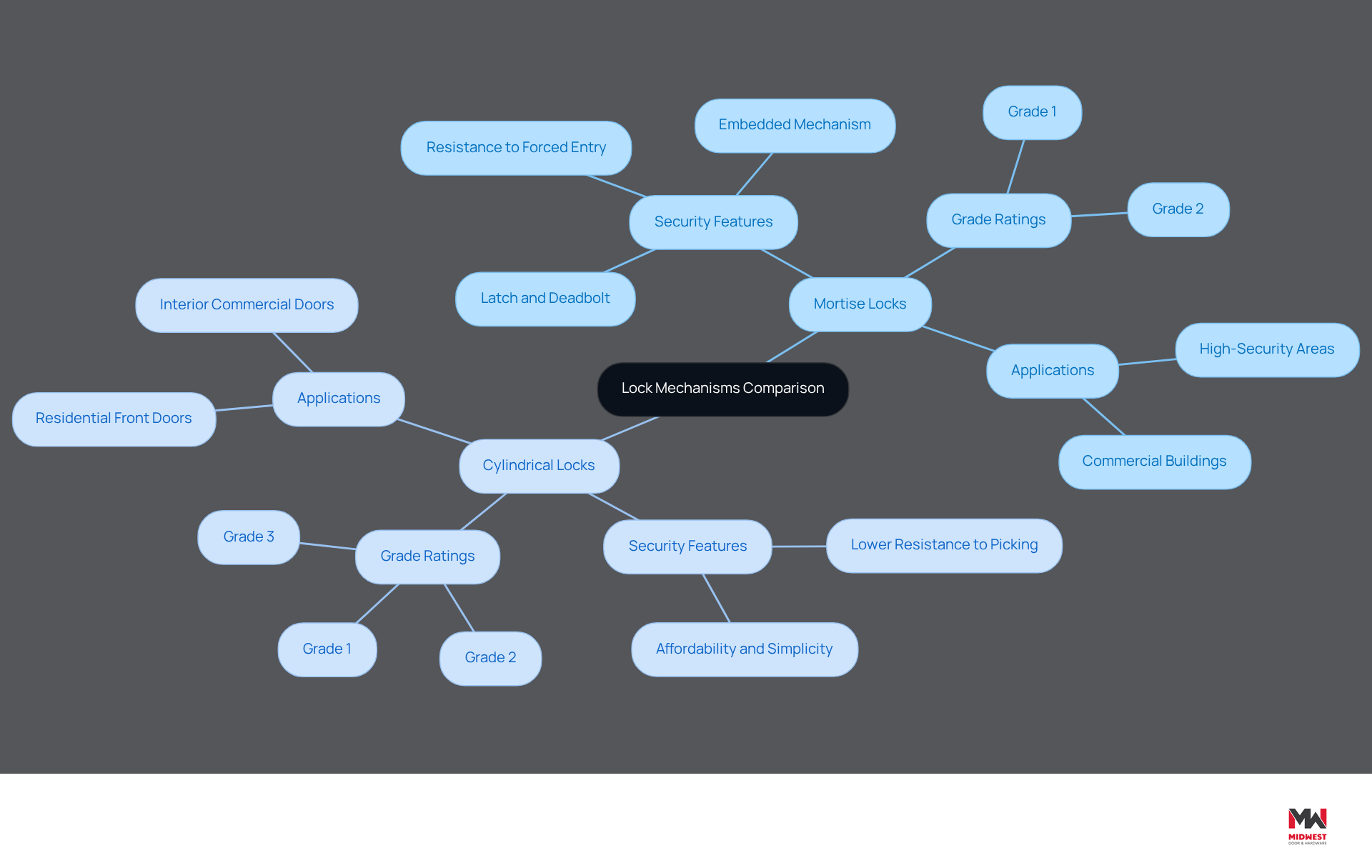
In security applications, the debate of mortise vs cylinder lock mechanisms reveals that mortise mechanisms provide superior protection compared to cylindrical devices. Mortise mechanisms feature a latch and a deadbolt, which together enhance resistance to forced entry. The mechanism casing is embedded within the door, reducing susceptibility to tampering. Numerous locking mechanisms are rated Grade 1, the highest security classification, demonstrating their strength and reliability.
On the other hand, round mechanisms, while preferred for their simplicity of setup and affordability, typically offer reduced security levels. This exposure makes them vulnerable to picking and other attacks. For example, while Grade 2 round mechanisms are appropriate for light to moderate traffic, they lack advanced anti-pick features, rendering them less secure than their alternative counterparts.
Statistics indicate that cylindrical mechanisms are frequently utilized in low-security settings, such as residential front doors, where their convenience surpasses their weaknesses. However, in high-security environments such as schools and hospitals, the choice between mortise vs cylinder lock mechanisms can significantly enhance security in critical areas.
Security experts highlight the significance of rating systems, pointing out that a higher ANSI grade is associated with improved defense against possible assaults. For contractors, understanding these distinctions is crucial for selecting the appropriate type of fastening mechanism that meets both security requirements and compliance with stringent building codes, including those mandated by the International Building Code (IBC) and the National Fire Protection Association (NFPA). Regular inspection and testing of fire-rated door assemblies are also essential to ensure ongoing compliance and safety.
Compare Cost Factors: Mortise and Cylindrical Locks
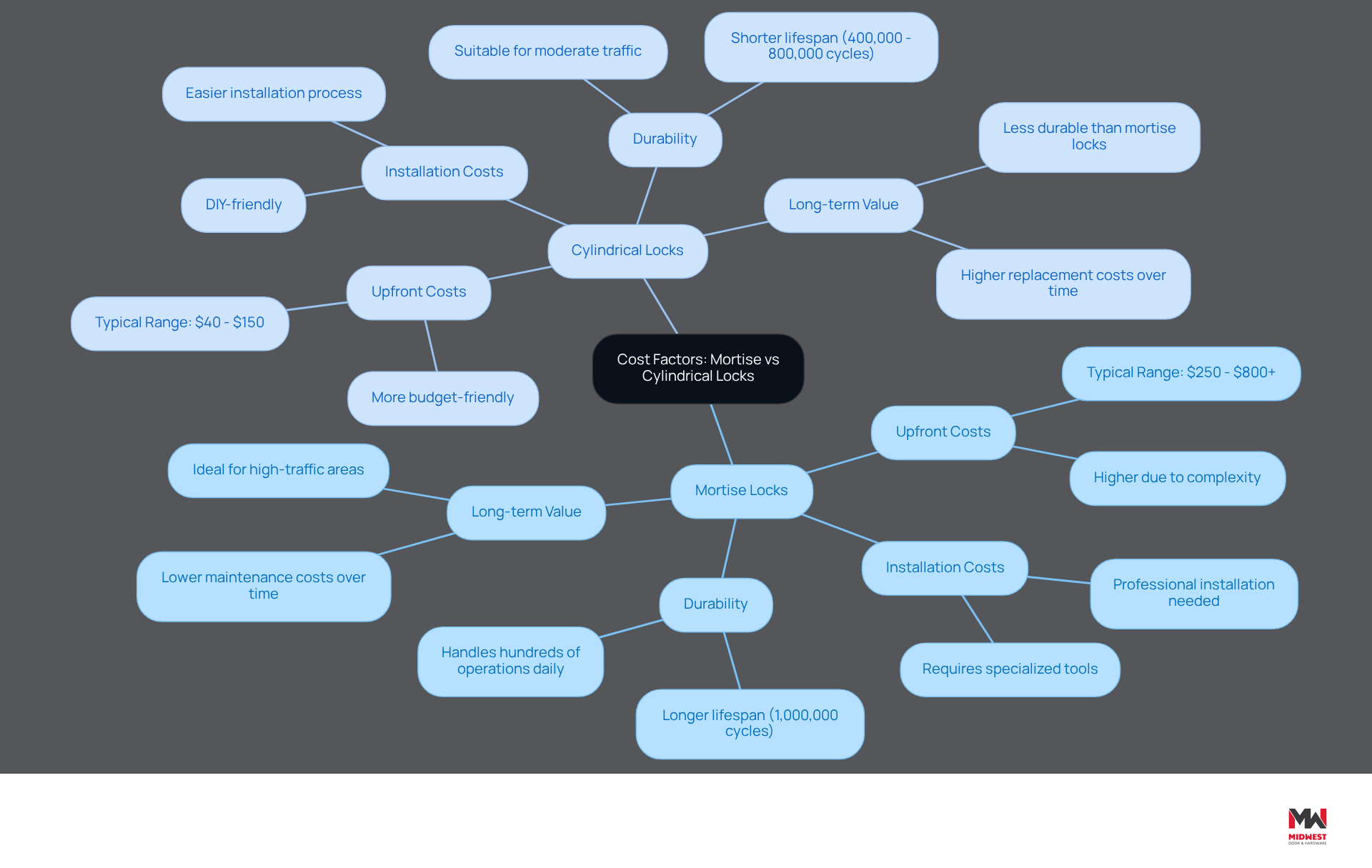
When selecting security devices, the price difference between mortise vs cylinder lock styles plays a crucial role in decision-making. When comparing mortise vs cylinder lock mechanisms, it is evident that mortise locks usually come with higher upfront costs due to their intricate design and the need for precise installation. Their durable construction contributes to a longer lifespan, offering significant long-term value. Installation expenses for mortise mechanisms can also be high, as they require specialized tools and skilled labor to create the necessary pocket in the entry, typically costing between $250 and $800+ per unit.
In contrast, when comparing mortise vs cylinder lock mechanisms, round options are generally more cost-effective, both in terms of the price of the device and installation costs, ranging from about $40 to $150 for residential Grade 2/3 options. They are easier to install, needing only a standard hole drilled into the door, which can significantly reduce labor costs and installation time. Contractors must weigh the long-term implications of their choices; while round mechanisms may save money upfront, they often lead to increased replacement costs over time. For example, a Grade 1 round mechanism can last roughly 4.4 years with moderate use, while a Grade 1 recessed device can withstand about 5.5 years under similar circumstances. When considering mortise vs cylinder lock mechanisms, mortise mechanisms can manage hundreds of operations daily, making them a wiser investment for projects where durability and dependability are essential. Ultimately, the decision should balance initial costs with the potential for long-term savings and reliability.
Assess Durability and Maintenance Needs of Each Lock Type
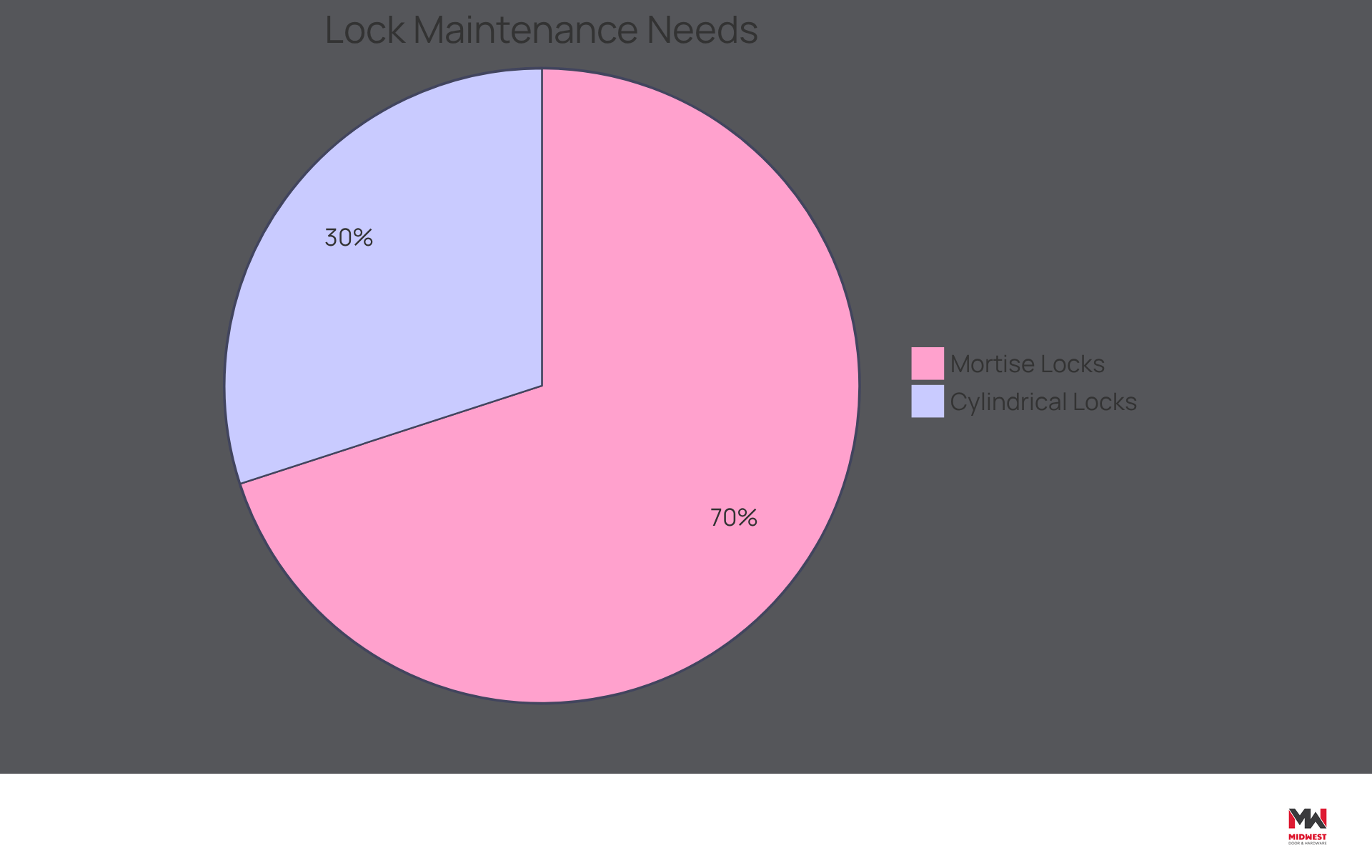
When selecting security devices for commercial applications, durability is paramount to ensure long-term functionality and cost-effectiveness. When comparing mortise vs cylinder lock mechanisms, mortise locks are renowned for their robust construction, typically crafted from heavy-duty materials that endure significant wear and tear. They are designed for high-traffic environments and can last for decades with proper maintenance. This maintenance typically includes:
- Periodic lubrication
- Thorough inspections to ensure smooth operation
In contrast, round mechanisms, while generally sturdy, may not endure intense usage as efficiently as mortise vs cylinder lock systems. They are more susceptible to wear and may require more frequent replacements, leading to increased costs and potential security risks. Maintenance for cylindrical mechanisms is generally easier, requiring:
- Regular cleaning
- Lubrication
However, their lifespan is frequently shorter compared to mortise vs cylinder lock options. It's important for contractors to assess the anticipated traffic and usage of the doors when deciding which type of security mechanism to install, as this choice greatly affects durability and maintenance needs. Implementing regular maintenance practices, including:
- Monthly testing in accordance with industry standards
- Annual inspections
is essential for ensuring the longevity and functionality of both lock types, especially in high-traffic environments. Ultimately, the choice of security mechanism can significantly influence both operational efficiency and overall project costs over time.
Conclusion
Contractors must navigate the critical differences between mortise and cylindrical locks to enhance security and functionality in their projects. Mortise locks provide robust protection and durability, making them suitable for high-security environments. In contrast, cylindrical locks offer a straightforward installation process and lower upfront costs, but they often compromise on security and longevity.
This article has emphasized key points, including the security features, cost factors, and maintenance needs of both lock types. Mortise locks excel in security ratings and durability, while cylindrical locks are favored for their ease of installation and affordability. Contractors must carefully consider these factors when selecting the appropriate locking mechanism for their specific applications, particularly in settings that demand high security, such as schools and hospitals.
Finding the right locking mechanism means balancing initial costs with long-term benefits. By prioritizing security and durability, contractors can ensure that their projects meet both safety standards and client expectations. For those in the Nebraska region, partnering with Midwest Door & Hardware can provide access to a wide range of high-quality locking solutions, including expert advice on the best options for local building needs.
Frequently Asked Questions
What is the main difference between mortise and cylindrical locks?
The main difference is that mortise locks require a pocket (the mortise) to be carved into the entry for installation, while cylindrical locks are installed through a standard circular opening in the door.
Why are mortise locks considered more secure than cylindrical locks?
Mortise locks are generally more secure because their design protects the mechanism from outside interference, making them more durable.
What types of functions do mortise locks offer compared to cylindrical locks?
Mortise locks typically offer a wider range of functions, including deadbolts and privacy features, whereas cylindrical locks are more basic and straightforward in their operation.
What should contractors consider when choosing between mortise and cylindrical locks?
Contractors should consider the specific application, particularly in terms of security needs, access requirements, and long-term flexibility for developing a commercial keying system.
In what types of settings are mortise locks more suitable?
Mortise locks are more suitable for high-security settings due to their enhanced durability and functionality.
List of Sources
- Understand the Key Differences Between Mortise and Cylindrical Locks
- Cylindrical vs Mortise Locksets: Commercial Door Hardware Guide | CDF Distributors (https://cdfdistributors.com/blog/post/cylindrical-vs-mortise-locksets-commercial-doors)
- Cylindrical vs Mortise Lock Confusion | Door Lock Guide | CDF (https://cdfdistributors.com/blog/post/config-mistake-cylindrical-vs-mortise-lock-confusion)
- American Locksets. Commercial Mortise Locks: Types, Functions and Buying Guide (https://americanlocksets.com/commercial-mortise-locks-guide?srsltid=AfmBOor--6uZZaYrTnQ1x-Qcmx0Zchq4C_ESBRxxBpD8qWoR52KySz0r)
- Mortise vs Cylindrical Lock: Which Is Right for Your Door? (https://doorsforpros.com/blog/post/mortise-vs-cylindrical-lock?srsltid=AfmBOoqZRrvFBxfRp81t5ChMa11037IlH-6WB-A1GM69QMrIFRv9NGy5)
- Commercial Mortise Lock vs Cylindrical Lock: Which to Spec & Why (https://zensupply.com/blog/commercial-mortise-lock-vs-cylindrical-lock?srsltid=AfmBOorah0A0KXlCnD7uLIajiH8eOyi9x4wVClgbXkK_ZP-4bNINW05X)
- Evaluate Security Features: Mortise vs. Cylindrical Locks
- Cylindrical Locksets Vs Mortise Locks: Which is Best (https://fast.parkavenuelocks.com/blog/post/the-real-difference-between-mortise-vs-cylindrical-locksets)
- Security Ratings Explained (https://doorlocksdirect.com/blog/security-ratings-explained?srsltid=AfmBOoqaDdVoWjIJMpw24mj8tJM41yAw927Hyxttfbo5qM_fe9jhSxrY)
- Mortise Lock Market Research Report 2034 (https://dataintelo.com/report/mortise-lock-market)
- Mortise Locks vs. Cylindrical Locks - LaForce, LLC (https://laforceinc.com/blog/cylindrical-locks-vs-mortise-locks)
- Mortise vs Cylindrical Lock: Which Is Right for Your Door? (https://doorsforpros.com/blog/post/mortise-vs-cylindrical-lock?srsltid=AfmBOoo1zt9g-Q2S_cgsT_Rw4rvA47JIEhGGSn16dEOQdkOlgBIDsfo0)
- Compare Cost Factors: Mortise and Cylindrical Locks
- Commercial Mortise Lock vs Cylindrical Lock: Which to Spec & Why (https://zensupply.com/blog/commercial-mortise-lock-vs-cylindrical-lock?srsltid=AfmBOorGAWqkt0scxcKECc4IC49gEkU6CY8QqY8EYuRHM2_P56aF1izp)
- Mortise vs Cylindrical Lock: Which Is Right for Your Door? (https://doorsforpros.com/blog/post/mortise-vs-cylindrical-lock?srsltid=AfmBOooxverMZFalSN1RH1N_niVOYzkv7mv-5x089gD72I4WqMFGcylM)
- Mortise Lock vs Cylindrical Lock: Which One Should You Buy? (https://nationallocksupply.com/blog/mortise-vs-cylindrical-locks?srsltid=AfmBOootNEQNkEi1MqPxzw6ALUrsMZsXufNUtlWW8j3cnoUhF5RnBGDX)
- Mortise Lock vs Cylindrical Lock: A Comprehensive Comparison (https://cytlocks.com/mortise-lock-vs-cylindrical-lock-a-comprehensive-comparison)
- How to Choose Between Mortise and Cylindrical Locks? - YAKO (https://yako-hw.com/news/388)
- Assess Durability and Maintenance Needs of Each Lock Type
- Why Mortise Locks Are So Mysterious: Our 5 Reasons (https://andersonlock.com/blog/5-reasons-mortise-locks-the-mysterious-locks)
- Commercial Mortise Lock vs Cylindrical Lock: Which to Spec & Why (https://zensupply.com/blog/commercial-mortise-lock-vs-cylindrical-lock?srsltid=AfmBOoqK0QRMhu9JUUzNphynZQzuVuYooFUyPhvEozVKiFyFCEaYcszO)
- Best Commercial Door Locks 2026: 7 Top Picks for Security (https://prime-door.com/best-commercial-door-locks-in-2025-prime-door)
- What Are the Most Common Applications of Mortise Locks? (https://qualitydoor.com/blogs/guide/what-are-the-most-common-applications-of-mortise-locks?srsltid=AfmBOooWKLnIH0QluenxBcYcc6mzt_lAr7BOerW5JC-QXCP3FJ1B6-mD)
Related News
Check out more of what we’ve worked on.