

Introduction
Navigating the complexities of door design is crucial in the construction industry, especially regarding right swing doors. These entryways facilitate smooth access in busy environments. They also play a critical role in ensuring compliance with safety regulations. As the demand for effective and accessible building solutions grows, the characteristics and functionality of right swing doors significantly impact their application in both residential and commercial settings. This exploration highlights the balance between design, safety, and usability that contractors and builders navigate to meet evolving project needs.
Define Right Swing Door: Characteristics and Functionality
A correct hinged entry, or right-hand entry, is vital for ensuring effective access and compliance in both residential and commercial settings. This design allows the entrance to swing outward, making it easier to access the adjacent area. The operation of proper hinged entrances is essential in both home and business environments, as they promote effective movement and enhance accessibility. In commercial structures, outward-opening entrances are particularly beneficial in busy zones, facilitating smooth access and egress, which is crucial for maintaining security and operational effectiveness.
Recent trends indicate that single panel entries, featuring right-hand options, are expected to dominate the interior hinged entry market, capturing a significant market share due to their aesthetic appeal and ease of operation. Additionally, the International Building Code mandates that entrances in areas with 50 or more occupants must open outward, underscoring the importance of proper opening entrances in ensuring compliance with safety regulations.
Key characteristics of proper hinged entrances include their ability to support automatic entry operators, which enhance accessibility for individuals with mobility challenges by reducing the effort needed to open the entrance. Without automatic entry operators, accessibility for individuals with mobility challenges is significantly hindered. This functionality is especially advantageous in commercial environments, where the incorporation of automatic entrances can improve traffic flow during peak hours.
Real-world examples show that appropriate entryways are crucial for various commercial applications. For instance, in assembly occupancies, the necessity for exit openings to open outward is critical for preventing crowd crush during emergencies. Furthermore, appropriate preparation and setup of suitable hinged entrances can alleviate frequent issues associated with the direction of the door's movement, ensuring compliance with building regulations and enhancing overall security.
Specialist views highlight that the orientation of an entryway's movement is not merely a design decision; it significantly impacts security, accessibility, and adherence to regulations. Misunderstanding these traits can result in non-compliance with safety regulations. Therefore, comprehending what is right swing door and its operation is essential for contractors and builders to ensure that their projects meet the highest standards of security and efficiency.

Contextual Importance of Right Swing Doors in Construction
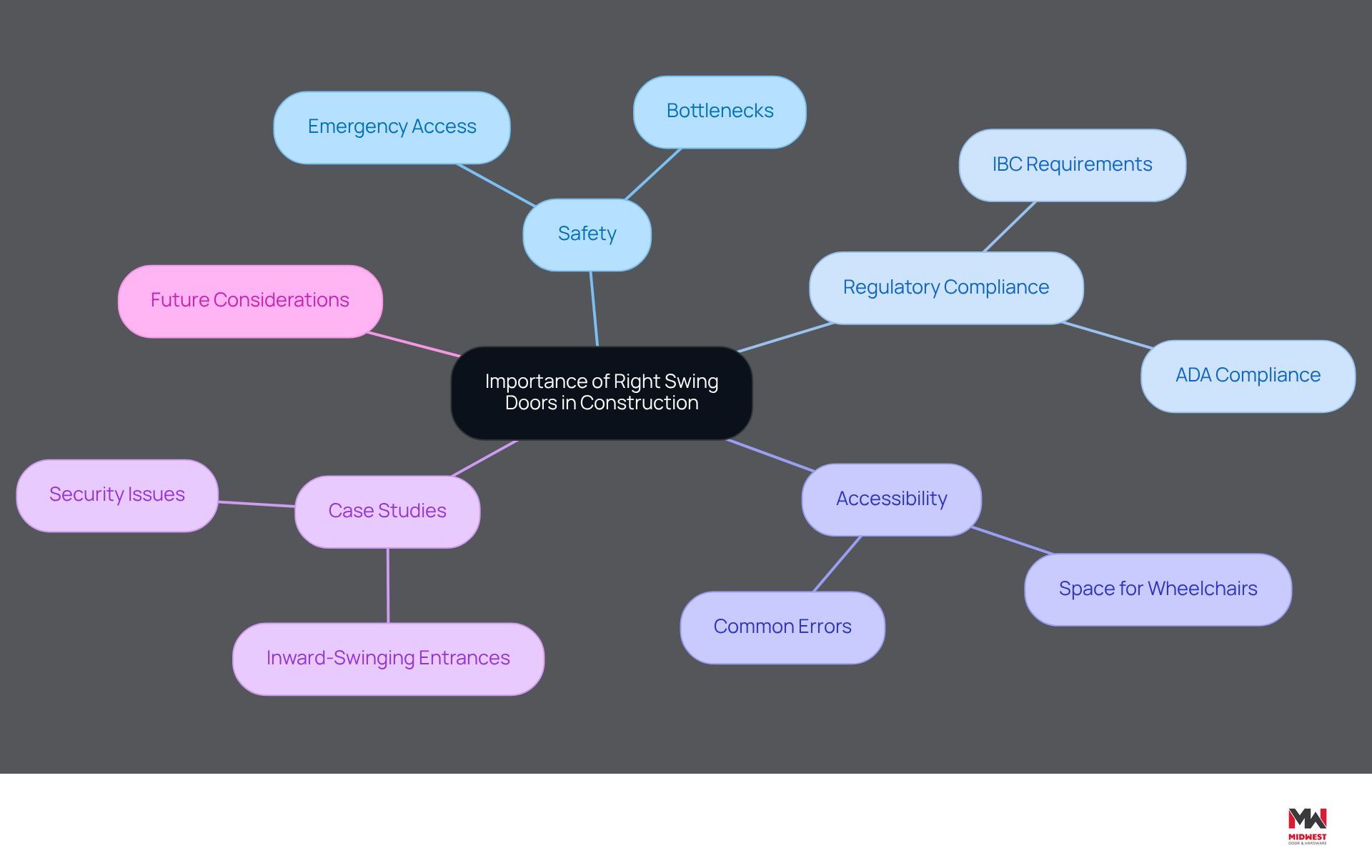
The design and orientation of entryways are critical in construction, directly impacting safety and compliance with building regulations. In commercial settings, the orientation of an entry can influence foot traffic movement and emergency access. For example, hospitals frequently employ right-opening entrances to guarantee quick access for emergency staff, while schools benefit from these entrances to enable seamless movement between classrooms and hallways.
The selection of entry movement direction is not just a design aspect; it is a vital element in complying with safety regulations. The International Building Code (IBC) mandates that exit entrances in areas with an occupant load of 50 or more must open outward, improving egress during emergencies. This requirement underscores the importance of proper entryways in preventing bottlenecks and ensuring safe evacuations.
Ensuring compliance with the Americans with Disabilities Act (ADA) is essential for creating accessible environments. Properly designed entryways must offer sufficient space for wheelchair users, ensuring that they can navigate areas without hindrance. Frequent errors, such as entrances swinging into necessary turning areas, can lead to accessibility violations and obstruct safe movement.
Case studies emphasize the consequences of improper swing decisions. For instance, inward-swinging entrances in high-occupancy zones have been linked to dangerous situations during emergencies, highlighting the necessity for adherence to fire regulations. Additionally, common infractions include removing self-closing devices or keeping entrances ajar, which can compromise security and lead to costly repairs.
As we approach 2026, the focus on proper entryways remains essential as building regulations evolve. Effective planning and compliance with these regulations not only facilitate smoother inspections but also enhance the overall security and functionality of commercial spaces. Understanding the implications of entryway design is essential for architects and builders to create safe and functional commercial environments.
Historical Development of Right Swing Door Design
The evolution of entrance design reflects a critical balance between historical aesthetics and modern safety standards. Initially, entrances served a purely functional purpose as barriers to entry. As architectural design progressed, aesthetics and usability became increasingly important considerations. The 20th century marked a pivotal moment with the introduction of standardized entry sizes and swing orientations, enhancing consistency in construction practices.
Historically, the six-panel design of Colonial entrances became widely recognized, showcasing craftsmanship that emphasized both durability and aesthetic appeal. The evolution of entryway design reflects a journey from simplistic barriers to integral elements of architectural beauty, influenced by various historical milestones. For example, the Victorian era introduced heavier wooden entrances with elaborate framing, while the American Craftsman movement favored cleaner lines and authentic craftsmanship.
Today, what is right swing door exemplifies a blend of historical functionality and modern design principles, reflecting the evolving needs of users. However, balancing historical design with modern safety standards presents ongoing challenges for architects and builders. Adherence to regulations such as FEMA, ICC 500, and NFPA 80 is essential, especially for fire-rated and tornado-rated entries. This necessity for compliance not only ensures safety but also influences design choices in contemporary architecture.

Key Characteristics: Right Swing vs. Left Swing Doors
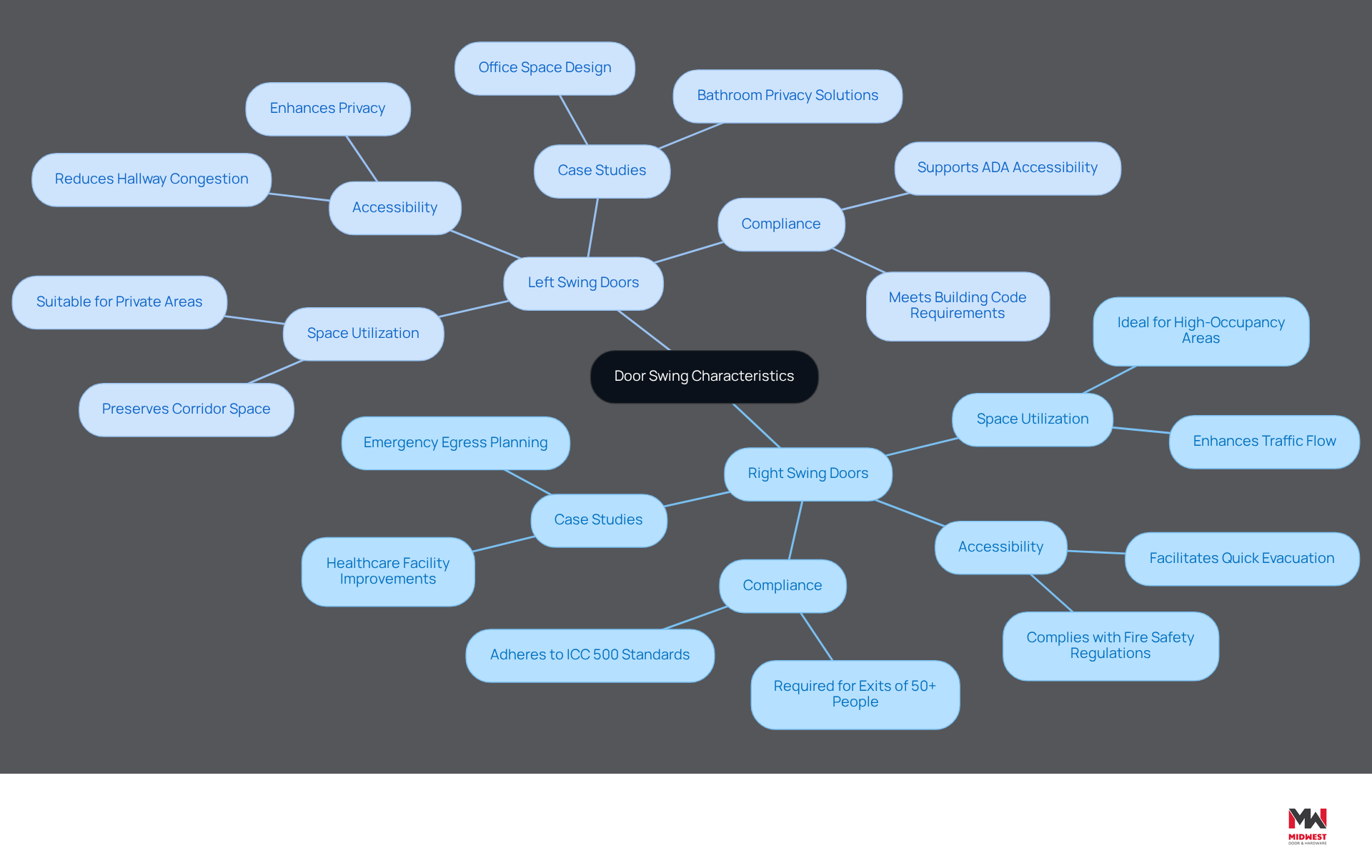
The positioning of hinges and the direction of door openings significantly impact space utilization and accessibility in various environments. A correct hinged entry, with pivots on the correct side, opens outward away from the user, while a left-hinged entry, with pivots on the left, opens inward towards the user. This distinction plays a key role in how we use space and ensure accessibility in different settings.
In narrow hallways, a right-opening entry enhances traffic flow by opening outward. This is particularly beneficial in busy locations such as schools and healthcare facilities. Conversely, left-opening entrances are often preferred in private areas like offices and restrooms, where confidentiality is paramount.
Understanding these traits is essential for compliance with codes. For example, any exit for 50 or more individuals must swing outward to allow for quick evacuation during emergencies. Additionally, adherence to ICC 500 standards is critical for tornado-rated entries, which must be installed in designated storm shelters with no substitutions allowed. Correct setup and upkeep, including yearly evaluations as required by NFPA 80, are essential for guaranteeing the functionality and security of these entries in commercial environments.
Case studies illustrate the practical implications of entryway movement choices. In a recent project involving a healthcare facility, the strategic selection of appropriate entryways at main entrances improved accessibility and compliance with fire safety regulations. Meanwhile, left-opening entrances in patient rooms enhanced privacy and comfort. Such considerations are vital for contractors to ensure that installations meet both functional needs and regulatory requirements. Understanding these distinctions not only ensures compliance but also enhances the overall functionality and safety of commercial spaces.
Common Applications of Right Swing Doors in Various Settings
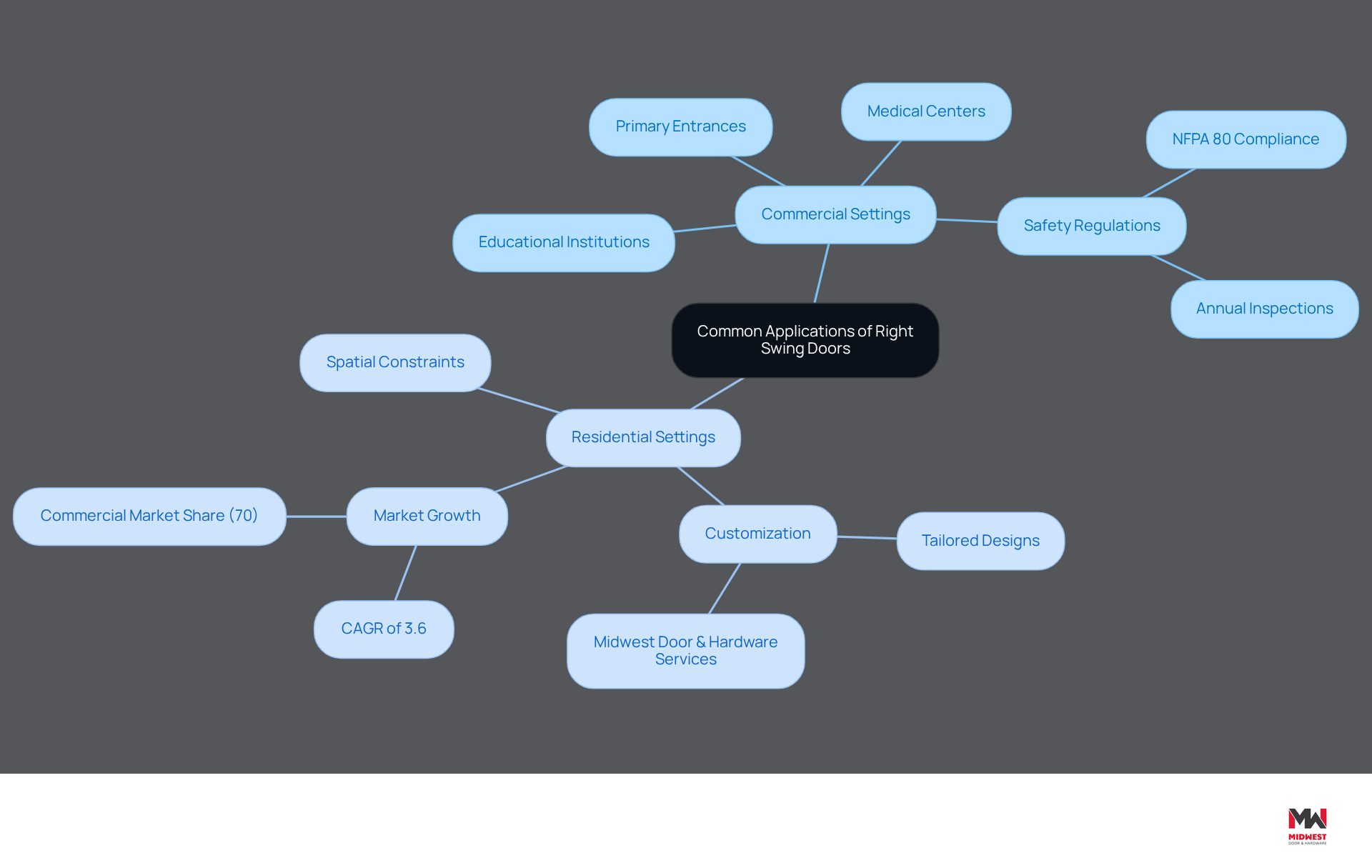
Right access panels play a crucial role in ensuring safety and functionality across various settings, from commercial structures to residential properties. In commercial settings, they serve as primary entrances, facilitating easy access for both customers and employees. Their design excels in high-traffic areas, prioritizing functionality and accessibility. For example, educational institutions and medical centers employ appropriate hinged entrances to adhere to security standards while improving movement within the establishment. Adherence to safety regulations, including the requirement for annual inspection and testing of fire-rated assemblies per NFPA 80, is essential in these environments.
In residential applications, many people wonder what is right swing door, as these entries are commonly found in bedrooms and bathrooms where spatial constraints often dictate the swing direction. This adaptability makes them a favored choice among contractors and builders, as they can be tailored to fit various architectural styles and functional needs. Midwest Door & Hardware's unique in-house fabrication shop west of Omaha enables customization of entries, frames, and hardware to meet specific project requirements.
The interior swinging entryway market is expected to grow at a compound annual growth rate (CAGR) of 3.6% from 2025 to 2035, reflecting a strong demand for adaptable solutions that meet diverse needs. Moreover, the commercial sector possesses a significant 70% share of this market, highlighting the importance of appropriate entryways in commercial construction.
Experts note that choosing the right swing direction affects not just the look but also security and compliance with building codes. For instance, Lori Greene, a recognized authority in hardware standards, emphasizes the necessity of adhering to safety regulations, particularly in environments like healthcare facilities where accessibility is critical. She observes that adherence to FEMA, ICC 500, NFPA 80, and local building codes is crucial for fire-rated and tornado-rated entries, including proper labeling, hardware compatibility, and installation standards.
Additionally, Midwest Door & Hardware provides a cosmetic wood entryway repair service as a cost-effective alternative to replacement, further enhancing their service offerings.
Ultimately, what is right swing door entrances not only enhance accessibility but also ensure compliance with essential safety standards, making them indispensable in construction projects. Midwest Door & Hardware's expertise in supplying and coordinating door solutions for large-scale K-12 projects further reinforces their commitment to quality and service in the Nebraska context.
Conclusion
Selecting the right swing doors is crucial for ensuring safety and compliance in construction and design projects. These doors facilitate smooth movement in high-traffic areas and ensure compliance with building codes, enhancing the overall functionality of both residential and commercial spaces.
Throughout this article, we have highlighted key points, including:
- The importance of right swing doors in emergency situations
- Their role in promoting accessibility
- The necessity for compliance with regulations such as the International Building Code and the Americans with Disabilities Act
Real-world applications demonstrate how these doors are integral to various environments, from schools and hospitals to residential properties, emphasizing their versatility and critical function in safety and design.
With ongoing changes in construction practices, prioritizing effective entryway design is more important than ever. Contractors and builders are encouraged to prioritize the selection of right swing doors to enhance safety, accessibility, and compliance in their projects. Working with local suppliers like Midwest Door & Hardware ensures that designs meet quality standards and enhance safety and efficiency in Nebraska.
Frequently Asked Questions
What is a right swing door?
A right swing door, or right-hand entry, is a hinged entrance that swings outward, facilitating easier access to adjacent areas and enhancing movement in both residential and commercial settings.
Why are right swing doors important in commercial environments?
Right swing doors are crucial in commercial environments as they promote smooth access and egress, especially in busy areas, which is vital for maintaining security and operational effectiveness.
What are the key characteristics of proper hinged entrances?
Key characteristics include the ability to support automatic entry operators, which improve accessibility for individuals with mobility challenges, and compliance with safety regulations, particularly in areas with high occupancy.
What does the International Building Code (IBC) say about door openings?
The IBC mandates that entrances in areas with 50 or more occupants must open outward to ensure safe egress during emergencies, highlighting the importance of proper entryway design.
How do right swing doors enhance accessibility?
Right swing doors can be equipped with automatic entry operators, reducing the effort needed to open the door, which is especially beneficial for individuals with mobility challenges.
What are the consequences of improper door swing decisions?
Improper swing decisions, such as inward-swinging doors in high-occupancy areas, can lead to dangerous situations during emergencies and may violate safety regulations.
How does the design of entryways impact safety and compliance?
The design and orientation of entryways directly affect safety, compliance with building regulations, and the flow of foot traffic, making it essential for architects and builders to consider these factors.
What role do right swing doors play in emergency situations?
Right swing doors facilitate quick access for emergency personnel and help prevent bottlenecks during evacuations, which is critical for safety in emergencies.
What is the significance of the Americans with Disabilities Act (ADA) in relation to entryways?
The ADA emphasizes the need for properly designed entryways that provide sufficient space for wheelchair users, ensuring accessible navigation without hindrance.
Why is understanding right swing doors important for contractors and builders?
Understanding right swing doors and their operation is essential for contractors and builders to ensure compliance with safety regulations, enhance security, and meet the highest standards of efficiency in their projects.
List of Sources
- Define Right Swing Door: Characteristics and Functionality
- Enhance Commercial Accessibility with Swing Door Operators (https://autoingress.com.au/how-swing-door-operators-enhance-accessibility-in-commercial-spaces)
- Should Commercial Doors Swing In or Out? Everything You Need to Know (https://pdqlocks.com/blog/should-commercial-doors-swing-in-or-out)
- Should Commercial Doors Swing In or Out? Everything You Need to Know (https://pdqlocks.com/blog/should-commercial-doors-swing-in-or-out?hs_amp=true)
- Door Swing Direction Code Requirements (IBC, IRC & ADA Guide) (https://jdj-consulting.com/door-swing-requirements-and-code-compliance)
- Interior Swinging Door Market | Global Market Analysis Report - 2035 (https://futuremarketinsights.com/reports/interior-swinging-door-market)
- Contextual Importance of Right Swing Doors in Construction
- Door Swing Direction Code Requirements (IBC, IRC & ADA Guide) (https://jdj-consulting.com/door-swing-requirements-and-code-compliance)
- Should Commercial Doors Swing In or Out? Everything You Need to Know (https://pdqlocks.com/blog/should-commercial-doors-swing-in-or-out?hs_amp=true)
- Fire safety: Swing doors for hospitals & clinics. (https://blog.dormakaba.com/optimize-fire-safety-with-swing-doors-for-hospitals-and-clinics)
- Historical Development of Right Swing Door Design
- From Vintage Elegance to Modern Masterpieces: Tracing the Journey of Door Design - Doorland Group (https://doorlandgroup.com/from-vintage-elegance-to-modern-masterpieces-tracing-the-journey-of-door-design)
- The Evolution of American Interior Door Design - Bring It Home (https://bringithome.jeld-wen.com/the-evolution-of-american-interior-door-design)
- A Journey Through Time: The Fascinating History of Doors (https://frameportamerica.com/blogs/news/a-journey-through-time-the-fascinating-history-of-doors?srsltid=AfmBOopU2DYkltWUx9kgzWrHs2Iai2v3H2irsqc8kSV2HB0ePrSbgGj4)
- (PDF) The Evolution of European Doors: Architectural Splendor, Craftsmanship, and Symbolism (https://researchgate.net/publication/385299362_The_Evolution_of_European_Doors_Architectural_Splendor_Craftsmanship_and_Symbolism)
- Key Characteristics: Right Swing vs. Left Swing Doors
- Does the Direction of the Door Swing Matter? (https://cdfdistributors.com/blog/post/does-the-direction-of-the-door-swing-matter)
- The Surprising Role of Door Swing in Room Layout and Functionality - The Home Special (https://thehomespecial.com/the-surprising-role-of-door-swing-in-room-layout-and-functionality)
- Should Commercial Doors Swing In or Out? Everything You Need to Know (https://pdqlocks.com/blog/should-commercial-doors-swing-in-or-out)
- How to Choose Between a Left Swing or Right Swing Door (https://midwestdoor.net/news/how-to-choose-between-a-left-swing-or-right-swing-door)
- Choosing the Right Door Swing: Left vs Right Explained (https://swingingcafedoors.com/swinging-door-blog/choosing-the-right-door-swing-left-vs-right-explained)
- Common Applications of Right Swing Doors in Various Settings
- Hospital swinging-door requirements | HFM Magazine (https://hfmmagazine.com/articles/3401-hospital-swinging-door-policy)
- Types of Automatic Doors for Schools: Enhancing Security and Accessibility (https://doorservicescorporation.com/resources/blogs/2024-june/types-of-automatic-doors-used-in-schools)
- Swinging Doors in Health Care Facilities – Requirements and Limitations of the Model Codes | ASHE (https://ashe.org/education/swinging-doors-health-care-facilities-requirements-and-limitations-model-codes)
- Interior Swinging Door Market | Global Market Analysis Report - 2035 (https://futuremarketinsights.com/reports/interior-swinging-door-market)
- Unlock the Door to Career and Life Inspiration (https://doors.sidewalksafari.com/inspirational-door-quotes)
Related News
Check out more of what we’ve worked on.