
Introduction
Choosing the right latch is crucial for ensuring safety and accessibility in both residential and commercial spaces. This mechanism is vital for ensuring safety and accessibility, with different types tailored to specific requirements. Choosing the right latch can be challenging given the numerous options on the market.
Exploring the purpose, types, and historical evolution of door latches reveals their significance in security and the advancements that have shaped their design over time. Recognizing the evolution and purpose of door latches can significantly influence security decisions in any project.
Define the Door Latch: Understanding Its Function and Purpose
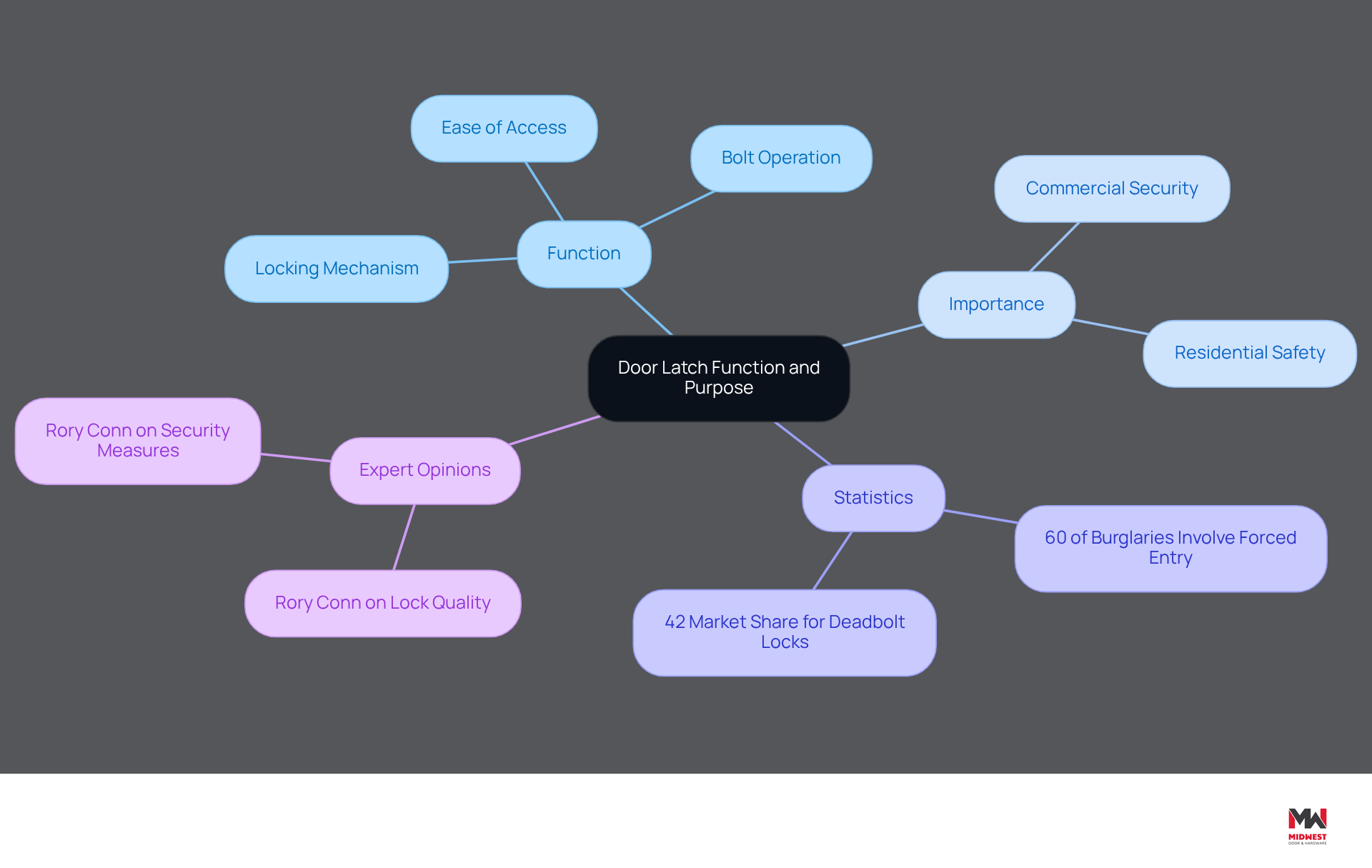
A locking mechanism, which is what the latch on a door is called, is crucial for securing entrances, providing both safety and ease of access. It typically includes a bolt that extends from the entry into a strike plate affixed to the frame. When the entrance is shut, the bolt connects with the strike plate, effectively preventing the entry from swinging open. Understanding what is the latch on a door called is essential for preserving privacy and safety in both residential and commercial environments.
The functioning of a bolt mechanism is straightforward: it is activated via a handle or knob, which pulls back the bolt when rotated, allowing the entrance to open. Entry fasteners are not just convenient; they play a critical role in security systems. With approximately 60% of attempted burglaries involving forced entry, the importance of robust locks cannot be overstated. High-quality locks and fasteners can significantly reduce these risks, enhancing overall protection.
Experts agree that strong door latches, which is what the latch on a door is called, are vital for protecting properties. For instance, Rory Conn emphasizes that investing in strong locks is essential for ensuring the safety of individuals and assets. Furthermore, studies indicate that properties equipped with effective locking mechanisms experience significantly lower burglary rates compared to those lacking adequate security measures.
In commercial environments, it is crucial to know what is the latch on a door called, as their role becomes even more essential. Almost one-third of business thefts occur through entrances, highlighting the need for secure locking mechanisms. Case studies demonstrate that utilizing commercial-grade locks can effectively reduce the risk of unauthorized access and theft, thereby safeguarding valuable assets and sensitive information.
Current statistics indicate that deadbolt locks hold 42% of the total lock market share, preferred for their enhanced protective features. As the locking systems market continues to evolve, the incorporation of advanced technologies in locking mechanisms is becoming more common, further improving safety and user convenience. Understanding the importance of effective locking mechanisms is essential for enhancing security in both residential and commercial settings.
Explore the History and Evolution of Door Latches
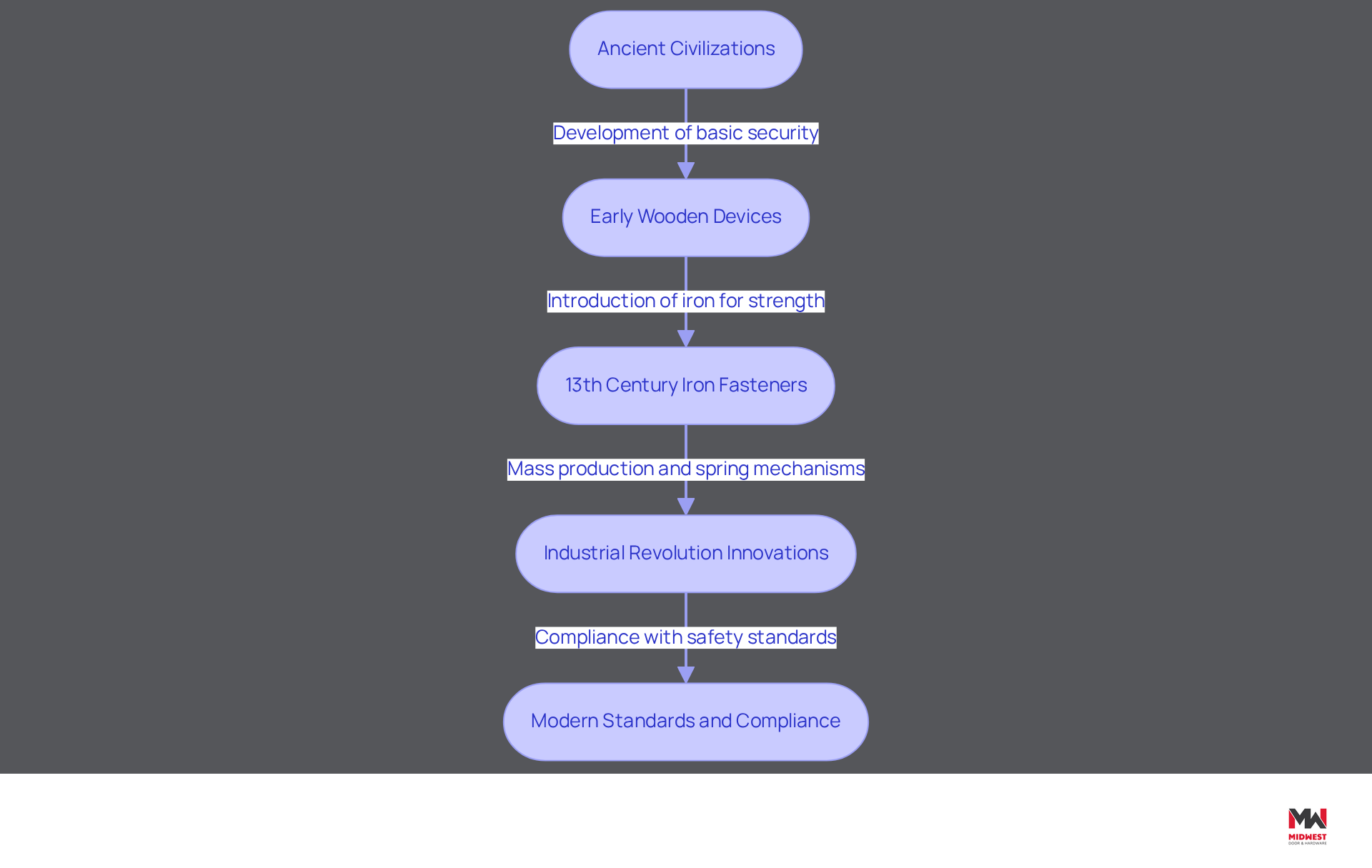
The evolution of door fasteners reflects a long history of innovation driven by the need for security and functionality. Early examples can be traced back to ancient civilizations such as Egypt and Rome, where simple wooden devices controlled by strings or levers fulfilled fundamental security requirements. As metalworking methods progressed, more resilient designs emerged, including the Suffolk and Norfolk fasteners in the 13th century, which utilized iron for improved strength and dependability.
The Industrial Revolution marked a significant turning point in latch technology, introducing spring-loaded mechanisms and standardized designs that enhanced functionality and ease of use. This era also saw the mass manufacturing of entryway fittings, broadening the range of styles and finishes available to the public. The global hardware market for entrances is projected to exceed USD 117.9 billion by 2032, expanding at a rate of approximately 5.2% from 2025 to 2032, reflecting the increasing demand for innovative and reliable solutions for entrances.
Today, door fasteners are available in various materials and designs, meeting diverse architectural needs and safety requirements. This evolution highlights technological advancements and reflects society's growing expectations for safety and convenience in architectural tools. Adherence to standards such as FEMA, ICC 500, and NFPA 80 is essential for ensuring that closures meet safety regulations, especially for fire-rated and tornado-rated entries, which must comply with strict labeling and installation criteria. Furthermore, annual inspection and testing of fire-rated assembly units per NFPA 80 is crucial, along with the requirement that tornado-rated shelter hardware must be listed and compliant with interior egress requirements, ensuring the highest safety standards are maintained. Ensuring compliance with safety standards is not just a regulatory requirement; it is essential for protecting lives and property.
Identify Common Types of Door Latches and Their Applications
In educational settings, the choice of fastening mechanisms directly impacts safety and functionality, making it essential to select the right type for each application. Here are several common types of door latches, each tailored for specific uses:
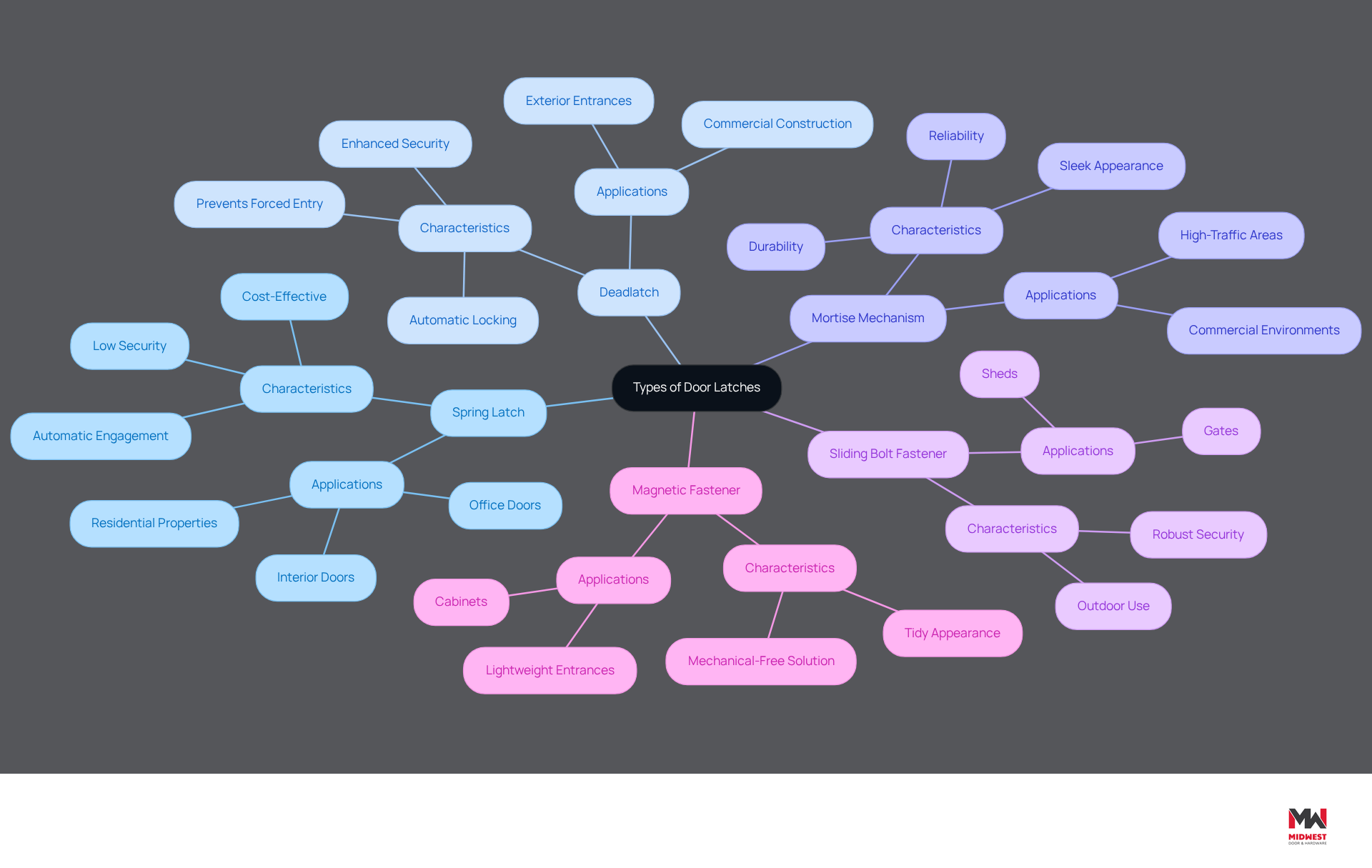
- Spring Latch: Commonly found in interior doors, this latch automatically engages when the door closes, offering convenience without requiring a key. It is particularly suitable for low-security areas.
- Deadlatch: This device, which incorporates a deadlocking mechanism, prevents forced entry, making it perfect for exterior entrances where security is essential for improved protection. Statistics show that deadlatches are increasingly preferred in commercial construction because of their enhanced protective features, which greatly lower the risk of unauthorized access.
- Mortise Mechanism: This latch is installed within a pocket in the door, providing a sleek appearance and is widely used in commercial environments due to its durability and reliability. A case study on the use of mortise fasteners in schools, such as at Lincoln Northwest High School, demonstrated their effectiveness in high-traffic environments, ensuring both safety and ease of use.
- Sliding Bolt Fastener: This fastener secures gates and sheds by sliding a bolt into a catch, making it effective for outdoor applications where robust security is needed.
- Magnetic Fastener: Frequently employed in cabinets and lightweight entrances, magnetic fasteners utilize magnets to keep the entry sealed, providing a tidy and mechanical-free solution.
Understanding these fastening types helps contractors and builders select the right hardware for their projects. Moreover, compliance with safety standards such as NFPA 80 for fire-rated doors and ICC 500 for tornado-rated doors is critical, especially in Nebraska's tornado-prone climate. Proper installation and regular upkeep, including yearly evaluations, are essential to guarantee the durability and dependability of these fastening systems. By prioritizing the right fastening solutions and adhering to safety standards, contractors can significantly enhance the security and functionality of educational environments, ultimately safeguarding students and staff alike. Additionally, Midwest Door & Hardware offers a range of comprehensive product brands, including Sargent, Design Hardware, Dormakaba, and Medeco, to meet diverse project needs.
Break Down the Components of a Door Latch
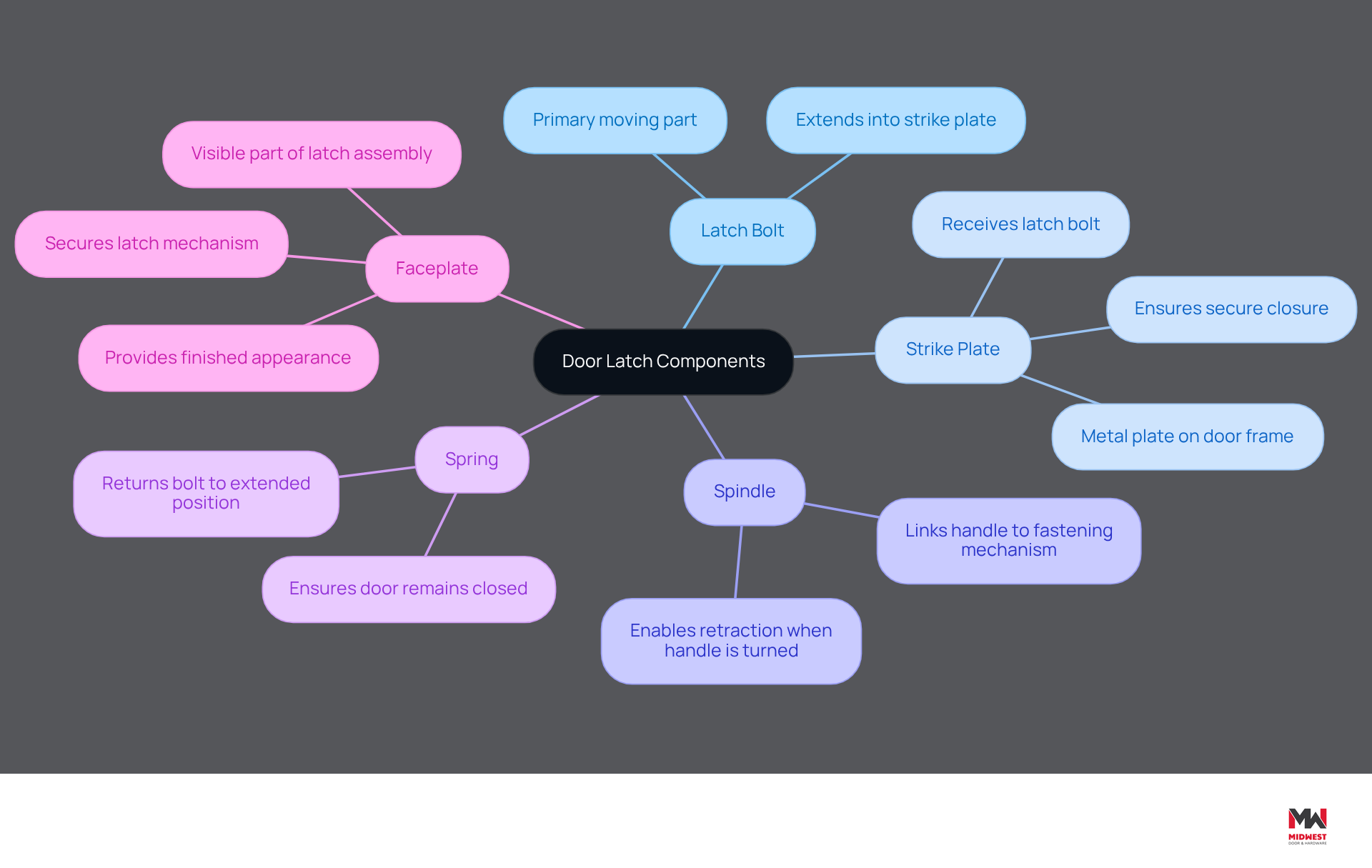
Understanding what is the latch on a door called is crucial for effective installation and maintenance. A typical door latch consists of several key components:
- Latch Bolt: The primary moving part that extends into the strike plate to secure the door.
- Strike Plate: A metal plate affixed to the frame that receives the bolt, ensuring a secure closure, which relates to what is the latch on a door called.
- Spindle: A rod that links the handle to the fastening mechanism, enabling the fastening to retract when the handle is turned, which relates to what is the latch on a door called.
- Spring: A part that returns the bolt to its extended position after being retracted, ensuring that what is the latch on a door called keeps the entry closed.
- Faceplate: The visible part of the latch on a door called the faceplate is attached to the edge of the entryway, which raises the question of what is the latch on a door called, providing a finished appearance and safeguarding the latch mechanism.
Understanding what is the latch on a door called is vital for anyone involved in installing or maintaining entry fixtures, as it aids in effective handling and troubleshooting. At Midwest Door & Hardware, we provide thorough installation support, ensuring that our clients, especially midsize contractors, have the resources they need to complete their projects efficiently. Our services encompass pre-installation equipment setup, field installation, and ongoing support, which are vital for preserving the integrity and functionality of entry systems in various environments, including schools and commercial buildings throughout Nebraska. This knowledge not only enhances installation efficiency but also ensures long-term reliability of entry systems.
Clarify Related Terms and Concepts in Door Latch Terminology
Understanding hardware terminology is crucial for effective communication and project success in the field of Midwest Door & Hardware. Key terms include:
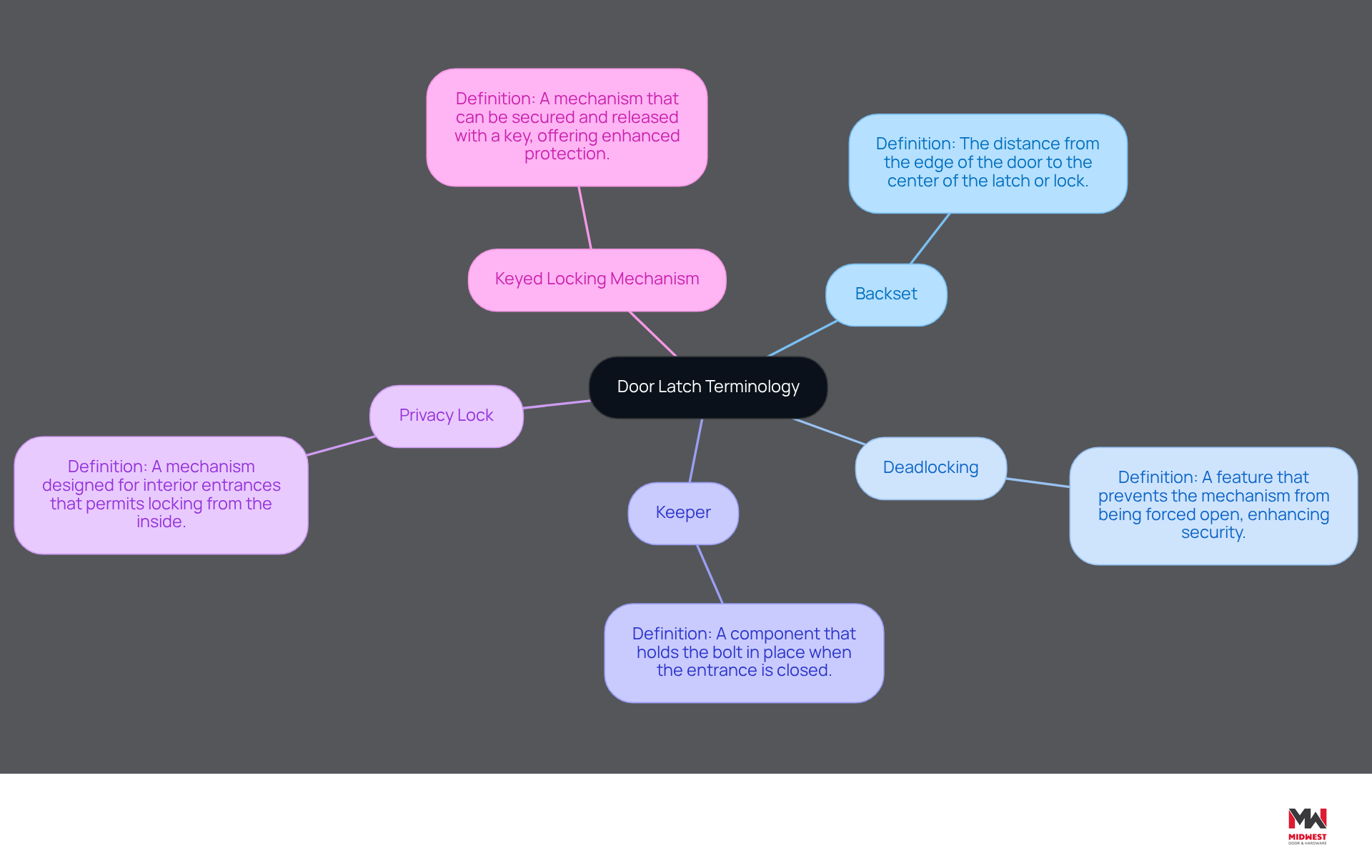
- Backset: The distance from the edge of the door to the center of the latch or lock, essential for proper installation and ensuring that the latch aligns correctly with the strike plate.
- Deadlocking: A feature that prevents the mechanism from being forced open, significantly enhancing security by ensuring that the device cannot be easily bypassed.
- Keeper: A component that holds the bolt in place when the entrance is closed, often integrated into the strike plate, ensuring that the entrance remains securely shut.
- Privacy Lock: A mechanism designed for interior entrances that permits locking from the inside, frequently utilized in bathrooms to ensure seclusion while still allowing for emergency access.
- Keyed Locking Mechanism: A mechanism that can be secured and released with a key, offering enhanced protection for outside entrances and ensuring that only permitted individuals can obtain access.
When contractors understand these terms, they can make better choices about entry fixtures and communicate more effectively with clients and suppliers. Regular maintenance checks, like tightening fittings and lubricating parts, help prevent issues related to what is the latch on a door called and extend the life of your hardware. Yearly evaluations are crucial for adherence to industry standards like FEMA, ICC 500, and NFPA 80, ensuring that all entry components meet safety regulations and function dependably over time.
At Midwest Door & Hardware, we know that solid installation and maintenance support are key to your project's success. Our comprehensive services, including pre-installation equipment setup, field installation, and ongoing maintenance, ensure that every detail is addressed. We also offer unique services such as our in-house fabrication shop for customizing doors, frames, and hardware, as well as cosmetic wood door repair as a cost-effective alternative to replacement. Whether you are managing a large-scale build or a smaller project, our team is here to provide the expertise and support you need to close out projects with confidence.
Conclusion
Selecting the right door latch is crucial for ensuring security and functionality in any setting, whether residential or commercial. Different types of door latches serve distinct purposes, each playing a critical role in property security. Understanding the components of door latches enables informed decisions that enhance safety and convenience in property management.
Key insights include the importance of selecting the right type of latch for specific applications, such as:
- Spring latches for interior doors
- Deadlatches for exterior entrances
The historical development of door latches highlights ongoing innovation in security technology, with modern advancements leading to more robust and reliable locking mechanisms. Furthermore, compliance with safety standards is crucial, especially in regions like Nebraska, where environmental factors necessitate stringent safety measures.
Investing in the right door latch is not just about security; it’s about creating a safe environment for everyone who enters the space. Engaging with trusted suppliers like Midwest Door & Hardware can provide access to a wide range of high-quality products, including:
- Sargent
- Design Hardware
- Dormakaba
As well as unique services such as in-house fabrication and cosmetic wood door repair. By investing in proper installation and maintenance, contractors and property owners can ensure that their entry systems remain secure and functional for years to come.
Frequently Asked Questions
What is a door latch and what is its purpose?
A door latch, also known as a locking mechanism, is crucial for securing entrances, providing safety and ease of access. It typically includes a bolt that extends into a strike plate on the door frame, preventing the door from swinging open when shut.
How does a door latch function?
A door latch functions by using a handle or knob to pull back the bolt when rotated, allowing the door to open.
Why are strong door latches important for security?
Strong door latches are vital for protecting properties as they significantly reduce the risk of forced entry, which is involved in approximately 60% of attempted burglaries. High-quality locks enhance overall protection.
What is the significance of door latches in commercial environments?
In commercial environments, door latches are essential as nearly one-third of business thefts occur through entrances. Utilizing commercial-grade locks can effectively reduce unauthorized access and theft.
What percentage of the lock market do deadbolt locks hold?
Deadbolt locks hold 42% of the total lock market share, preferred for their enhanced protective features.
How has the design of door latches evolved over time?
The design of door latches has evolved from simple wooden devices in ancient civilizations to more resilient metal designs in the 13th century, and further advancements during the Industrial Revolution introduced spring-loaded mechanisms and standardized designs.
What is the projected growth of the global hardware market for entrances?
The global hardware market for entrances is projected to exceed USD 117.9 billion by 2032, expanding at a rate of approximately 5.2% from 2025 to 2032.
Why is compliance with safety standards important for door latches?
Compliance with safety standards, such as FEMA, ICC 500, and NFPA 80, is essential to ensure that door closures meet safety regulations, particularly for fire-rated and tornado-rated entries, protecting lives and property.
What are the requirements for fire-rated and tornado-rated door hardware?
Fire-rated assembly units must undergo annual inspection and testing per NFPA 80, and tornado-rated shelter hardware must be listed and compliant with interior egress requirements to maintain safety standards.
List of Sources
- Define the Door Latch: Understanding Its Function and Purpose
- Press | Company News, Updates & Media Coverage | DOOR (https://door.com/press)
- The Role of Locks in Crime Prevention: Statistics and Analysis | Crono Lock (https://cronolock.ca/the-lock-blog/the-role-of-locks-in-crime-prevention-statistics-and-analysis)
- Door Locks Market Report | Global Forecast From 2025 To 2033 (https://dataintelo.com/report/door-locks-market)
- DOOR, Formerly Latch, Rolls Out AI-Powered App (https://securitysales.com/news/door-formerly-latach-rolls-out-ai-powered-app/159238)
- Smart Lock Statistics By Best Advanced Safety (2026) (https://news.market.us/smart-lock-statistics)
- Explore the History and Evolution of Door Latches
- UK Door Handles History and Evolution (https://handlestore.com/blog/uk-door-handles-history-and-evolution)
- Door Hardware Market Size, Share & Growth Analysis by 2032 (https://metastatinsight.com/report/door-hardware-market)
- Exploring the History and Evolution of Door Hardware Designs (https://viaggiohardware.com/blogs/blog/exploring-the-history-and-evolution-of-door-hardware-designs?srsltid=AfmBOor0tBy_JX_MX73aLA-NpkrJsLJT9VBoPihcplLZZ8lPDyWmY3g3)
- The History of Door Hardware: From Ancient Times to Modern Day (https://smithanddeshields.com/the-history-of-door-hardware-from-ancient-times-to-modern-day)
- Edifice Magazine 2005: "Three Centuries of Door Hardware" - Sven Kraum (https://legacyvintage.ca/blogs/journal/three-centuries-of-door-hardware)
- Identify Common Types of Door Latches and Their Applications
- Types of Door Latches: Interior, Exterior, and Commercial Latch Types Explained (https://doorsforpros.com/blog/post/types-of-door-latches?srsltid=AfmBOopZ5jdMhDDKI6wX1He1JKs2ZEBVi6mYdJ-Zn_T8ak4L20QVztOD)
- The Ultimate Guide to the Different Door Latch Types (https://johnbarnesgroup.au/the-ultimate-guide-to-the-different-door-latch-types)
- Types and Uses of Latches (https://iqsdirectory.com/articles/latch.html)
- Door Latches Guide: Types, Uses & Buying Tips | DK Hardware (https://dkhardware.com/blog/the-complete-guide-to-door-latches-types-sizes?srsltid=AfmBOopsVv0OfUeOTv3939agxDUkp-6BTLiK1Sbv_iTrbW8Ore68cKu2)
- Types of Door Latches You Didn’t Know Existed (Explained Simply) (https://gezuimpex.com/blogs/news/types-of-door-latches)
- Break Down the Components of a Door Latch
- How do Door Latches Work? | Aspire Doors (https://aspire-doors.co.uk/accessories/internal-door-latches/advice/how-do-door-latches-work)
- Door Latch Parts Terminology (https://inspirehardware.com/blogs/news/door-latch-parts-terminology?srsltid=AfmBOooPTfBsgnF7S57LpZBQEI_aDrH4MM42DY_1ElnvjwGXSat4rFRa)
- Understanding Different Types of Door Latches (https://htfhardware.com/blog/post/understanding-different-types-of-door-latches?srsltid=AfmBOoofpZBR5nJP0NRT-_z6Cl3tqbcFjVQEE3n40umdQ6GSQ9GA97Mm)
- What is a Door Latch? Types and Uses (https://parkavenuelocks.com/blog/post/what-is-a-door-latch-types-and-uses)
- Clarify Related Terms and Concepts in Door Latch Terminology
- Door Latch Parts Terminology (https://inspirehardware.com/blogs/news/door-latch-parts-terminology?srsltid=AfmBOoquC1IEoHvWNNVOF5jpULJRcXlG92oHqVZed61pLf-saiHIHOpa)
- Types of Door Latches: Interior, Exterior, and Commercial Latch Types Explained (https://doorsforpros.com/blog/post/types-of-door-latches?srsltid=AfmBOor6RDla8niCS7TbAVh-9_Zh5y0nSkNncN9Hog-Ohdin3sf67Wwn)
- Understanding Different Types of Door Latches (https://htfhardware.com/blog/post/understanding-different-types-of-door-latches?srsltid=AfmBOoouU-I-8BZluEIAGa2oGTeJNaPzMbXjuj0J_8_CV30-vLBlC3RZ)
- Door and Hardware Industry Glossary - Colorado Doorways (https://doorwaysinc.com/door-hardware-industry-glossary)
- Common Door and Hardware Abbreviations and Terms (https://beaconcdl.com/blogs/news/common-door-and-hardware-abbreviations-and-terms?srsltid=AfmBOoof6Qv-C_j1wNQjyouFCBkXov8THqM94U30IOBCeS5igsUjM5vM)
Related News
Check out more of what we’ve worked on.