
General
Why Annual Door Maintenance Saves You Money and Keeps You in Code
There's a pattern that plays out in commercial buildings all the time. A door starts closing a little slowly. Then the latch doesn't quite catch. Then someone props it open with a doorstop because it's easier than dealing with the closer. Six months later the building owner gets a deficiency notice during a fire inspection — and what started as a minor adjustment has turned into an urgent compliance issue with a deadline attached to it.
It doesn't have to go that way.
Commercial doors and hardware are mechanical systems. Like any mechanical system, they perform best when they're maintained regularly and addressed early when something starts to drift. Annual door maintenance isn't a luxury or an optional add-on for facilities with extra budget. For most commercial buildings it's a code requirement. And for all of them it's the most cost-effective way to protect the investment that went into specifying and installing quality openings in the first place.
Here's what annual door maintenance involves, why it matters, and what the consequences look like when it gets skipped.
What Annual Door Maintenance Actually Covers
A thorough annual door maintenance inspection goes opening by opening through a building and evaluates each door assembly for proper function, condition, and code compliance. The scope includes several key areas.
Door operation and adjustment is the foundation of any maintenance visit. Doors need to open smoothly, close completely, and latch positively every time. A closer that's lost its adjustment will either slam the door or fail to close it fully. A hinge that's worked loose will cause the door to sag and bind in the frame. A latch that isn't engaging the strike properly is a security and — on fire-rated openings — a life safety issue. These are all conditions that develop gradually and are easily corrected when caught early.
Hardware inspection covers the condition and function of every hardware component on the opening — closers, hinges, locksets, panic devices, door stops, and any electrified hardware. Worn components can be identified before they fail completely, which is almost always cheaper than emergency replacement after the fact.
Sealing and weatherstripping inspection matters for both energy performance and fire door integrity. Worn or damaged weatherstripping on exterior doors compromises the building envelope. On fire-rated doors, damaged or missing intumescent seals — the material that expands under heat to seal the gap between door and frame — can affect the door's fire rating.
Fire door compliance inspection is a specific component of annual maintenance that NFPA 80 requires for fire-rated assemblies. This inspection verifies that fire door labels are intact and legible, that no unauthorized modifications have been made to the assembly, that the door is self-closing and positive-latching, and that the gap between the door and frame meets NFPA 80 tolerances. The maximum allowable gap between a fire door and its frame is 1/8 inch at the meeting edge of pairs and 3/4 inch at the bottom — tolerances that are tighter than most people realize and that can be compromised by normal building settlement and wear over time.
The Cost of Skipping Maintenance
The financial case for annual door maintenance is straightforward. A door closer adjustment costs very little. A door closer replacement costs more. A door closer failure that leads to a fire door standing open during an inspection — or worse, during an actual fire event — costs a great deal more in ways that go well beyond the hardware itself.
Building owners and facility managers who defer door maintenance consistently tend to find themselves facing one of two scenarios. The first is a deferred maintenance backlog where multiple doors across the facility have developed problems simultaneously, turning what should be a series of minor adjustments into a significant repair project. The second is a compliance deficiency discovered during an inspection — by a fire marshal, a building official, or The Joint Commission in healthcare settings — that requires immediate corrective action under a tight deadline.
Neither scenario is pleasant. Both are largely avoidable.
For healthcare facilities, the stakes are particularly high. The Joint Commission surveys include detailed fire door inspections, and deficiencies in fire door compliance are among the most commonly cited findings. A facility that hasn't maintained its fire doors consistently is a facility that's going to have a difficult survey — and the corrective action process that follows is time-consuming, disruptive, and expensive.
Leaky Closers: A Common and Addressable Problem
One of the most common maintenance issues MDH encounters on commercial doors is the leaky closer — a door closer that has lost its hydraulic fluid and is no longer controlling the door's closing speed and force properly. A leaky closer typically shows up as a door that closes too fast, slams, or swings erratically rather than closing smoothly and consistently.
Beyond the noise and the wear it creates on the door and frame, a leaky closer on a fire-rated opening is a compliance issue. NFPA 80 requires that fire doors be self-closing and positive-latching — a closer that isn't functioning correctly can't meet that requirement.
Leaky closers are not repairable in the field. Once a closer has lost its hydraulic fluid, replacement is the correct solution. The good news is that closer replacement is a straightforward maintenance task when it's addressed promptly. When it's ignored, the door continues to operate incorrectly, the wear on surrounding hardware accelerates, and the compliance exposure grows.
MDH's Preventative Maintenance Program
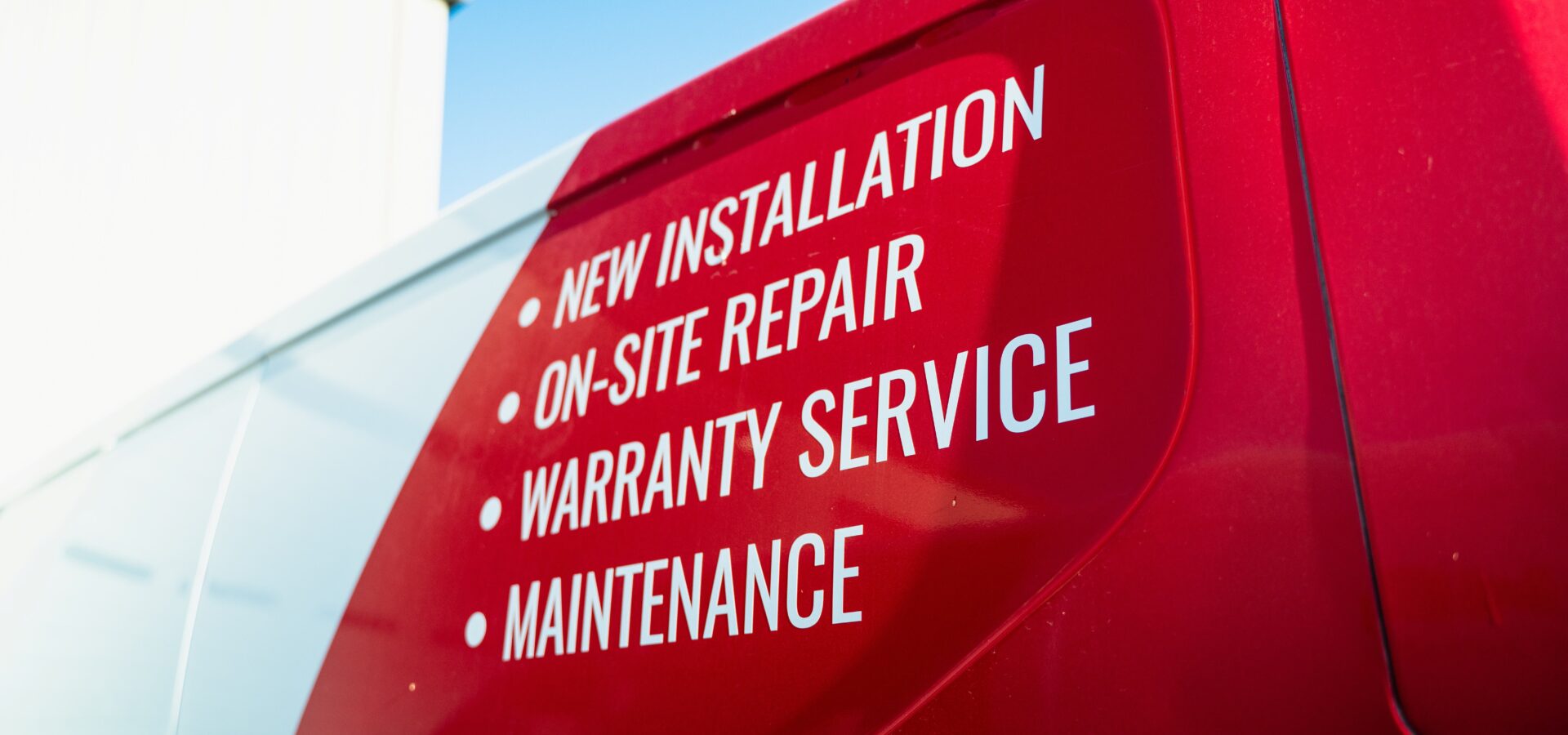
MDH offers annual opening preventative maintenance services for commercial buildings across Nebraska. Our team inspects each opening, identifies adjustments and repairs needed, and provides building owners and facility managers with a clear picture of their door inventory's condition and compliance status.
For contractors who have completed projects and want to offer their clients a maintenance solution, MDH is a resource worth knowing about. For building owners and facility managers who are managing aging door inventories or preparing for inspections, our preventative maintenance program provides both the inspection documentation and the corrective work needed to get and stay in compliance.
A well-maintained door does its job quietly and reliably — the way a good door should. The buildings that achieve that result year after year are the ones where someone is paying attention.
If you'd like to talk about a preventative maintenance program for your facility, reach out to our team.
Start Your Build
Got a project? We'll bring frames, doors, hardware, and the expertise to keep every opening on schedule.