
door distributors near me
How to Evaluate a Commercial Door Distributor for Your Nebraska Project
Use a five-part response matrix for distributor review
Use a five-part response matrix to compare a commercial door distributor’s stated scope, timing, responsibilities, requirement review, and continuing support for the project. For a Nebraska project, that record keeps the opening conditions, hardware details, coordination items, and follow-through requirements together. It gives the project team a concrete way to see what the response addresses before treating it as ready for further review.
Use a response comparison tied to the opening record rather than treating a distributor quote as the project decision. For each opening, keep three areas visible:
- Opening record. Record the opening number, location, use, door material, frame, handing, swing, and observed condition.
- Hardware and coordination record. Document hinges or pivots, closer, lock or exit device, trim, strike, cylinder or keyway, and any electrified hardware. Also identify fire labels, egress roles, accessible-route conditions, automatic operators, and connected access-control equipment.
- Disposition and follow-through. Separate immediate repairs from standardization opportunities and full-assembly replacement needs. For each completed phase, keep testing, keying records, closeout documentation, and a service path visible.
Compare the distributor response with these recorded items, leaving gaps and responsibility questions open for project-team coordination. The result is a project-specific comparison of what the response addresses and what still requires review, rather than a general supplier ranking.
Use the rest of this guide as a two-sided check. First, define the supplier-side scope. Then build the project-side opening record that lets you test the fit. If either side remains vague, keep the request in review and ask focused questions before treating the quote as comparable.
The central distinction is responsibility, not brand selection. Supplier capability answers what can be supplied or supported; the opening record answers what each door must do; the approval path answers what can be released. Keep those three questions separate until the project team has resolved them.
Confirm the project is within the stated service area
Project location is one part of the supplier-fit check. A commercial door distributor may be suitable for one project and unsuitable for another if the locations, delivery expectations, installation arrangements, or service responsibilities differ.
For a Nebraska project, identify the city and site before discussing products. That may mean Omaha, Lincoln, Grand Island, North Platte, Scottsbluff, Columbus, Aurora, David City, Council Bluffs, or another location in the project area. Put the location in the initial inquiry, along with whether the work is new construction, renovation, repair, or phased replacement.
A service-area check should answer three practical questions:
- What does support include? A supplier may price and deliver products while installation, adjustment, field measurement, or continuing service follows a different path.
- What timing applies? When the schedule is tight, ask about average delivery lead times.
A service-area answer without a scope and timing answer is incomplete.
Project type also belongs in the first location check. A school, hospital, office, church, arena, community center, or commercial facility may have different opening counts, access requirements, phasing, and service expectations. State the facility type so the supplier can understand the setting before responding.
Projects outside the stated Nebraska service context should not be treated as automatically covered. Put the location in the inquiry and ask for serviceability before you rely on product availability, delivery expectations, installation assistance, or repair support. Do not infer local availability from the words “near me.”
Define the supplier-side scope before comparing fit
A commercial door distributor’s scope should be tested against the complete opening package. At Midwest Door & Hardware, we stock, fabricate, and deliver commercial door hardware. We provide hardware such as hinges, locks, exit devices, door closers, and electrified hardware. You can send us a door schedule or the openings you need priced when you request a quote.
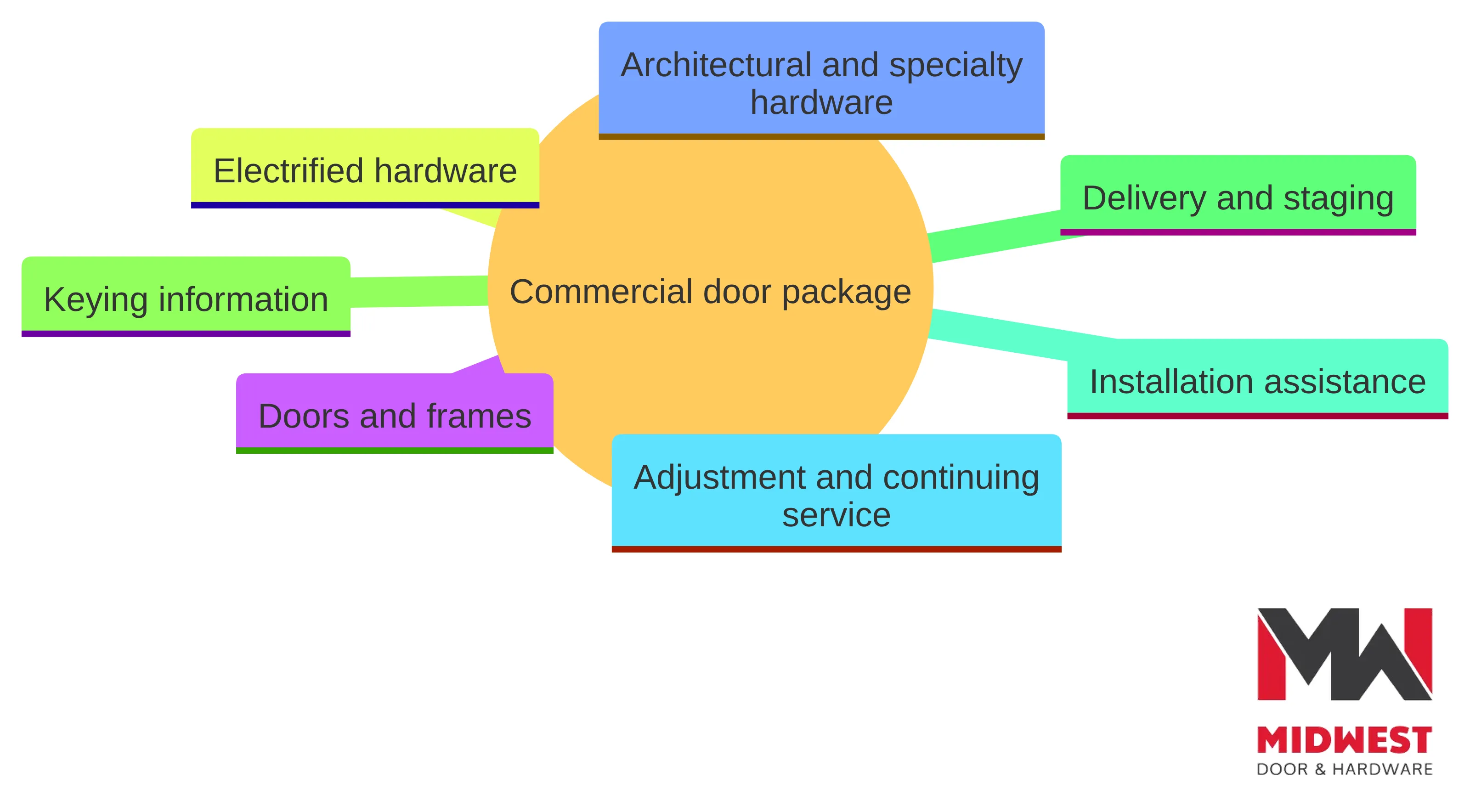
Treat the package as connected parts rather than isolated items. This structure lets you ask whether the supplier is addressing the required assembly or only a portion of it.
We provide commercial door repair and service, installation assistance, and services tailored for commercial projects. For small and midsize jobs, we arrange installation with trusted third-party installers. We also offer ongoing assistance to help contractors keep entrances functioning smoothly. Ask which of those responsibilities apply to your project and which will remain with your installer or project team.
Before comparing suppliers, divide your request into these scope cells:
- doors and frames
- architectural and specialty hardware
- electrified hardware or access-control interfaces
- keying information and records
- delivery, staging, or material coordination
- installation assistance or installer coordination
- adjustment, repair, and continuing service
A blank cell is not a negative answer. It is an unresolved responsibility that should be assigned before release.
Ask for the supplier response in the same categories as the request. A useful response distinguishes material being priced, assistance being offered, work assigned to an installer, and questions that still need project-team decisions. Matching the request and response categories makes omissions easier to spot.
A hardware match is only one part of supplier fit. Check whether the response addresses the opening function, the specified hardware group, the electrical interface, and the expected service path. If it covers only individual hardware items, keep the rest of the opening package open for coordination.
Build the project-side opening record
The project-side opening record is the foundation for a useful pricing request. For multiple doors, record each opening’s number, location, use, material, frame, handing, swing, and observed condition before selecting products. Use the project door schedule and hardware schedule as starting documents, then record field conditions that may affect the package.
A useful opening record can contain the following fields:
- opening number and exact location
- room, area, or function
- door material and frame condition
- handing and swing
- observed condition or repair need
- fire label and rated-opening information
- egress role and accessible-route condition
- automatic operator, if applicable
- connected access-control equipment
- hardware group or specified hardware
- unresolved field dimensions or document conflicts
Complete one row per opening. Do not combine dissimilar openings merely because they appear to use the same general door type.
Build the record in a consistent order. Start with the opening identity and use, add the door and frame conditions, then enter the hardware and special requirements. Finish by marking unresolved information. This order keeps a missing field visible instead of allowing a familiar product name to stand in for a project requirement.
Separate immediate repairs from standardization opportunities and full-assembly replacement needs. A repair request, a replacement package, and a new-construction quote can involve similar hardware terms but require different decisions, documents, and responsibility lines. Mark the intended action for each opening before you ask for pricing.
Review the record opening by opening before sending it. Look for missing handing, an unassigned hardware group, an unmarked fire label, an unexplained electrified component, or a condition that differs from the schedule. Each item should become a direct question or an assigned follow-up task.
Check hardware, access, and egress requirements
Hardware, access, and egress requirements should be reviewed as one coordination problem. Our commercial hardware scope includes hinges, locks, exit devices, door closers, and electrified hardware. Your project record should show how those components relate to the opening function, access-control equipment, and egress role.
During an opening review, identify fire labels, egress roles, accessible-route conditions, automatic operators, and connected access-control equipment. These fields help you distinguish a standard opening from one that needs a coordinated hardware or approval review. They also give the supplier enough context to flag an incomplete or conflicting request.
Use a short coordination matrix for each opening:
| Project question | Record before pricing |
|---|---|
| How must the door operate? | Use, swing, handing, closer, and egress role |
| What hardware is specified? | Hinges or pivots, lock or exit device, trim, strike, cylinder or keyway |
| Is an electrical interface involved? | Electrified hardware and connected access-control equipment |
| Is an accessible route or automatic operator involved? | Route condition and operator requirement |
| Does the opening carry a fire label? | Label information and related project requirements |
The matrix does not approve the package. It makes the questions visible so the applicable project team can resolve them.
Treat missing hardware information as a coordination item, not as permission to assume a standard component. Ask the distributor to identify the missing information and return the question to the responsible project party. That approach keeps the opening record aligned with the actual use and required function.
Require testing, keying records, closeout documentation, and a service path for each completed project phase. Those deliverables should have an owner and a timing point in the project record. A supplier-fit decision is incomplete if the material is identified but the handoff information is not.
Put fire-rated openings behind a verification gate
Fire-rated openings should not move directly from a product search to release. A commercial door schedule identifies the fire rating for each opening, with rated openings commonly shown by a time value and non-rated openings marked “NR” or left blank. Use the schedule and related details to establish which openings require a documented review.
Fire-rated frame details can include minimum steel gauge, label requirements, and fire-rated glass requirements for frames with borrowed lites. Check those details against the proposed frame and any glazing condition. A frame that appears dimensionally suitable may still require a separate label, material, or glazing review.
For a fire-rated opening, coordinate the specified fire exit hardware, closing device, and positive-latching lockset with the project requirements. Keep the hardware review tied to the rated assembly and the opening’s egress function. Do not approve an item merely because it fits the preparation or resembles hardware used at another opening.
Your project team must resolve which requirements govern the opening.
Keep the listing and compliance information with the opening record before release.
Assign that responsibility in the project handoff or facility plan instead of leaving it as an unnamed future task. The applicable project and facility team must determine the inspection path for the specific assembly.
Hold a rated opening at the verification gate until the rating, frame details, required hardware, labels, and approval path are documented. Send the complete opening record for project-specific review rather than releasing a partial hardware package.
Use a simple verification packet for each rated opening. Attach or reference the door schedule entry, frame detail, hardware group, label information, and any project-specific review comments. Then mark each item as documented, needing clarification, or approved by the responsible project party. This prevents a complete-looking quote from being mistaken for a released assembly: a price can be returned while a label, frame, hardware, or approval question remains open.
The packet also gives the distributor a focused question set. Instead of asking generally whether a product is suitable, identify the opening, state the requirement that is unclear, and ask what information is needed to continue the review. If the response proposes a different product, record it as a proposed alternate and route it through the project’s formal review process. Keep the verification status with the opening record through pricing and handoff, so later participants can see which decisions were made and which still belong to the architect, engineer, code official, or owner’s project team. This creates an auditable handoff without treating the distributor’s response as a code determination or project approval.
Control substitutions and unresolved scope
Products that are not specified or approved as alternates should not be substituted in the field without a formal substitution request and architect approval. This boundary applies even when the proposed product appears to perform a similar function. Keep the specified product, proposed alternate, reason for the change, and approval status together in the opening record.
Unresolved scope should remain visible until the responsible project party closes it. Mark whether the open item concerns the door, frame, label, hardware, access-control interface, installation condition, delivery timing, or approval path. A supplier can price an allowance or identify an alternate, but that response does not itself settle the project requirement.
Use a simple release boundary:
- Resolved: the documents identify the requirement, the proposed item matches it, and the responsible party has approved the package.
- Open for clarification: the documents conflict, the requirement is incomplete, or the supplier needs more opening information.
- Not approved: an alternate or field substitution has been proposed without the required review.
Release only the first category. Send the other two back to the responsible project team with the missing question stated directly.
Record substitutions by opening, not only in a general email chain. Include the affected opening, specified item, proposed item, reason, supporting information, approving party, and approval status. This keeps an accepted alternate from being confused with an unresolved suggestion.
Keep exceptions visible through pricing, procurement, installation, and closeout. If an opening changes from repair to replacement, or from standard hardware to electrified hardware, update the opening record and responsibility assignments before the package moves forward.
Clarify installation and continuing service responsibility
We provide commercial door repair and service and offer ongoing assistance to help contractors keep entrances functioning smoothly. That support should be separated from the original installation scope. Identify who will respond to adjustment needs, damaged hardware, operating problems, access-control coordination, and future repair requests.
Put these responsibility questions in the inquiry:
- Who measures or confirms existing opening conditions?
- Who stages or coordinates material at the project site?
- Who installs the doors, frames, and hardware?
- Who performs final adjustment and testing?
- Who keeps keying records and closeout documents?
- Who handles repair or service requests after turnover?
- What delivery timing should be used for the project schedule?
Confirm whether the supplier offers installation services or whether you need to engage a contractor. When schedules are tight, ask about average delivery lead times rather than assuming that a quoted product is immediately available.
For tornado-rated shelter openings, retain the applicable listing, compliance information, and inspection responsibility with the facility records. A service conversation is useful only when the opening list and responsibility boundary are specific.
Treat the handoff as part of the scope. Testing, keying records, closeout documentation, and a service path should be assigned to a person or organization for each completed phase. Write the handoff requirement into the inquiry so the response addresses continuing responsibility rather than stopping at delivery.
Choose a supplier-fit path only after you know whether you need supply, installation coordination, repair, ongoing assistance, or several of these together. Ask for separate treatment of each responsibility so an installation arrangement is not mistaken for a continuing service commitment.
Prepare a quote-ready inquiry
A quote-ready inquiry gives the supplier a defined project location, opening scope, and decision status. You can send Midwest Door & Hardware your door schedule or the openings you need priced to request a quote. Include enough context for each opening to be priced as part of the intended assembly rather than as an unrelated product line.
Include these items in the request:
- Project identification: project name, city and state, site type, new construction or renovation status, and the requested contact.
- Opening information: opening numbers, locations, uses, door and frame materials, handing, swing, and observed condition.
- Hardware information: hardware groups, hinges or pivots, closers, locks or exit devices, trim, strikes, cylinders or keyways, and electrified hardware.
- Compliance information: fire labels, rated-opening details, egress roles, accessible-route conditions, automatic operators, and connected access-control equipment.
- Schedule information: required delivery window, installation milestone, phased-release needs, and questions about average delivery lead times.
- Decision status: specified products, approved alternates, unresolved substitutions, and items awaiting architect or project-team approval.
- Support requested: supply only, installation assistance, third-party installer coordination, adjustment, repair, testing, closeout records, or continuing service.
Ask for a response that separates confirmed scope from open questions. Useful response fields include the products being priced, items requiring additional information, expected delivery timing, installation responsibility, service arrangements, and documentation needed before release. This format gives you a clearer comparison than a single total with no responsibility breakdown.
A short project brief can accompany the schedules. State the number of openings, the project phase, the requested pricing or service action, the openings with special requirements, and the decisions that remain open. Keep the brief consistent with the opening record so the supplier is not working from two different scopes.
Keep formal substitutions outside the product-selection shortcut. If a specified item is unavailable or an alternate is proposed, identify the change and route it through the formal substitution request and architect-approval process before treating it as an accepted part of the quote.
Before sending the request, compare the inquiry against the opening record. Every opening should have an intended action, enough hardware information for review, marked access and egress conditions, a fire-label status where applicable, and a named path for unresolved questions.
Decide whether the distributor is ready for project-specific follow-up
A commercial door distributor is ready for project-specific follow-up when the location is identified, the requested scope is clear, the opening record is organized, and unresolved approvals are visible. At Midwest Door & Hardware, we can receive a door schedule or opening list for pricing, provide commercial door hardware, and provide commercial door repair and service. Installation assistance and third-party installer coordination can be addressed as separate responsibilities.
Before sending the inquiry, check that each opening has an intended action, hardware information, access and egress conditions, fire-label status, and a named path for unresolved questions. For fire-rated or tornado-rated work, keep the applicable project documents, standards, listings, approval records, and inspection responsibilities together. The applicable architect, engineer, code official, or project team must determine individual project suitability.
Use the result to place the project in one of three categories:
- Ready for follow-up: location, scope, opening records, and responsibility questions are organized.
- Ready with open items: pricing can begin, but specific approvals, dimensions, hardware details, or service assignments remain unresolved.
- Not ready for release: the request depends on an unapproved substitution, an incomplete rated-opening review, or missing opening information.
Send a focused inquiry in the first two categories, while keeping the unresolved items explicit. Hold the third category until the responsible project team closes the release boundary.
Use the follow-up to resolve the project’s actual opening questions, not to request a generic product list. A focused inquiry gives you a practical basis for deciding whether the supplier’s location, scope, coordination support, installation path, and continuing service responsibilities fit the work. For project-specific suitability, rely on the applicable project team and governing requirements.
What should a contractor confirm before requesting distributor follow-up?
What types of products does a commercial door distributor typically supply?
A commercial door distributor usually supplies doors, frames, and various types of hardware, including hinges, locks, exit devices, and door closers.
How can I confirm if a distributor serves my specific project location?
To confirm serviceability, provide the exact project address or city in your inquiry and ask the distributor if they can support that location.
What information should I include when requesting a quote from a distributor?
Include project identification, opening information (like numbers and locations), hardware details, compliance information, schedule requirements, and any unresolved decisions.
What are the requirements for fire-rated openings when working with a distributor?
Fire-rated openings must be documented with their fire ratings, frame details, and specific hardware requirements, and should undergo a verification process before approval.
What should I do if I need to substitute a product that is not specified?
Any product that is not specified or approved as an alternate should not be substituted without a formal substitution request and architect approval.
How can I ensure ongoing support after installation from a distributor?
Clarify who will handle adjustments, repairs, and maintenance after installation, and ensure that these responsibilities are documented in your agreement with the distributor.
What is the importance of a door schedule when working with a distributor?
A door schedule provides essential details about each opening, including specifications and requirements, which helps the distributor provide accurate pricing and support.
Start Your Build
Got a project? We'll bring frames, doors, hardware, and the expertise to keep every opening on schedule.